

This post is also available in:
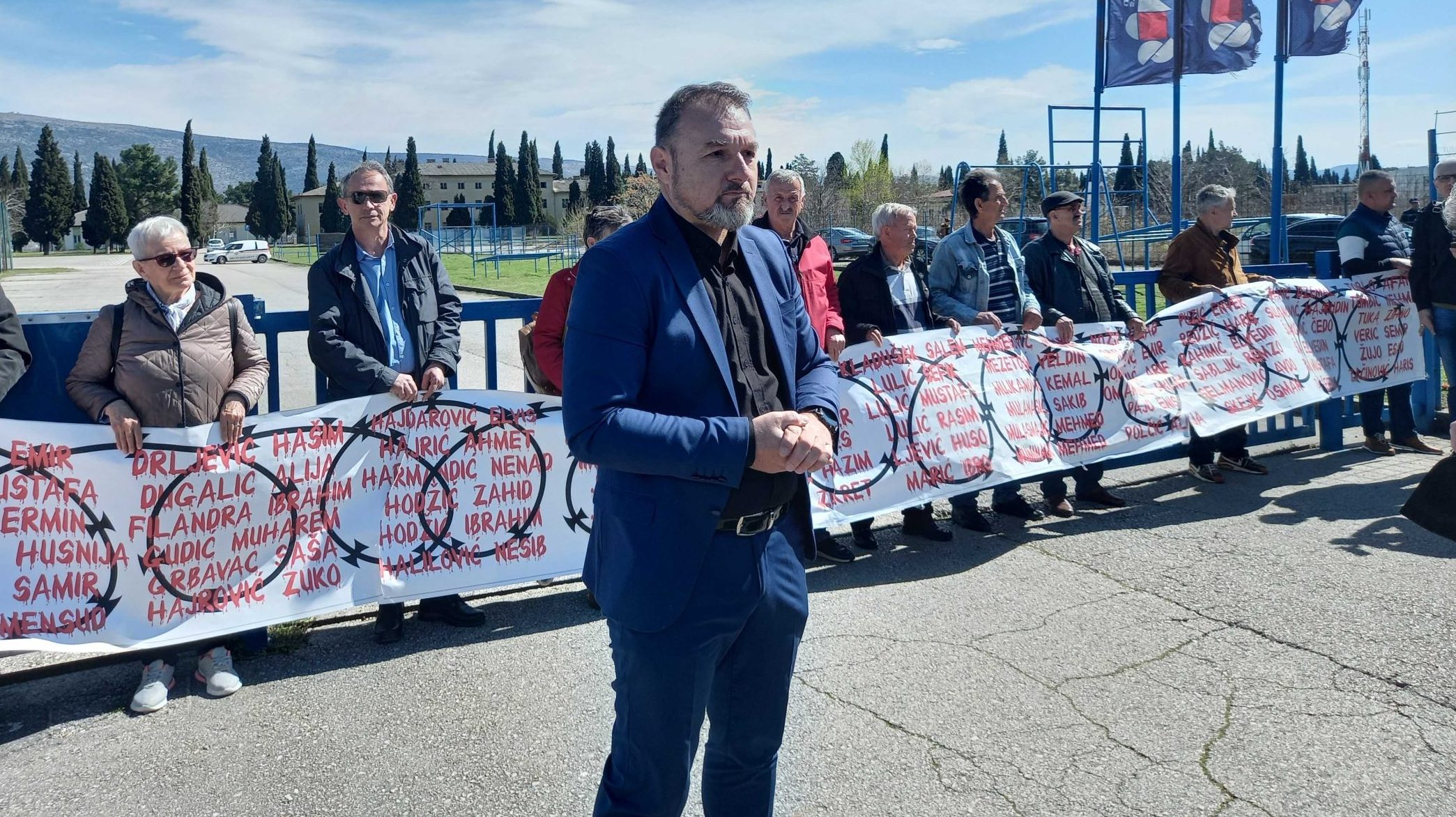 Emir Hajdarovic. Photo: BIRN BiH
Former inmates of the Heliodrom camp, their relatives and war victims’ organisations marked the 30th anniversary of the beginning of the dissolution of the wartime detention facility by gathering in front of the former camp’s gates on Tuesday.
A banner with the names of 77 murdered camp inmates was placed by the gates and the participants announced that they wanted to send out a message of peace.
Emir Hajdarovic, head of the Mostar camp inmates’ association, condemned the authorities for their inaction over the crimes committed at the camp, saying that “they did absolutely nothing to bring to justice the criminals who controlled this space and the lives of the camp inmates”.
After flowers were laid and tributes paid in front of the former camp, a commemoration for the inmates who died was held at the National Theatre in Mostar.
“Our wish was to open the eyes of these people and our children so that what we survived, they really shouldn’t have to,” said Hajdarovic.
The Heliodrom camp, located in a former Yugoslav People’s Army base near Mostar, was run by the Croatian Defence Council, HVO, the military force of the Croatian Republic of Herzeg-Bosnia, an unrecognised Croat-led statelet during wartime.
According to indictments at the International Criminal Tribunal for the Former Yugoslavia, ICTY, the Bosnian Croat wartime military force, the HVO started detaining Bosniak men and others at the Heliodrom camp from 1993.
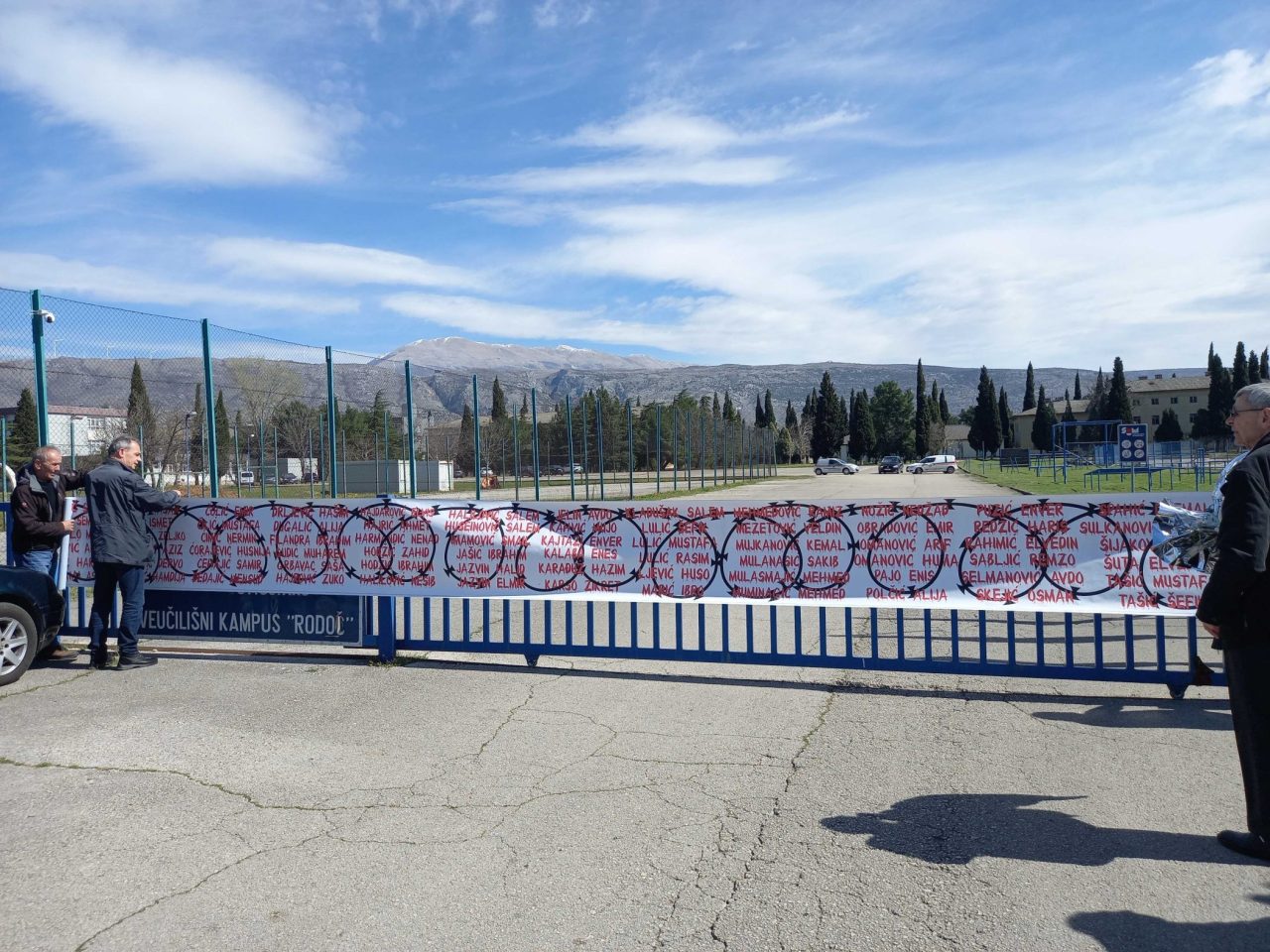 Imena logoraša postavljena na kapiju bivšeg logora “Heliodrom”. Photo: BIRN BiH
Controversy erupted last year when it was announced that part of the former Heliodrom camp is to be turned into an HVO military museum with financial support from the Bosnian Defence Ministry, despite opposition from former prisoners. The ministry said funding will also come from HVO veterans.
Hajdarovic said that the establishment of the HVO museum was “a poke in the eye for all the victims”.
In 2017, the Hague Tribunal sentenced Bosnian Croat wartime military and political leaders Jadranko Prlic, Bruno Stojic, Slobodan Praljak, Valentin Coric, Berislav Pusic and Milovoj Petkovic to a total of 111 years in prison for crimes committed in so-called Herzeg-Bosnia, including the Heliodrom camp.
The reading of the judgment was disrupted by Praljak, who took poison in the courtroom and died a few hours afterwards.