

This post is also available in:
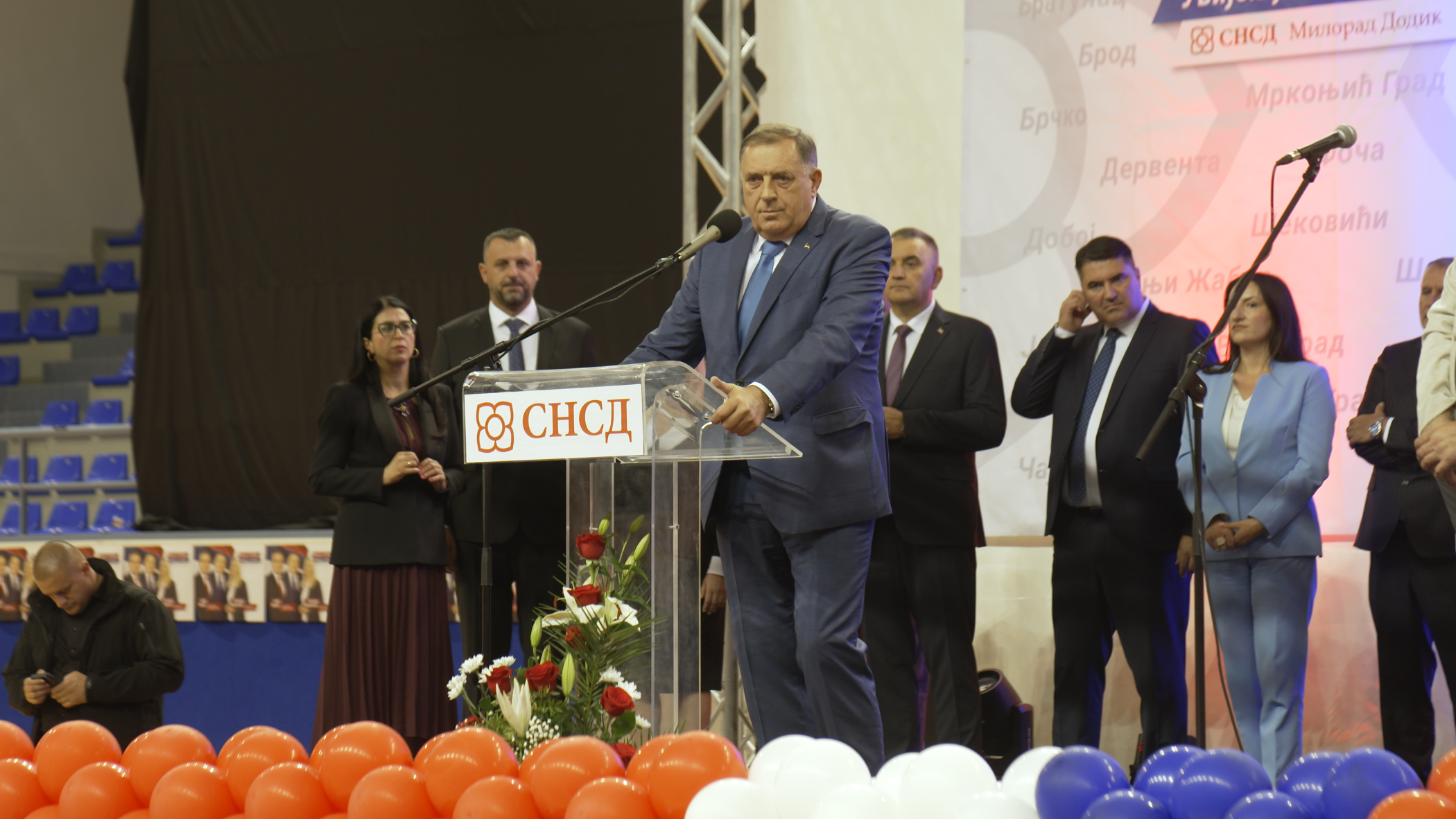
Several times during the campaign, former President of Republika Srpska, Milorad Dodik, whose SNSD party won a large number of seats, according to preliminary results, pushed a false narrative about the endangerment of Serbs in East Sarajevo, because Bosniaks are buying apartments there and settling in. He repeated his views to Detektor journalists, justifying himself by saying he has many Muslim friends. He had previously apologised to Bosniaks for similar words used during earlier elections for the president of RS. But he has repeated them.
“This is our land, this is our space, this is Serbian land. They forced us out of Sarajevo and we don’t want to lose this space again. I have nothing against Muslims, but the politics I recognise, I have the right to oppose. These people elected me, I’m responsible for them to have a peaceful life. I don’t want to see terrorist groups and bandits here,” Dodik said to Detektor during a pre-election rally in East Sarajevo.
For Damjan Ozegovic of Transparency International (TI) in Bosnia and Herzegovina, Dodik’s stance on Bosniaks in East Sarajevo is playing with the emotions of voters in that area.
“In that geographical area they should live in fear and possibly vote for some ‘protectors’. That’s the most basic way without presenting any concrete solutions that could actually affect the real quality of life for the voters,” says Ozegovic.
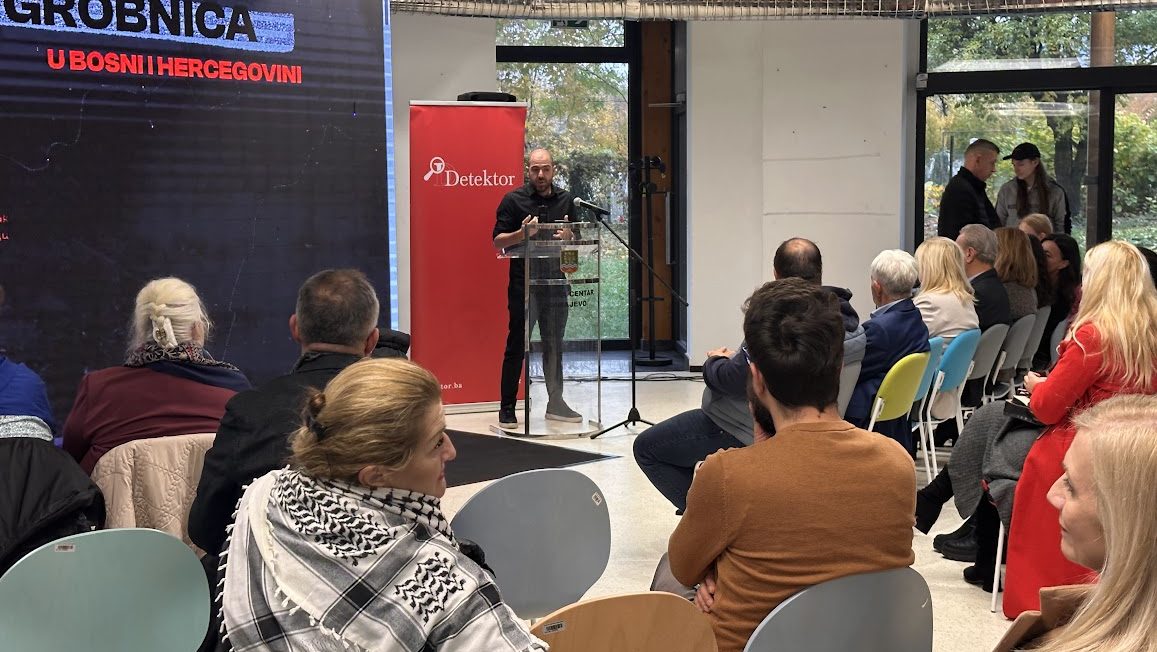
Detektor records such messages in every election. During this one it recorded almost 30 statements in the Hate Mapping Database, in which politicians insulted or targeted various ethnic, religious, or other groups, as well as party opponents.
Half of the recorded hate cases in Detektor’s database involve high-ranking SNSD members and members of parties from the ruling coalition in Republika Srpska.
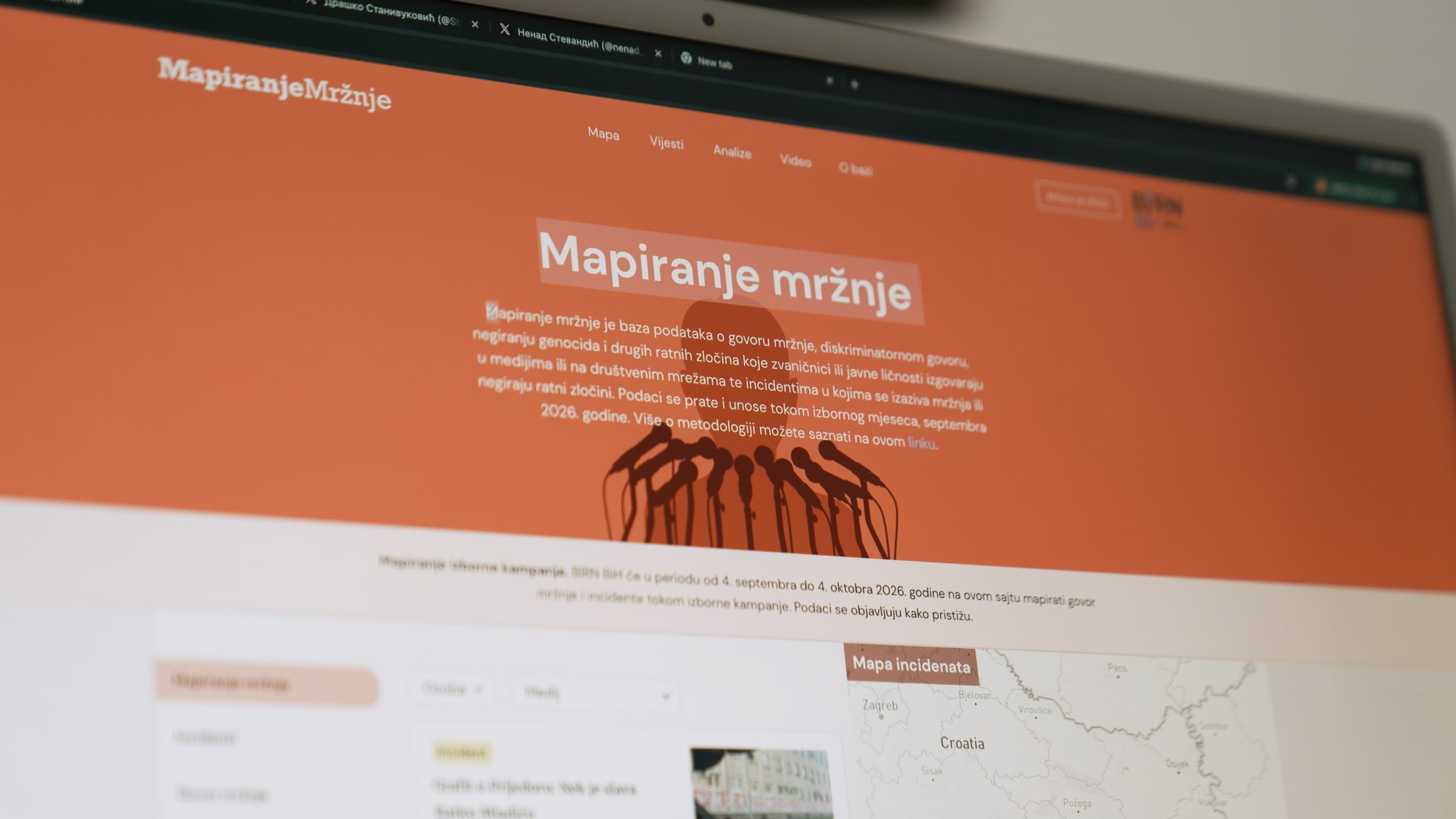
Detektor recorded nearly 30 statements in which politicians insulted or targeted ethnic, religious, or other groups, as well as political opponents. Photo: Detektor
They copy Dodik’s behavior patterns. For instance, the president of the People’s Assembly of Republika Srpska, Nenad Stevandic, claims that a branch of ‘Hamas’ has been formed in Bosnia and Herzegovina.
“The hatred openly displayed by people from the Sarajevo political scene has obviously led to the creation of a ‘Bosnian Hamas’ – a radical mass that would probably solve problems in Bosnia and Herzegovina according to the Middle Eastern model,” Stevandic posted on the People’s Assembly website.
Srdjan Amidzic, a member of SNSD and the Minister of Finance and Treasury of Bosnia and Herzegovina, says that he would take all the people involved in political life in Sarajevo to churches, because they don’t teach them “the difference between good and bad” in mosques.
Detektor also recorded a pre-election campaign message on social media from Faruk Kapidzic, one of the leaders of the SDA (Party of Democratic Action), claiming a Bosniak presidency member was “on an offensive to create a Greater Serbia”.
Although he initially agreed to comment on his stance, after more than an hour’s delay, Kapidzic decided he didn’t want to face the camera for the Detektor journalists.
Ozegovic, of TI, said: “When it comes to, in the majority of the electorate, which is Bosniak, when it comes to condemnation, that’s a narrative that has existed for over three decades now. However, it cannot bring a huge number of votes, if we are explicitly talking about the fight for votes of the rejection of voters. However, it was definitely expressed solely with the intention of securing the proven base that opposes what certain political entities are stating.”
Spreading hate is also about “incitement”, said Jovan Kalaba, president of the Central Election Commission (CEC). “Speech can incite someone to commit a crime against a certain group of people, be it based on religion, gender, or any racial discrimination.” He believes incitement is particularly dangerous during a pre-election campaign, because “it directly undermines democratic processes and polarises the society.”
Among other incidents Detektor mapped during the campaign was a derogatory speech in which Josip Jerkovic, a local party leader of HDZ Bosnia and Herzegovina from Derventa, insulted Slaven Kovacevic from Demokratska fronta (DF), who was running for the Presidency of Bosnia and Herzegovina, calling him ‘circumcised.’ Women candidates were also targets of discriminatory speech. The Croatian Republican Party criticized HDZ’s Darijana Filipovic for the fact that ‘she doesn’t know how to knead dough.’
Ozegovic said election law bans “all of the types of speech we’ve mentioned” including a law which says members of the opposite sex must not be portrayed in any humiliating way.
Despite these laws, sanctions have mostly not been imposed for these cases or for hate speech.
Complaints and anonymous sanction
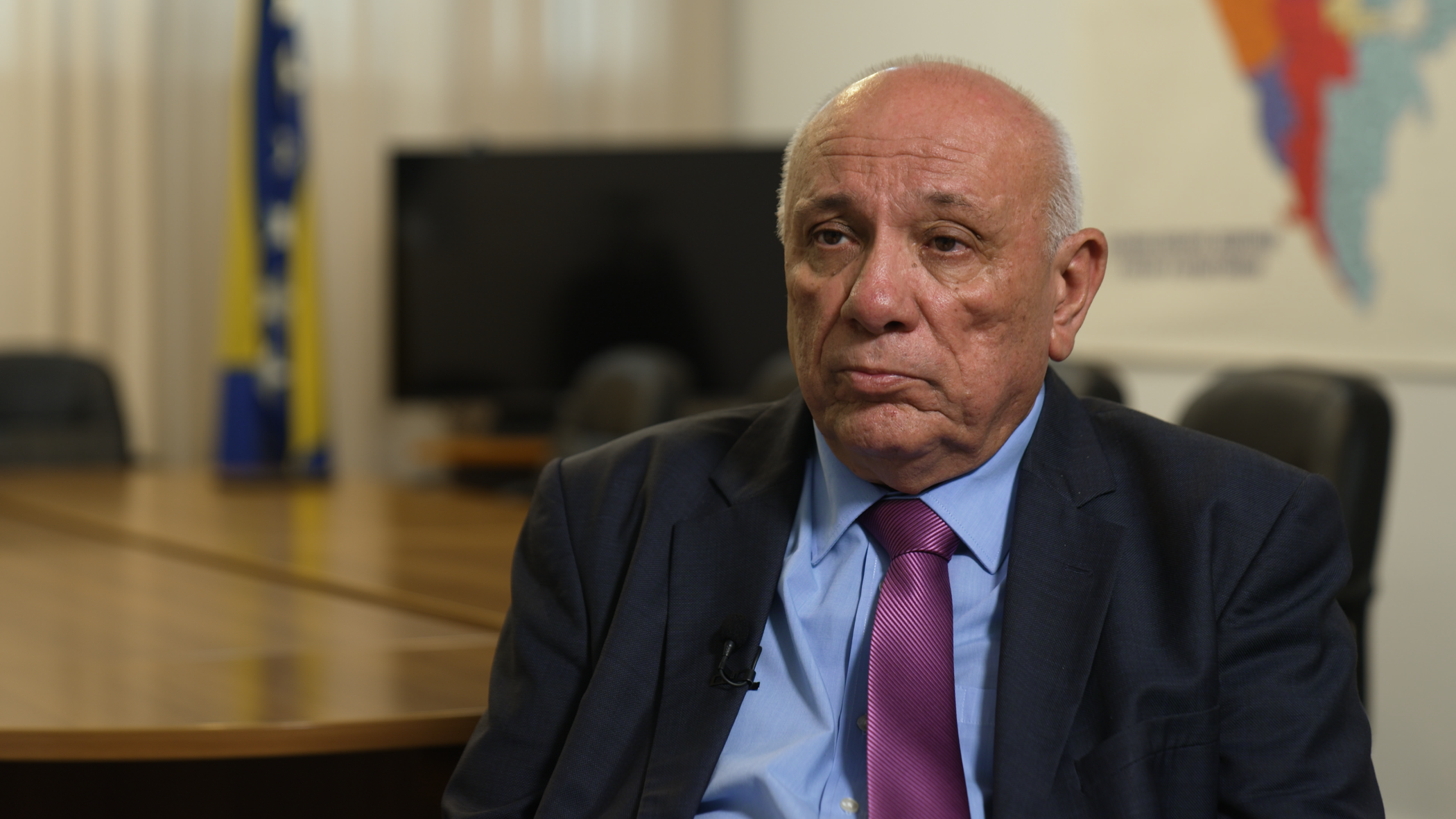
Jovan Kalaba, President of the CEC: Only one sentence was imposed. Photo: Detektor
The Election Law of Bosnia and Herzegovina defines hate speech as ‘public expression that causes or incites hatred, discrimination, or violence against a person or group because of their race, nationality, gender, religion, ethnic origin, or other personal characteristics’. Candidates and parties can be fined up to 30,000 KM, or removed from the list and have the accreditation of the political entity annulled.
Hasan Kamenjakovic of the Pod Lupom coalition said that as of early October, there were around 60 cases of hate recorded during the pre-election campaign.
They submitted eight complaints of hate speech to the CEC. Among them were those based on religion and ethnicity, as well as attacks on the LGBT population.
“It seems to me that the Central Election Commission will at least take into account cases related to religious and ethnic intolerance, possibly also for hate against the LGBT population, but when it comes to glorifying war crimes and criminals, we see that whatever they receive, they forward to the Prosecutor’s Office of Bosnia and Herzegovina”.
The Bosnian Prosecutor’s Office previously told Detektor that they had received a large number of complaints about people glorifying war crimes, but they didn’t have police records for these, which they used to justify the lack of indictments. After the campaign, they filed one indictment, related to an incident for spreading hate that had been reported in 2025.
Kalaba, the CEC president, confirmed that since the announcement of the election, they had received 37 complaints about hate speech. He said so far one of the complaints had resulted in a 5,000 convertible mark fine after being classified as hate speech, but he did not reveal which political party it concerned. He added that 19 complaints were still being processed.
When asked about dismissing the complaints, Kalaba said it was not a decisive rejection, but rather a notice that it didn’t constitute hate speech.
Besides the lack of capacity to monitor hate speech, which Kalaba himself admitted, other interviewees like Ozegovic believe that the problem also lies in the CEC’s willingness to deal with the issue. This is also reflected in sanctions being symbolic rather than punishments.
“Any sanction, especially for big political entities, is unfortunately symbolic. A financial penalty doesn’t mean much to them – they have a million ways to pay it. Still, it sends a message that it’s punishable and unacceptable. It doesn’t just affect the person committing the offense; it actually influences broader public opinion, because if these things aren’t sanctioned in real time, voters somehow gradually become desensitised to them and the messages become more acceptable,” says Ozegovic.
Kamenjakovic of Pos Lupom agrees the timeliness of punishments is key. He said sanctions must be, above all, as swift as possible to have a deterrent effect. But he says hate speech laws are not being used enough. “So far, what we’ve seen is just one sanction being handed out. I don’t know if we can be very satisfied.”
Fewer messages, the same problem
Experts Detektor spoke to pointed out that the overall number of problematic statements is relatively lower compared to previous election cycles, which is also shown by Detektor’s Hate Mapping Database, updated during the election cycles.
Ozegovic suggested there may have been less hate speech because the election was more online than ever before. This election campaign has been characterised by fewer large public gatherings and big party forums.
“It seems that political parties have adapted to the times they live in, focusing more on online media, clearly recognising their advantage and finally realising their advantage over traditional media,” says Ozegovic.
Yet a reduced number of targeted hate speech incidents does not mean the problem is going away, however. On the contrary, it’s more focused and dangerous because nowadays messages are spread and generated not just by social media, but also by mainstream media like Radio Television of Republika Srpska.
Why is monitoring hate speech so important? Agnes Picod, head of the Office of the United Nations High Commissioner for Human Rights in Bosnia and Herzegovina, believes it can undermine the credibility of the election process, especially when candidates, in some cases even prominent ones, use it.
“I would say that in future election cycles, more attention should be given to that topic [of hate speech],” says Picod. This should also be the case outside of election processes, with institutions responding more quickly and efficiently to the problem of hate speech in everyday life.