

This post is also available in:
Although Bosnia and Herzegovina’s Law on Missing Persons requires mass graves to be marked, many sites remain without memorials, while victims’ families face administrative obstacles when trying to mark them.

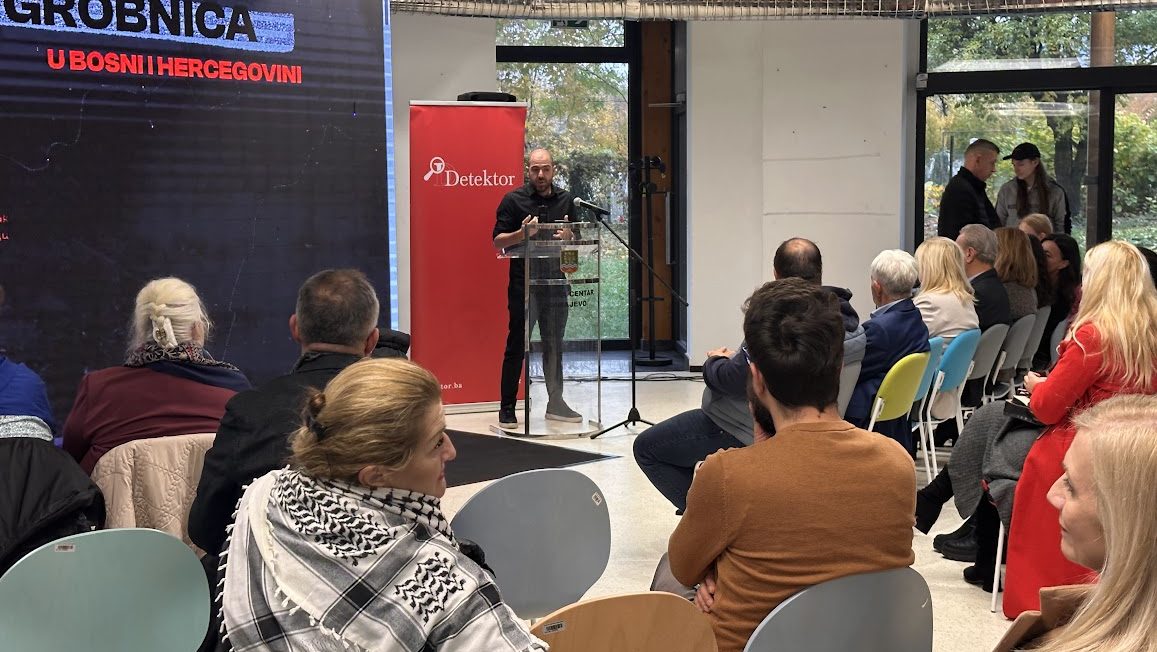
Presentation of the site grobnice.detektor.ba. Photo: Detektor
To provide legal support to victims’ associations and raise the issue of institutional accountability, BIRN BiH presented its project, “Ten Stories about Marking Mass Graves in Bosnia and Herzegovina” on November 3 in Sarajevo.
BIRN BiH Director Denis Džidić said the project aims to put additional pressure on institutions to find legal solutions in cases of non-compliance with the state-level law, particularly given that local authorities, especially in Bosnia’s Serb-majority entity, Republika Srpska, are blocking efforts to mark mass graves.
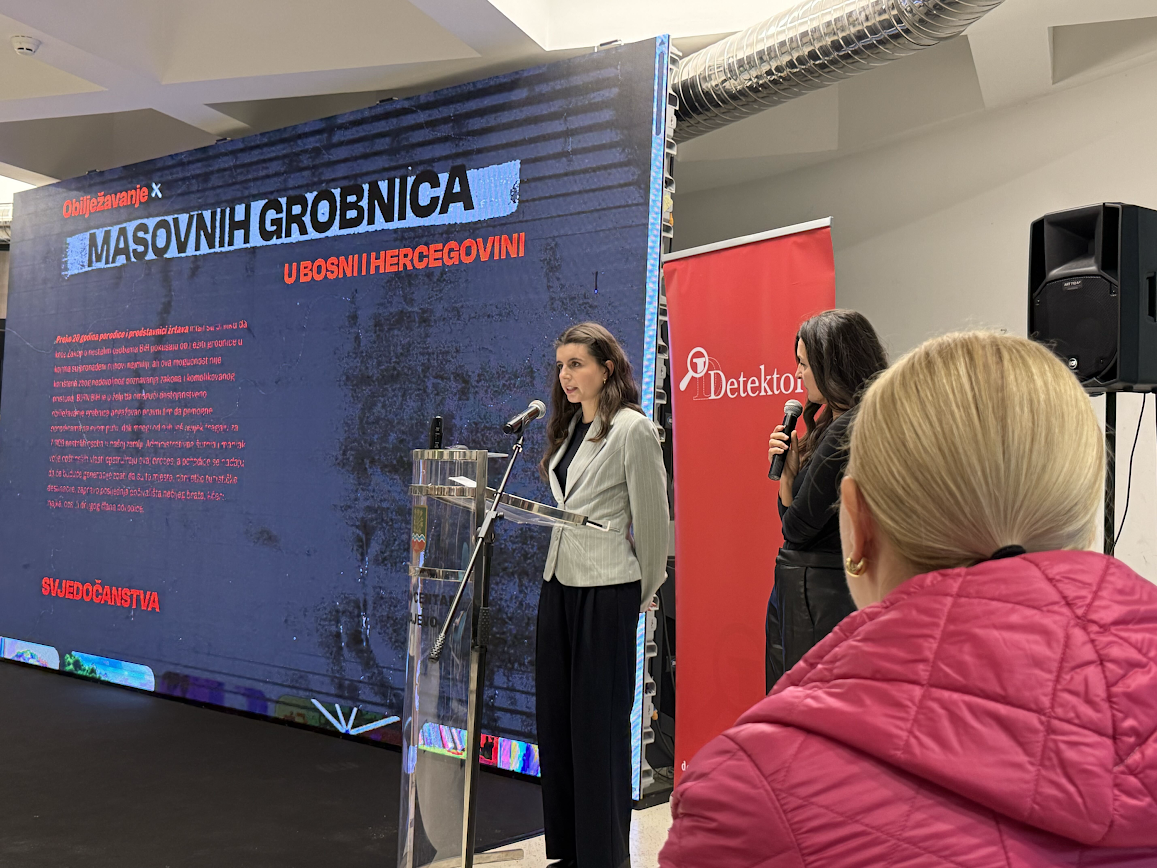
“We selected ten sites containing some of the largest mass graves in Bosnia and Herzegovina and provided legal support to associations so they could submit applications and obtain the necessary decisions,” Džidić said.
As part of the project, Detektor created the website grobnice.detektor.ba, featuring stories about the ten mass grave sites, the experiences of victims’ families and information about the procedures for marking them.
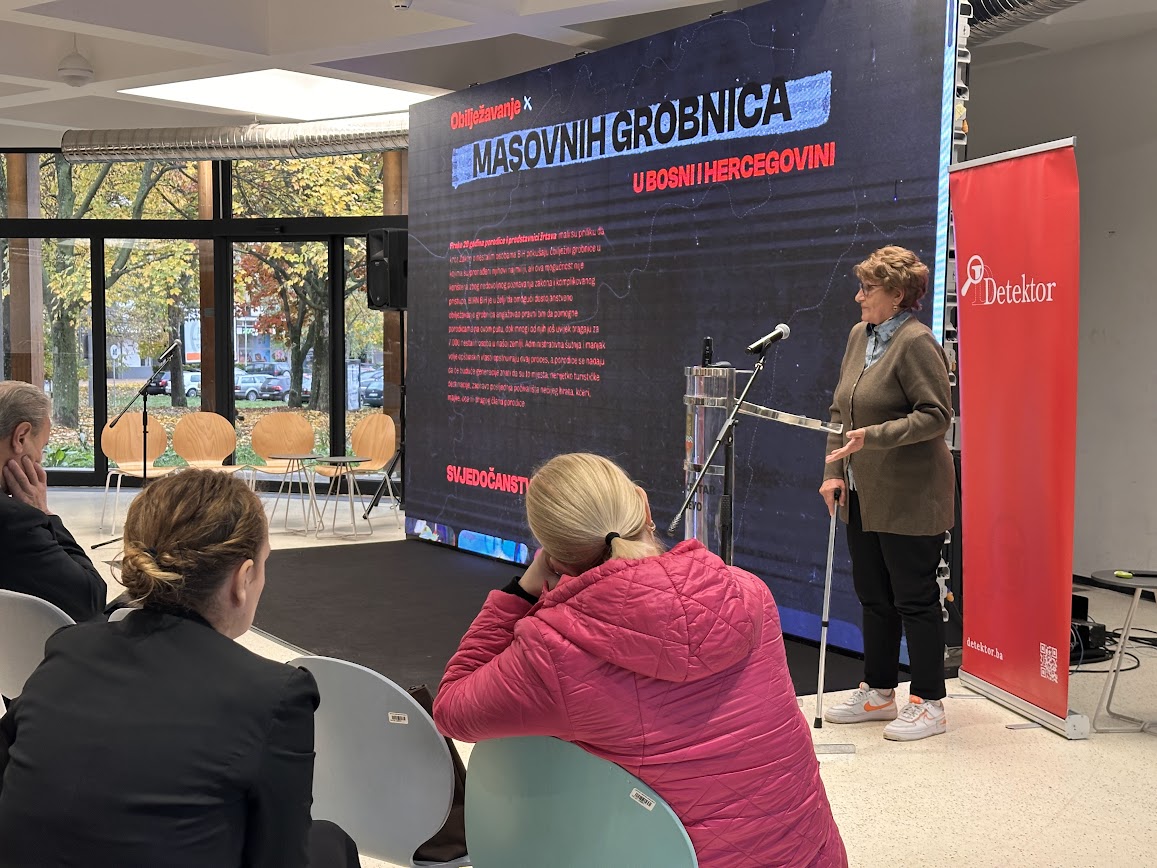
Ema Čekić. Photo: Detektor
BIRN BiH journalist Lamija Grebo, who worked on the project with her colleague Emina Dizdarević Tahmiščija, presented some of these stories at the conference. She said their work had shown that victims’ associations were not making use of all the opportunities provided by the Law on Missing Persons, while also facing numerous administrative obstacles.
Canadian Embassy representative Isabelle Jaulgey said Canada supported initiatives aimed at preserving historical memory. She stressed that memorialisation and the marking of mass graves are ways to honour victims and acknowledge the experiences of survivors and their families.

Panel: Families’ Right to Remembrance. Photo: DetektorRepresentatives of victims’ associations also spoke about the problems families face. Midheta Kaloper, president of the “Foča 92–95” Victims’ Association and a member of the Advisory Board of the Missing Persons Institute of Bosnia and Herzegovina, warned that leaving former mass grave sites unmarked allowed crimes to be forgotten.
Ema Čekić, president of the Association of Families of Missing Persons from Vogošća Municipality, stressed that the Law on Missing Persons was insufficiently understood and implemented. She also highlighted the problems families faced in their local communities.
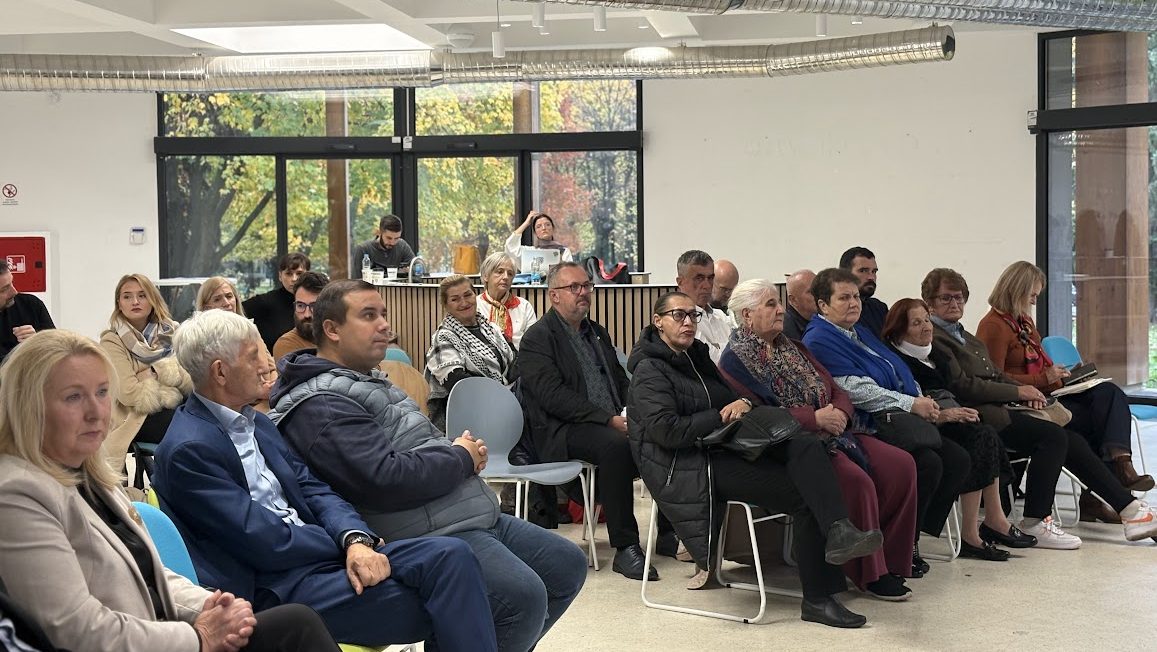
Representatives of victims’ associations at a conference on the marking of mass graves. Photo: Detektor
Emina Zahirović-Pintarić, an expert associate on the project, also referred to the regulations governing the establishment of the Fund for Support to the Families of Missing Persons, noting that the fund had yet to be established.
She said that, despite numerous obstacles, efforts must continue to improve the legal framework and find institutional solutions that would make it easier for families and associations to mark these sites.
Edvin Kanka Ćudić, of the Association for Social Research and Communications, UDIK, recalled the problems they had faced during initiatives to erect memorials to victims killed at Kazani and at St Joseph’s Cemetery in Sarajevo. He also highlighted the importance of civil society’s work in preserving the memory of victims.
The conference was the closing event of the project “Marking Mass Graves: Supporting Victims’ Associations through Training and a Public Campaign in Their Efforts to Mark Sites of Suffering in Bosnia and Herzegovina”, supported by the Government of Canada through the Canada Fund for Local Initiatives.