




This post is also available in:
“The era of deportations has begun,” Charlie Weimers, a far-right Swedish MEP, told Euronews at the start of the summer.
His declaration came a day after the European Parliament and European Council agreed on the new ‘return regulations’ that pave the legal ground for migrants “who have no right to stay in the member states” to be sent to third countries.
“Return hubs,” said the press release, “could serve either as the final destination or as transfer centres facilitating onward return to the country of origin or another third country.”
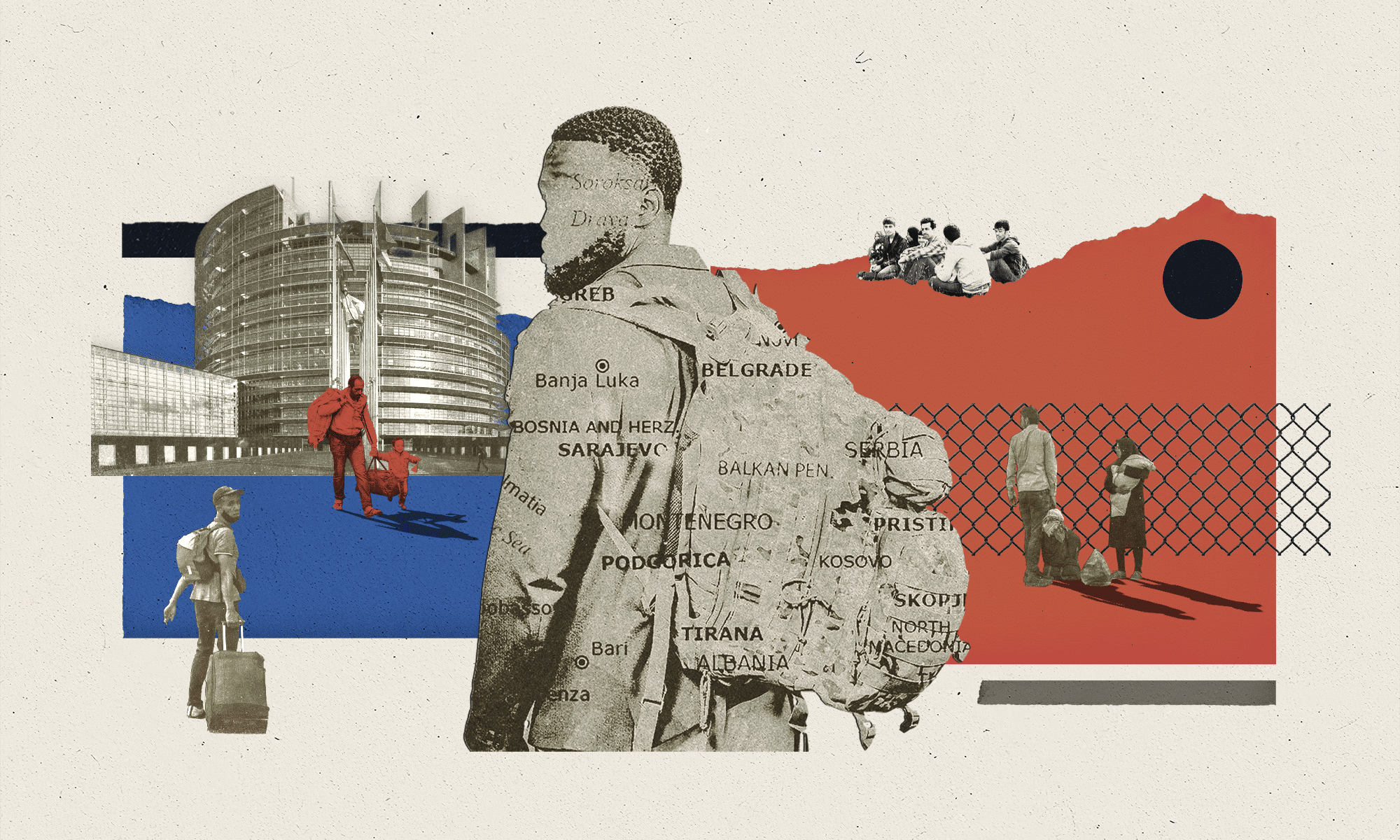
The news put human rights activists in the Western Balkans on alert. Activists focused on migrants’ welfare warn that countries in the region could be the ones hosting such hubs, despite documented violations of migrants’ rights in several Balkan states.
The infrastructure is already there. With generous help from the EU, Balkan countries have built a network of detention and reception centres to hold migrants over the last decade. Some, including Bosnia and Serbia, already have agreements with EU members to accommodate their migrants.
“There are quite a lot of camps that are fully equipped with beds and everything needed. So, they [the currently inactive detention centres] can very easily be put in use again within 24 or 48 hours, very quickly,” said Milica Svabic, a lawyer at the Belgrade-based KlikAktiv, an NGO providing legal support to migrants and asylum seekers.
The new EU return regulations are yet to come into force. After European Council and European Parliament negotiators reached a deal on the regulations on June 1, MEPs officially adopted them on June 16. But the new rules still must be signed off by the Council of the European Union before they come into force.
The UN High Commissioner for Human Rights and a number of human rights organisations have strongly condemned the regulations, warning that outsourcing detention to ‘third countries’ outside the European bloc bypasses fundamental human rights protections.
However, some EU member states, such as the Netherlands, Greece, Austria, Germany and Denmark, have already started exploring arrangements with third countries. As yet, there is no official confirmation on which countries these may be.
Western European governments are under domestic political pressure, exacerbated by the surge in popularity of far-right parties, to exert much stronger control over migration and deport migrants if they have no legal basis to remain.
The European Commission told BIRN that “a few member states launched an initiative looking into return hubs earlier this year”.
“The Commission has been invited as an observer, and we are following discussions closely … The Commission is not negotiating any such agreement or arrangement,” it said in a written response.
Nicholas Ioannides, deputy minister for migration in Cyprus, which currently holds the presidency of the Council of the European Union, said in June that the plan is to set up these hubs “maybe in Africa or Asia”, but “not close to European borders”.
Some Western Balkan leaders have previously rejected the idea of hosting return hubs, most notably when Britain explored the same option with unnamed countries in the region, as the BBC reported last year.
While Kosovo’s Prime Minister Albin Kurti expressed openness towards the idea, Albania has heavily criticised the concept of return hubs, even though it has set up migrant holding camps for use by Italy. Montenegro’s Prime Minister Milojko Spajic said in October 2025 that his country will not be hosting rejected asylum seekers from Britain.
Nikola Kovacevic, a Serbian lawyer who has represented refugees for more than a decade, told BIRN that if return hubs are located in the Western Balkans, the EU will “send people who have a terrible situation, but don’t meet requirements for asylum”, while “simultaneously testing” whether the state to which they are to be returned is a safe enough.
Kovacevic argued, however, that “Serbia, as a country which cannot effectively protect the human rights of refugees and asylum seekers, is not a safe third country”.
Balkan migration centres
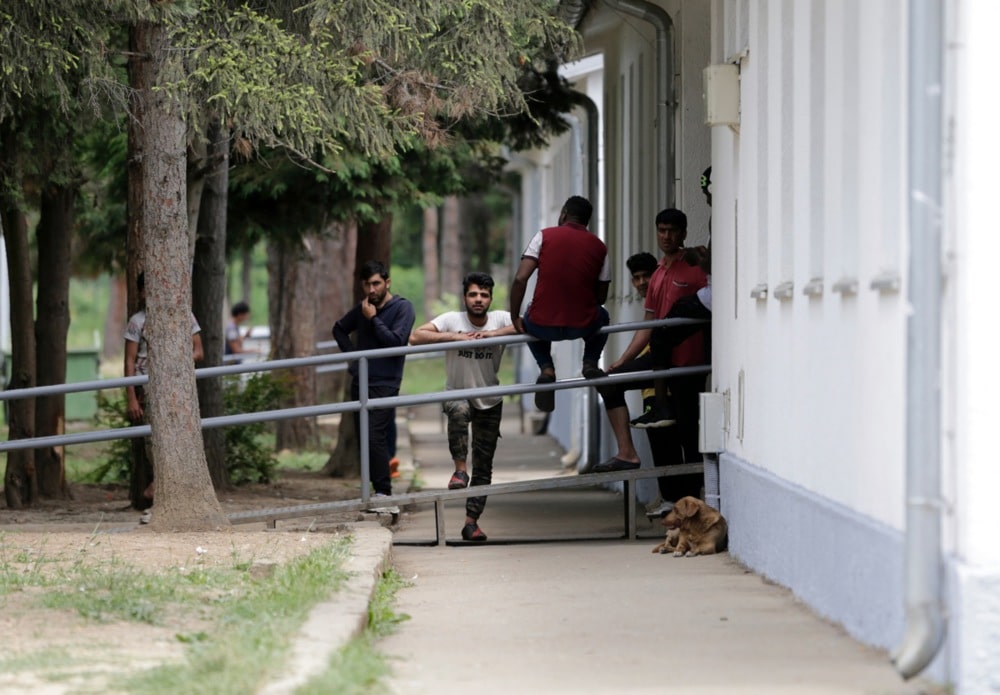
The Reception and Transit Centre in Obrenovac, Serbia, has capacity for up to 1,000 people. Photo: Andrej Cukic/EPA.
The warnings that the Western Balkan countries may host EU return hubs started even before the agreements on new regulations were done.
Collective Aid, an NGO working with migrants and asylum seekers in Serbia, Bosnia and Greece, issued a position paper on the EU return plans in February this year, expressing its concerns.
“As the European Union intensifies its focus on return policies and considers the establishment of so-called ‘return hubs’ in candidate countries such as Bosnia and Herzegovina and Serbia, serious concerns arise about the implications for people on the move,” the organisation wrote.
Western Balkan countries have migration detention centres with vast capacities already set in place over the last decade – many located in Serbia and Bosnia. They were mainly funded by the EU, in response to thousands of migrants who have been taking the so-called Balkan Route towards the EU since 2014.
BIRN identified 40 migration centres currently operating across the Western Balkans, which include around 15 facilities that have been newly built or substantially upgraded with EU funding since 2015.
Serbia and Bosnia and Herzegovina facilities have the capacity for over 8,000 migrants and asylum seekers. Serbia operates reception and asylum centres with space for up to around 6,000 people, while Bosnia and Herzegovina’s network of reception, asylum and immigration facilities can host around 2,600 people.
Since the early 2000s, some Balkan countries have had ‘readmission’ agreements with EU countries. These bilateral agreements are already functioning as tools for deporting third country nationals from the EU to its borders in the so-called Western Balkans Six countries: Albania, Bosnia and Herzegovina, Kosovo, Montenegro, North Macedonia and Serbia.
“We have reason to be worried about Western Balkan countries potentially becoming [return hubs] – especially the countries neighbouring to the east. We might definitely become some sort of a hub,” Emir Prcanovic, executive director of the Sarajevo-based legal aid NGO Vasa Prava, told BIRN.
From the 2015 migration crisis onwards, the EU has allocated and distributed hundreds of millions of euros to Western Balkan countries in pre-accession and Instrument for Pre-Accession Assistance (IPA) funding directed towards migration management, border surveillance, reception infrastructure and return capacity across the Western Balkans.
Hoping to join the EU in future, Western Balkan countries have also been adapting their policies related to migration to those of the European bloc.
Birgit Sippel, a member of Germany’s Social Democratic Party who has been serving as an MEP since 2009, told BIRN that “migration and border control have increasingly become conditions attached to the EU enlargement process.
“The two are now going hand in hand, even though they are fundamentally contradictory,” she said.
She said that the return hubs, which she and her party object to, “cannot be within candidate countries because they will become a member state”.
She explained that if the six Western Balkan countries become EU members “there would no longer be a return hub in a third country, but it would be a return hub within the European Union”.
Albanian and Serbian camps
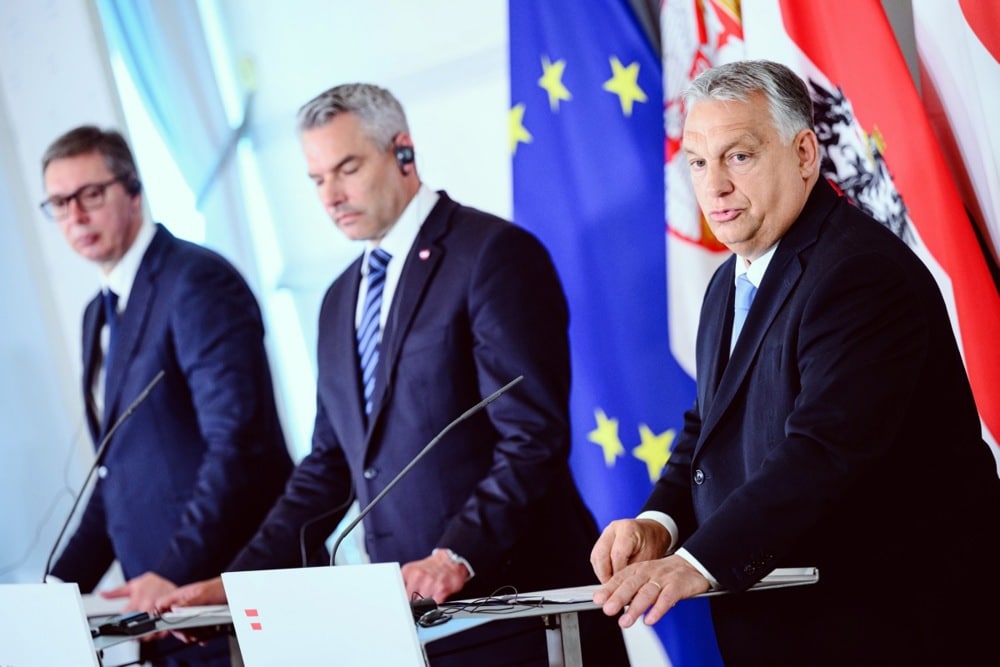
Serbian President Aleksandar Vucic, then Austrian Chancellor Karl Nehammer and then Hungarian Prime Minister Viktor Orban pictured ahead of the Hungary-Austria-Serbia Migration Summit in 2023. Photo: Max Slovencik/EPA.
However, similar agreements between some Western Balkan countries and EU member states already exist.
Albanian Prime Minister Edi Rama and his Italian counterpart Giorgia Meloni signed a deal in 2023 that allowed Italy to build detention centres in Albania for migrants rescued by Italy in international waters.
The plan was for the migrants and asylum seekers to be taken to Albania while their claims were being processed under Italian jurisdiction. But the plan faced a series of setbacks, as both Italian and European courts repeatedly ordered the authorities to send the migrants to the Italian mainland.
As BIRN reported, Italy’s asylum centres in Albania turned out to cost more than originally planned and much more than similar facilities in Italy itself, while simultaneously remaining largely empty after cases became bogged down in the courts.
Serbia also reached an arguably similar trilateral agreement with Hungary and Austria when the three countries signed a memorandum of understanding in November 2022.
The idea was that Hungary and Austria would send rejected asylum seekers to Serbia, which would in turn deport them either to their countries of origin or third countries, with all three sharing the costs.
As part of the deal, EU countries pledged to help Serbia reinforce its borders, particularly in the south, strengthening control of a line between Serbia and North Macedonia, sending Austrian police officers to Serbia.
According to Eurostat, between 2016 and 2025, Austria expelled around 1,086 people to a third country other than their own. The rejected migrants came from Afghanistan, Bangladesh, China, Colombia, Egypt, Iraq, Jordan, Lebanon, Morocco, Pakistan, Palestine, Sri Lanka, Sudan, Syria, Turkey and Venezuela. More than half of the orders were issued from 2022 to 2025.
BIRN asked the Austrian Ministry of Foreign Affairs which ‘third countries’ these people were shipped to, but the ministry did not provide the requested information.
Human rights violations
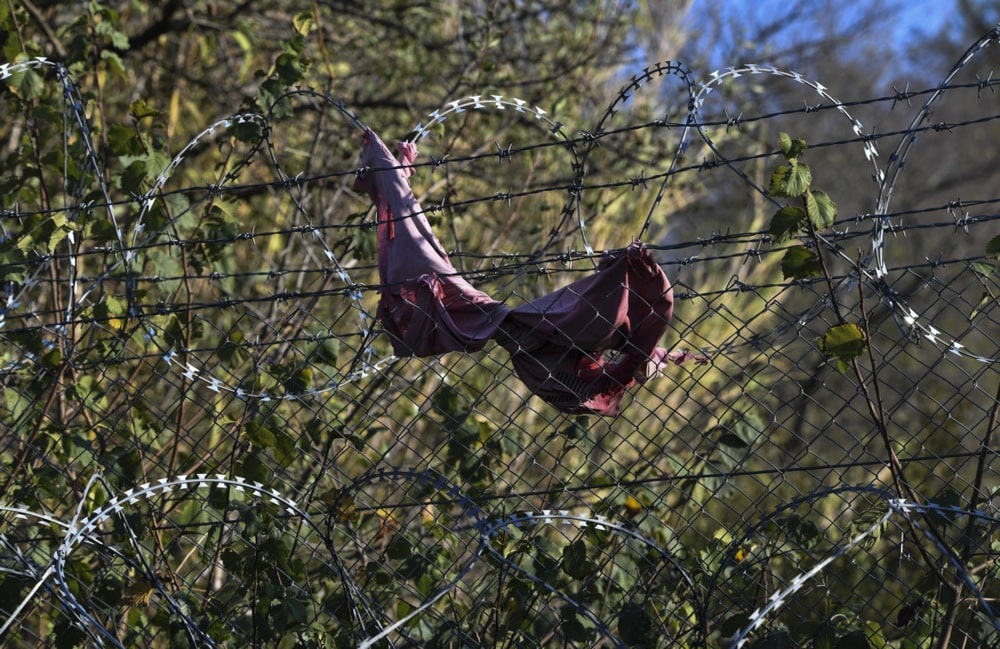
A torn piece of a shirt belonging to a person who jumped over a barbed-wire fence on the Macedonian-Greek border near Gevgelija, North Macedonia, in 2019. Photo: Georgi Licovski/EPA.
Under the auspices of the Austria-Hungary-Serbia agreement, migrants are reportedly sent back very quickly, with the process taking place in less than 48 hours, the NGO KlikAktiv told BIRN. This raises concerns among human rights organisations about whether migrants have enough time to get meaningful access to asylum procedures, legal assistance, interpretation services and the possibility of challenging deportation orders before being removed.
“For the readmission, the Hungarian government has to send an official email to the Serbian police,” said Milica Svabic, a lawyer at KlikAktiv. But Svabic said although Hungary had only officially deported two Turkish citizens based on readmission in the last three months of last year, informally thousands of people have been pushed back.
International and human rights organisations have for years warned about human rights violations faced by asylum seekers and migrants in Western Balkan countries, ranging from violent pushbacks by the police and vulnerability to violent crime gangs, poor conditions in detention centres and undue legal process.
In a high-profile case that was taken to the European Court of Human Rights, Waleed (not his real name) managed to enter Hungary via the Serbian border after fleeing Syria. However, much to his surprise, differently from others who had been allowed entrance before, he and two others with him were told to go back, as their asylum requests were rejected.
“I had to stay in Serbia, where I fortunately met a lawyer who helped me send the case to the European Court of Human Rights,” he told BIRN by phone.
In November 2022, the European Court of Human Rights ruled that Hungary had violated Article 3 of the European Convention on Human Rights by forcing them to go back to Serbia illegally, and by deeming Serbia a safe country of return despite findings at the time by the UN refugee agency UNHCR that “asylum-seekers returned to Serbia ran a real risk of not being protected against refoulement to North Macedonia and then to Greece”.
Existing detention centres in Albania, Bosnia and Serbia often violate human rights and resemble prisons with those inside having very little contact with the outside world, according to international and domestic human rights organisations, including Human Rights Watch, the International Rescue Committee and the Global Detention Project.
Anna Gruber, head of advocacy at NGO Collective Aid, cited the example of the Lukavica detention centre in Bosnia, which holds hundreds of migrants, but activists cannot get access. Citing a report based on detainees’ testimonies, Gruber told BIRN that “it is a prison”.
Prcanovic, the head of the Sarajevo-based legal aid NGO Vasa Prava, made a similar claim about Lukavica.
“The detention centre is a prison-like facility, where the communication with the external world is basically limited. You are entitled to make a phone call, if you have information of who to contact,” said Prcanovic.
“These are rights arising out of the provisions of the legislation per se. But if you are not aware of those, and if you are not given concrete, for example a leaflet or poster or the options, to make yourself aware and introduce certain aspects of the procedural rights, then all of that remains only an illusion,” he added.
Prcanovic explained that out of around 1,000 people who have been detained at Lukavica, “in the course of one year, usually around 30 people annually are able to provide some evidence or ask for legal aid to challenge their detention.”
He added that with the legalisation of deportation to third countries, and creation of return hubs, the region “will definitely have a number of people that are, so to say, stranded, that will also potentially trigger an increase of individuals asking for the asylum in respective countries, regardless whether they were returned to Bosnia or Serbia” or any other Western Balkan country.
This, he said, would “stretch” national asylum systems in the region, because they are “not equipped with the human capacity to cope with a massive asylum-seeking influx, especially knowing that every single individual decision needs to be decided individually.
“Not a single government in the Western Balkan region has the capacities for such a system. I mean, Kosovo cannot accept 1,500 asylum seekers. In Bosnia we have the reception centres, we have the beds, but if the number grows, the system would be put to a serious stretch,” he warned.
BIRN sent questions about return hubs to all the governments in the Western Balkans, as well as to the German, Netherlands, Spanish and French governments, but none responded by the time of publication.
Visuals built with Claude (Anthropic) via Claude Code. All geography, animation and interaction is custom code. Managed and developed by Toma Cristini-Filitika from Vaotea (vaotea.com).