


This post is also available in:
“Although it’s nothing, at least it’s something,” Sara told BIRN. “That was a few months ago. A drop in the ocean, as they say, compared to everything that happened.”
In securing compensation, Sara is the exception, not the rule. In practice, many survivors of war crimes receive nothing. In fact, those accused of war crimes and subsequently acquitted are more likely to be compensated.
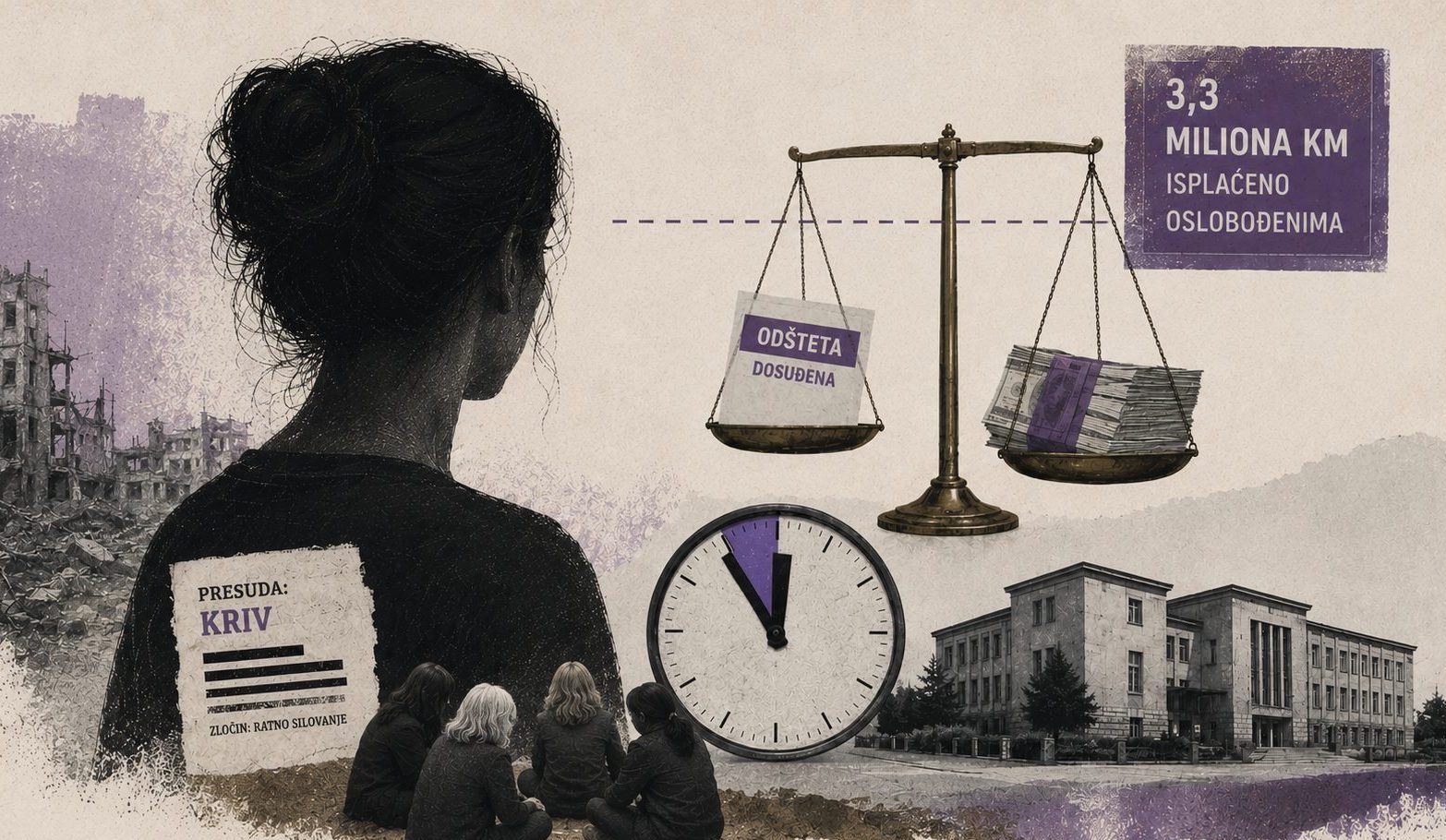
Over the past 10 years, Bosnia has paid out more than 1.6 million euros in compensation to individuals acquitted of war crimes. That’s 11 times more than survivors have received, according to data collected by BIRN from every court in the country.
The association Women Victims of War, for example, said 25 of its members been awarded compensation by the courts, but only two had so far received the full amount.
“For the other members, payments have been made partially or not at all,” the association told BIRN. “We also have information that there are cases where partial payments to victims had begun by the perpetrators but were stopped due to the perpetrators’ deaths.”
“There have been cases where victims did not live to see the payment of the awarded compensation.”
Made to file civil lawsuit
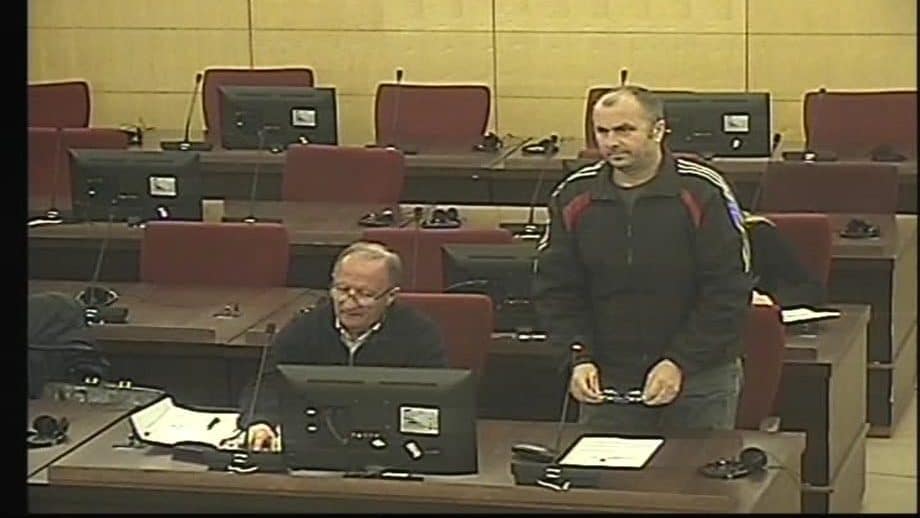
War crimes convict Dragan Janjic (standing) in court during his trial. Video still: Bosnian state court.
According to data from the Bosnia office of TRIAL International, out of a total of 24 verdicts on compensation – 23 of which are final – partial or full payments have been made in only seven. In two, compensation was secured via property seizures.
The compensation ranged from some 2,500 euros to 20,000 euros.
TRIAL International highlighted the case of Dragan Janjic, sentenced by the State Court in 2019 to seven years in prison for rape committed in 1992 in the Foca area. The survivor was awarded some 7,500 euros, split into instalments starting at around 115 euros. TRIAL International said it would take Janjic another five years to pay the full amount.
According to United Nations data, it is estimated that between 20,000 and 50,000 people were raped during the war in Bosnia.
Starting in 2015, the Bosnian State Court began awarding compensation in criminal proceedings for war crimes.
One of the biggest problems, however, is the fact that courts often do not decide on claims for compensation in criminal proceedings. Instead, survivors have to bring civil suits, during which they are often required to reveal their identity.
For many, this represents an insurmountable obstacle.
The District Court in Banja Luka, for example, told BIRN that out of 14 final verdicts it had reviewed, not one included compensation for survivors. In 10 of those cases, the survivors were directed to pursue compensation in civil proceedings.
Collection is rarely easy.
Convicted perpetrators frequently transfer property to family members or other persons. One way to stop this would be to freeze their assets at the investigation phase, but courts often reject such requests from prosecutors.
“This is one of the serious problems we face,” said Midheta Kaloper, head of the Association of War Victims Foca 92-95.
Ahmet Salcin, assistant director for legal affairs at the Your Rights Association, a Bosnian NGO, said: “The problem with enforcement here is that we do not have a fund at the state level of Bosnia and Herzegovina which the state would guarantee to be paid to the victims, and then the state could pursue reimbursement. But there is no political will to resolve this.”
A question of recognition, dignity
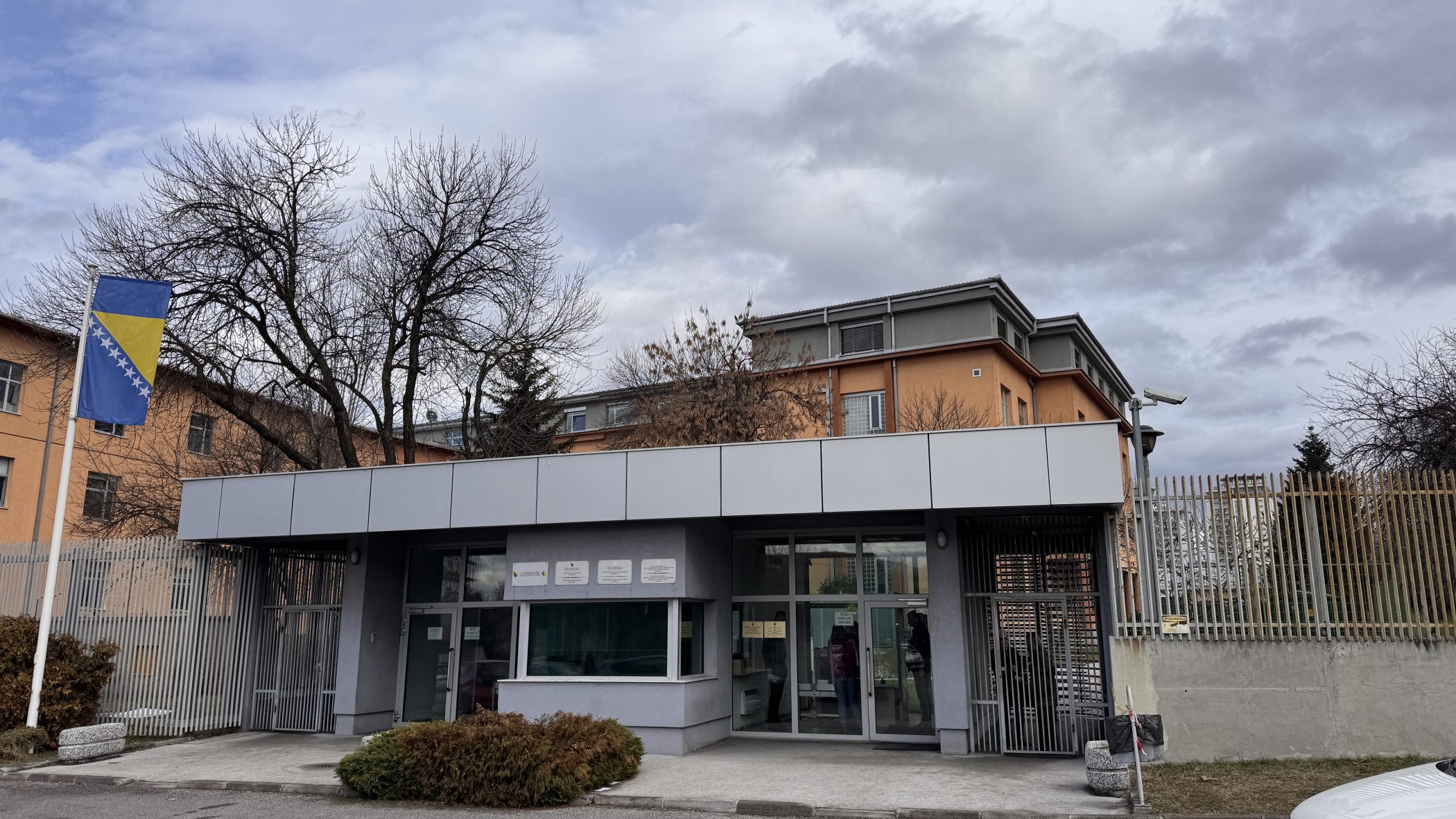
The Bosnian state court. Photo: BIRN.
Compensation is not merely a matter of money, but of acknowledging the harm done and a confirmation that justice, at least partially, has been served, experts say.
But survivors’ associations say people acquitted of war crimes are compensated quicker.
“The key difference is that people who have been acquitted generally manage to collect the amount awarded in a relatively short time, while victims, despite final verdicts, often wait years for payment or never receive it at all,” said Women Victims of War. “This situation further deepens the sense of injustice among those who suffered.”
Azra Frlj, psychologist at the Progress Association, said conflict-related sexual violence has consequences that can follow a survivor for the rest of their life.
“In addition to the psychological consequences, many survivors carry the burden of stigma, silence, impaired health, economic difficulties, lengthy court proceedings, and the wait for their experiences to be recognised and acknowledged,” said Frlj.
From the perspective of psychological recovery, Frlj said, it is not only important whether compensation has been awarded.
“What matters is the message society sends to people who have survived serious human rights violations,” Frlj told BIRN. “When individuals wait years or decades for verdicts to be enforced, rights to be realised, or access to the support they need, it deepens feelings of invisibility, abandonment, and mistrust toward institutions.”
“Prolonged delays in reparations affect health, quality of life, sense of security, and overall possibility to recover.”
In 2017, TRIAL International represented a survivor of conflict-related sexual violence who filed a lawsuit against Bosnia before the UN Committee against Torture, alleging failure to provide an effective and enforceable right to adequate and fair compensation and the fullest possible rehabilitation.
Two years later, the UN Committee ordered Bosnia to publicly apologise to the survivor, pay compensation as soon as possible, and systematically address the issue of reparations at the state level. Today, the survivor is still waiting for compensation, and four other survivors have since appealed to the same UN Committee.
More than three decades after she was raped, Sara’s ordeal goes on.
“I faced my perpetrator directly,” she said. “He did what he did in my apartment. Can you imagine what it was like for me to live afterwards, when I hadn’t told my husband or my children?”
The article was written as part of a project funded by the Swedish International Development Cooperation Agency (SIDA) and the Kvinna till Kvinna Foundation.