


This post is also available in:
The design and development of this innovative digital tool, through the technology of augmented reality (AR), enables the marking and documentation of places of suffering in the war in Bosnia and Herzegovina. It was fully financed by the European Union with 290,000 KM.
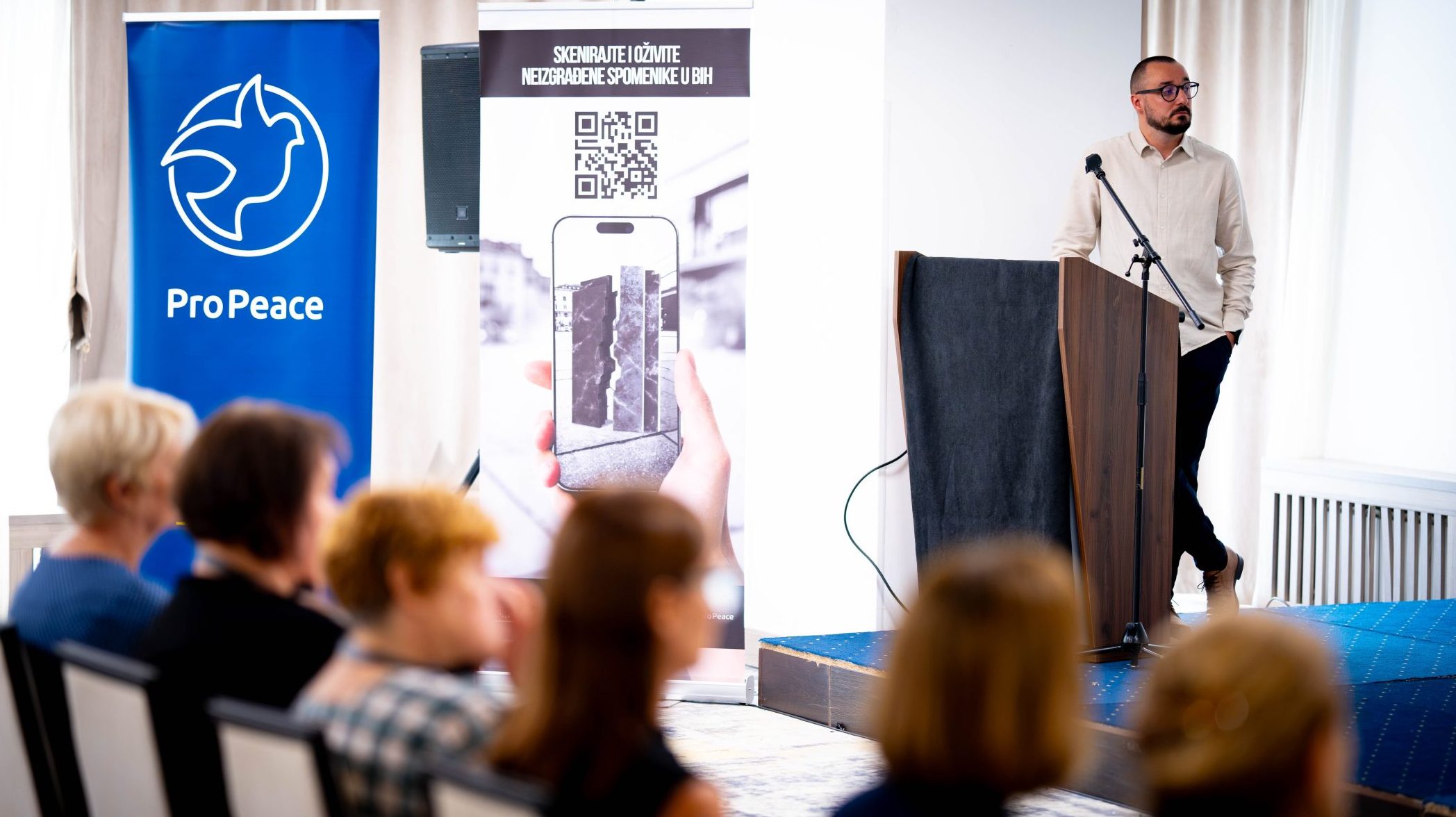
At the launch, the director of BIRN Bosnia, Denis Džidić, emphasized the importance of using modern technologies in memorialization efforts, especially in order to make memorialization more approachable to younger generations.
“Through an innovative approach, we wanted to move the story forward, to younger generations, to show them how the memorials should look like in reality. In this app, the content is also composed of court-established facts and virtual elements, but also witness testimonies from all locations,” Džidić explained.
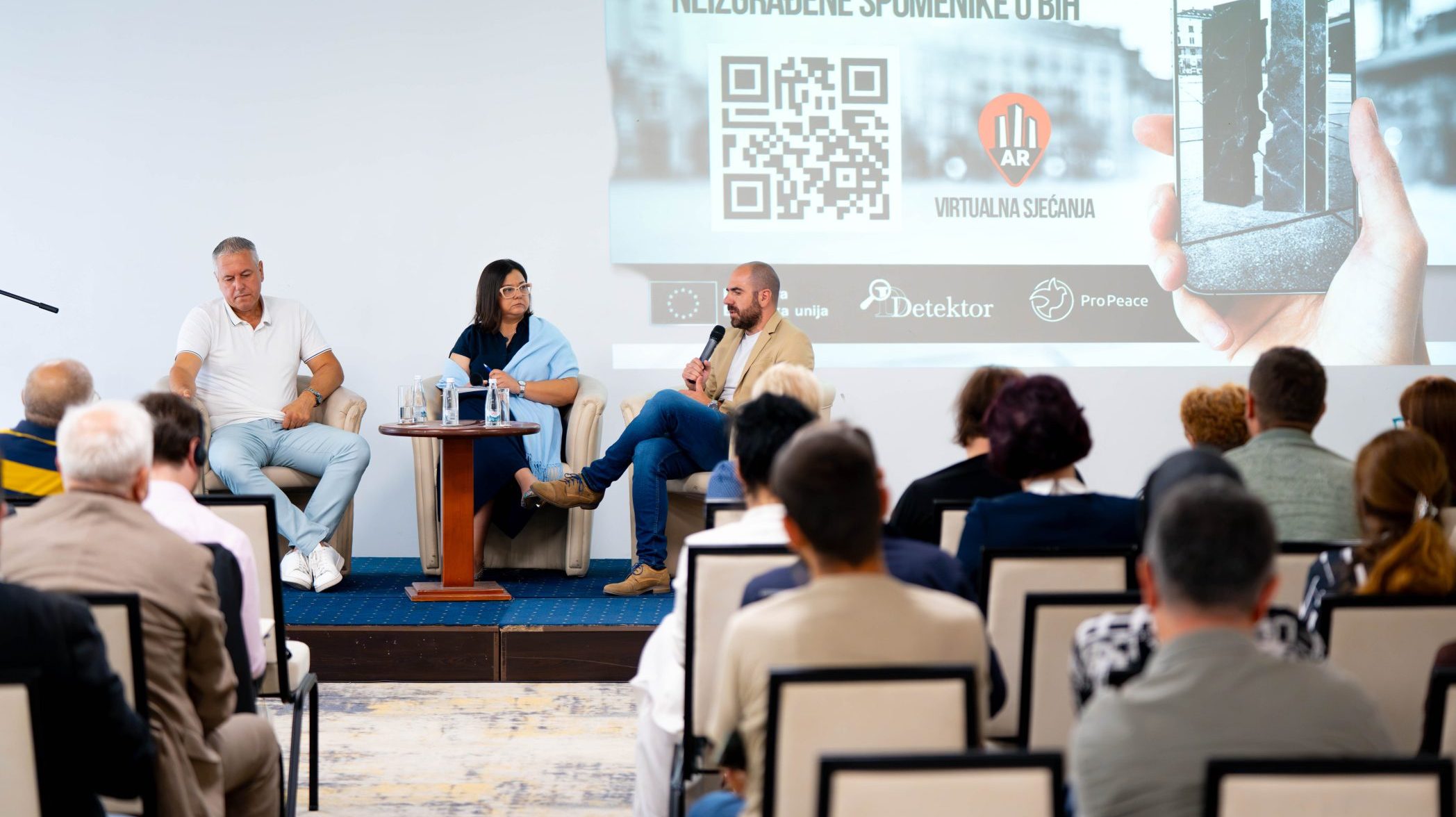
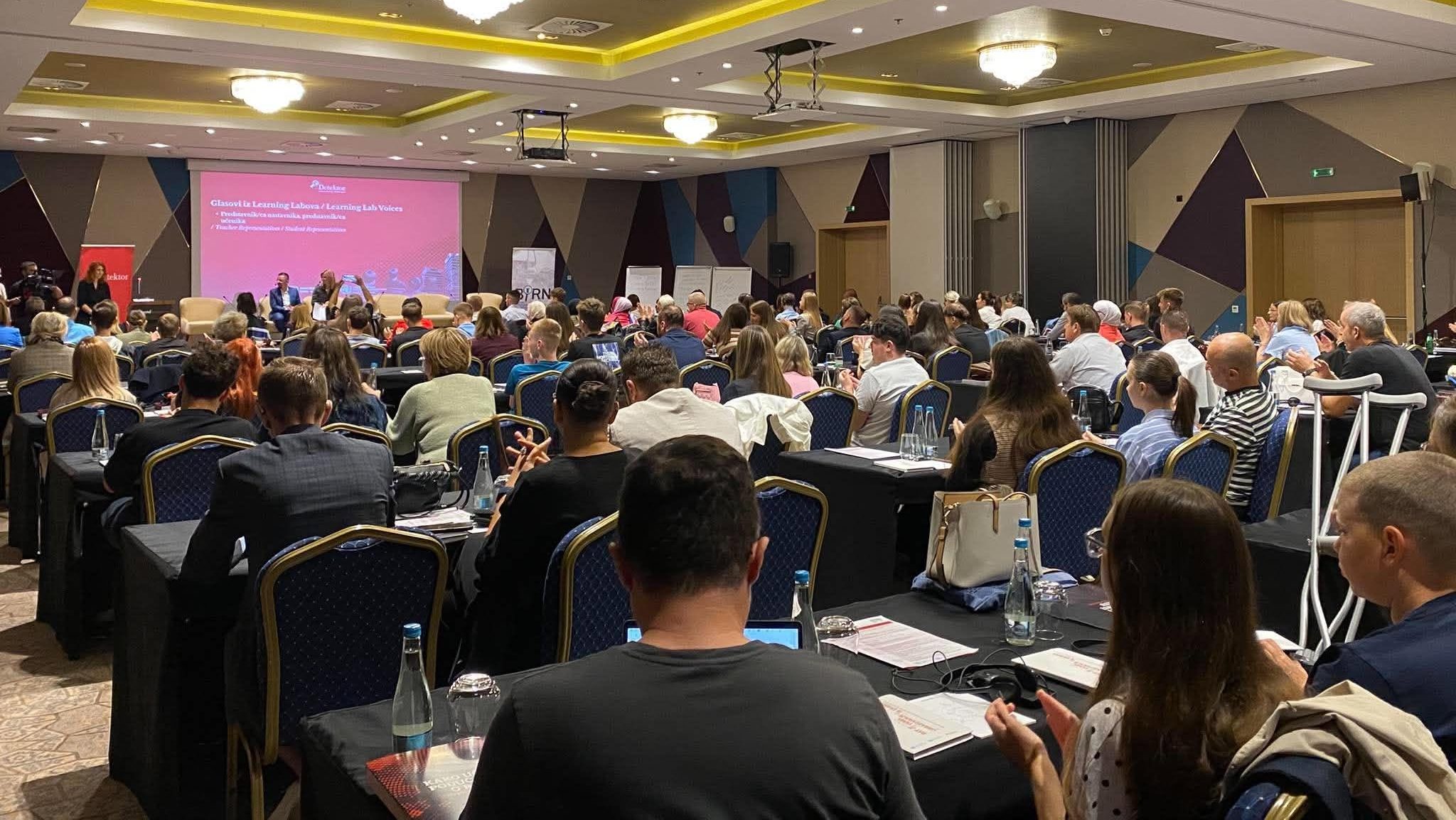
Panel discussion: Memorialization through the EU accession process. Photo: Detektor
The opening address also highlighted the importance of creating an inclusive and fact-based approach to memorialization. Karel Lizerot, Head of Good Governance at the Delegation of the European Union to Bosnia and Herzegovina, told the participants that he was both personally and professionally proud of this project, adding that there is still room to work further on transitional justice in Bosnia and Herzegovina.
“In Bosnia and Herzegovina, we support the memory culture and enable the victims, their families, individuals to go back to facts, locations and events that are court-established, so this application is important not only for Bosnia and Herzegovina but also to its path towards the European Union. Transitional justice is one of the key areas that Bosnia and Herzegovina needs to deal with on this path,” Lizerot said.
The application enables users to access virtual monuments at more than 50 unmarked sites of war crimes throughout Bosnia and Herzegovina via augmented reality, thereby symbolically marking and occupying in the digital space locations that have not received official markings.
In addition to AR content, the application contains narratives about each location based on court-established facts, video testimonies of survivors and family members of the victims, photographic and archival materials, as well as an interactive map that connects the places of suffering into a unique digital space of memory.
In this way, users may gain a new understanding of the events of the war in Bosnia and Herzegovina through a combination of facts, personal stories and multimedia content.
The findings of two strategic documents dealing with memorialization in Bosnia and Herzegovina were also presented at the conference. Lejla Gačanica presented an analysis of the legal framework for memorialization, while Eldin Hadžović spoke about existing initiatives and good practices for marking places of remembrance throughout the country.
Gačanica outlined that memorialization is starting to be seen as the fifth pillar of transitional justice indicating why and how we should preserve the memory of events from the past. That is, how do we memorialize what happened and how past events affect reparations and speaking the truth, guaranteeing the prevention of such crimes from being committed again.
“Memorialization must not be a unified narrative that suppresses everything else, but a space where different perspectives are acknowledged. Everyone has their own perspective on what happened, but with full respect for the facts without any relativization and, of course, with full respect for the war victims,” Hadžović said.
A special focus of the event was the panel discussion, “Memorialization through the process of accession to the European Union”, where participants discussed the role of the culture of memory, transitional justice and dealing with the past in the context of the European integration of Bosnia and Herzegovina. Panelists stressed the importance of developing memorialization policies that contribute to social dialogue, reconciliation and the protection of human rights.
Amer Đulić, a camp survivor and president of the Association of Detainees from Stolac, recalled that, back in 2017, they had submitted a request to Bosnia’s Council of Ministers to allocate space for a memorial room to murdered wartime camp inmates – but had never received a response.
He stated that, a year ago, they also initiated the memorialization process through the detainees’ association and non-governmental organisations in order to have a memorial centre, not to tell the story of one group of people but of all groups and their suffering in the war.
He called the new memorialization application “a story that touched me so much and that is so good”.
Many of his fellow former camp inmates from Stolac have now left the country, he said, but now “they will have the opportunity to get some information, because our younger generations no longer read the books we write and they don’t watch TV. What they want are cell phones, what they’re looking for, they’ll be looking for inside their phones,” Đulić said.
The presentation of the application is part of a wider effort to improve the availability of information about the places of suffering and preserve the memory of the victims through innovative and accessible digital formats.
For more information about the application and the project, visit the website www.virtualnasjecanja.detektor.ba.
The Virtual Memories project was implemented with the financial support of the European Union in Bosnia and Herzegovina.