


This post is also available in:
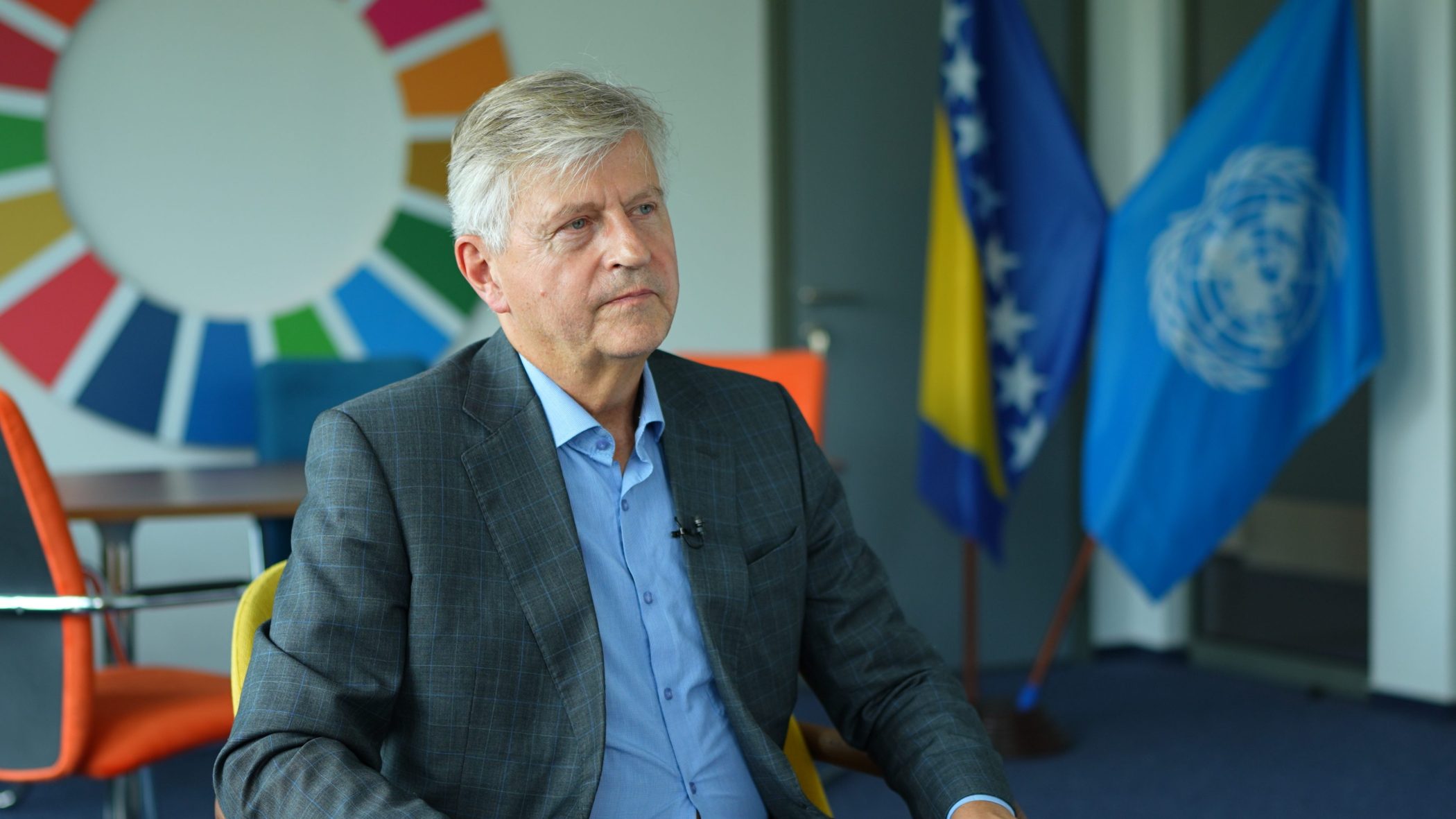
In an interview with Detektor, the Under-Secretary-General for Peace Operations said experiences from Bosnia and Herzegovina, as well as other post-conflict societies, have shown peacebuilding is a long and complex process requiring political will, international support, and the involvement of the entire society.
“It takes time, and I think that is an important lesson for all of us. Patience, but not only patience of course, because patience does not mean passivity. Patience, political will, support, commitment,” he said.
Lacroix said lessons have been learned from tragic events in BiH, not only for that country, but globally. He said that after speaking with peacebuilding experts in BiH, it was clear that challenges still exist, and that building trust is vital.
“Denial of war crimes is unacceptable and cannot in any way lead to better understanding or a more sustainable peace environment,” he said. Lacroix recognised that younger generations in BiH, born after the war, are growing up with conflicting narratives about the past.
He has observed this same dynamic in other post-conflict situations where he said young people from different communities or backgrounds are taught different narratives that do not necessarily lead toward peace or reconciliation.
Lacroix said these narratives are also important in conflict prevention, a strategy which the UN and the Secretary-General have both prioritised.
“One of the key things that we have to look at today is how to contain, prevent, react to and counter negative narratives.” He explained that this is not only about historical or school textbooks, but due to the fact that everyone now lives with social media.
“We have very powerful social networks now. And we all know that they carry negative messages. Most of them are engineered in a way that promotes negative narratives. I believe that this is one critical area where we have to work collectively to counter this as much as possible,” he said.
Lacroix emphasised the importance of international community support in BiH, but also what Bosnians could do for the rest of the world. Asked what his message to young people in BiH was, he said: “I think the message is that in today’s world there are many opportunities. It is a more open world. It’s a world where I believe Bosnia has a great potential and a role to play, not only in the region, but beyond,” Lacroix said.
He cited the participation of young people from BiH in peacekeeping operations. “That is just one example, but I am sure there are many other areas of activities where young people can thrive and look forward and go beyond what obviously are difficult lessons and stories of the past.”
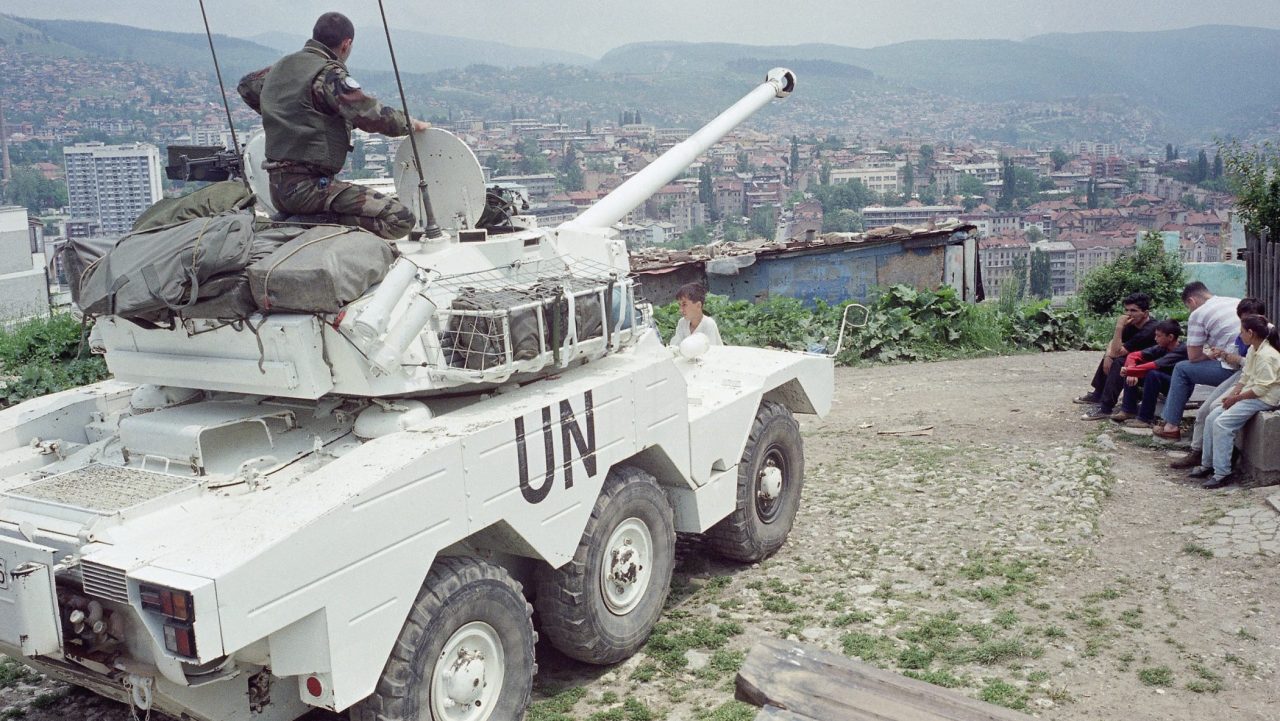
UN peacekeeper above Sarajevo in May of 1995. Photo: AP Photo/Jerome Delay
Lacroix addressed BiH’s participation in major peacekeeping missions around the world, adding that he had seen a transition from a country hosting peace operations to one providing support to them. He said that despite divisions that may still exist in BiH, there is a willingness to contribute to peace in other parts of the world, such as in Sudan.
“One of my messages to interlocutors was that it is symbolic and has a lot of value to see a country that has been the recipient of a UN peace operation, and still has issues to resolve, but at the same time is a provider to peace operations,” he said.
It is crucial in UN and peace operations, Lacroix said, to have as many countries contributing troops and police as possible, because “the greater and the bigger the constituency and support of peacekeeping is”.
This cooperation, he said, does not just need to be maintained, but expanded in different areas, such as increasing the number of individual military officers and units. Lacroix noted that BiH had already pledged such units at the ministerial meeting on peacekeeping in Berlin last year.
Lacroix stressed that a narrow approach to peacebuilding is insufficient: improving inequality, development, and social exclusion can help the process. Preventing conflict also involves engaging civil society, especially women and young people. “It is demanding, it takes patience. It takes a lot of attention, but we are committed to prevention and we do believe that yes, there has to be more efforts on fostering prevention.”
Modern UN peacekeeping missions, he noted, face numerous operational challenges from tech, such as drones, cyber threats and disinformation. Added to this there is a growing influence of conflict drivers like international terrorism, climate change, and transnational crime, all of which require attention.