




This post is also available in:
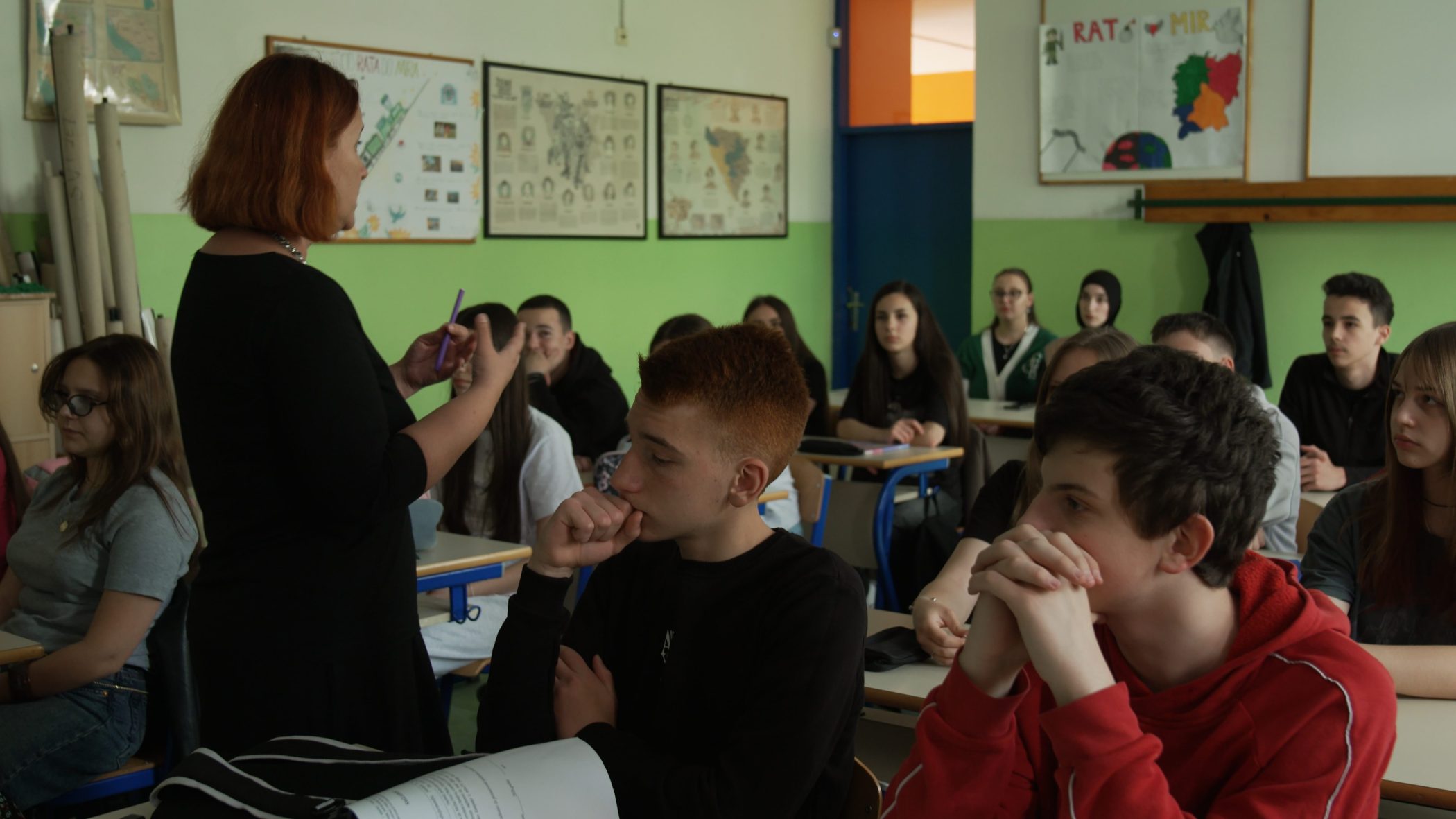
The school bell marks the beginning of class – but this time it’s a different kind of lesson for the ninth-grade pupils at the Nafija Sarajlić Elementary School in Sarajevo.
Gathered in front of their history teacher, they’re attending a model class held by a professor who has come from Sarajevo University’s Faculty of Philosophy to talk to them about the wartime past. Up to this point, they have only learned about the 1990s at home, listening to the stories of their parents and grandparents.
On the blackboard, history professor Melisa Forić Plasto chalks up words that the pupils associate with childhood: “happiness”, “play”, “carefreeness”, “friendship”, “freedom”. The classroom seems cheerful for a few minutes. And then the lesson takes on a different tone.
They are shown video testimonies of surviving victims of genocide, parents and siblings of their peers from all parts of Bosnia and Herzegovina who were killed in the war, as well as children who were deprived of their parents and the safety of home. Silence falls on the classroom as they try to understand where the words written on the board have disappeared to and how so many childhoods were cut short.
“Did you feel hatred in these stories?” professor Forić Plasto asks after the video testimonies.
“No, only sadness,” the pupils reply, almost in unison.
These are video testimonies from the Database of Facts Established by Courts About the War in Bosnia and Herzegovina, adapted to their age, but containing sufficient material for them to learn a lot in a way that interests them. Their textbooks so far have not offered them much information or stories they could identify with.
“When I first started teaching history, about 15 years ago, it was very difficult to hold such classes, because the lack of information was evident, and the curriculum also limited us in doing this,” says teacher Merima Jašarević, explaining that there wasn’t enough lesson time set aside for these topics.
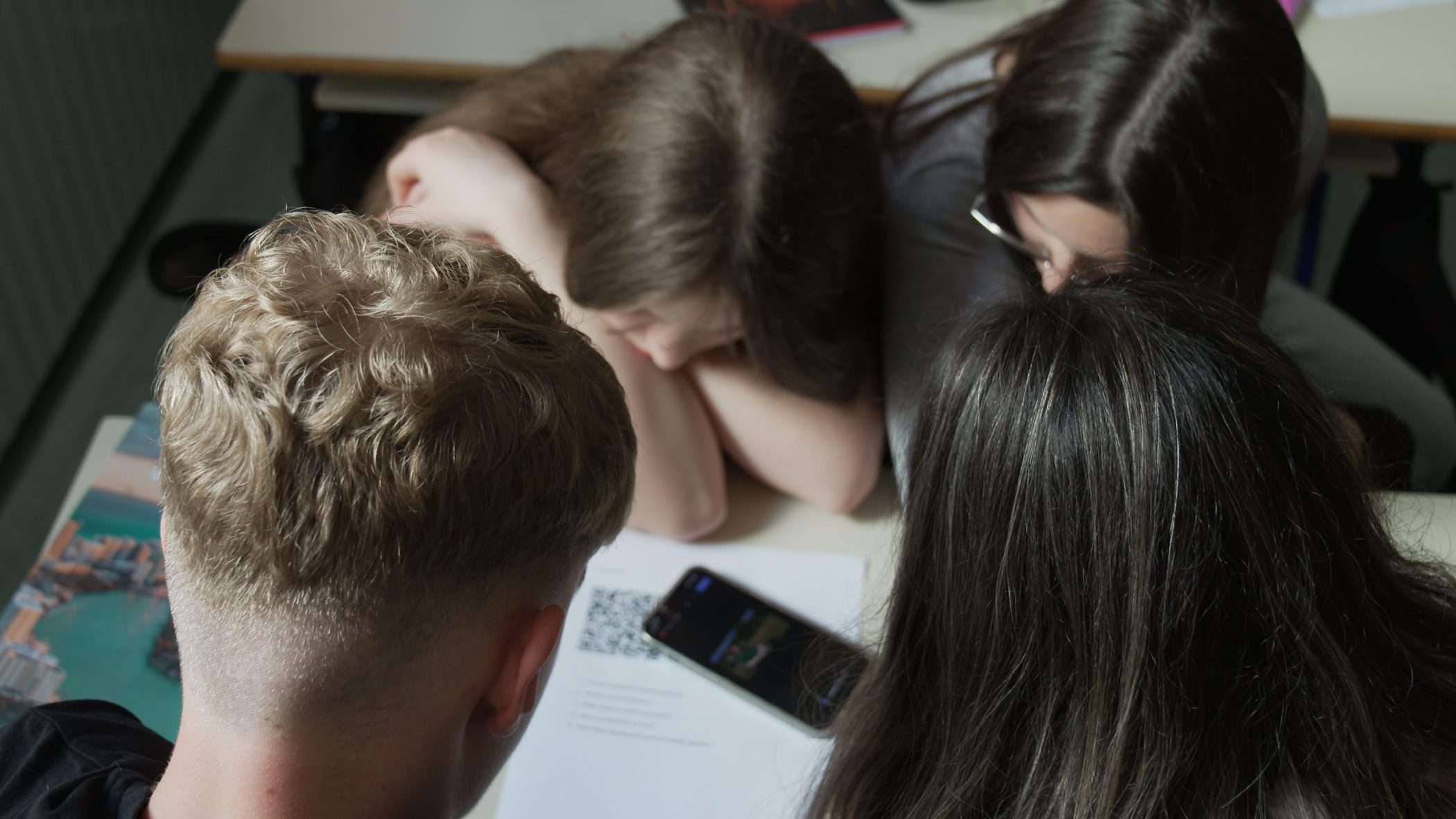
Učenici gledaju svjedočenja. Foto: Detektor
The class was held just a few days before the second anniversary of the adoption of the Resolution on the Srebrenica Genocide at the United Nations General Assembly. Detektor’s journalists are surprised that the elementary school pupils know about the document that advises member states to provide education about the killing of more than 7,000 men and boys in July 1995 in Srebrenica and to raise awareness about the genocide.
“I have heard of the Resolution on the Genocide in Srebrenica, it happened in 2024, I think, on May 23rd. In total, 84 countries participated, of which only 19 in the whole world were against Srebrenica being recognised as genocide,” says Samir Čavrk, a ninth‑grade pupil at Nafija Sarajlić Elementary School. His answer comes confidently, almost as if learned by heart.
In the practical part of the class, the pupils are divided into groups and watch video testimonies from survivors of the Srebrenica genocide. While presenting what they saw in the video testimony of one survivor, Nedžad Avdić, the pupils recount the details of his capture, execution by firing squad and escape. They talk about the moment when, as they recall, “he asked for a drop of water so he wouldn’t die of thirst”. All of them remembered that detail.
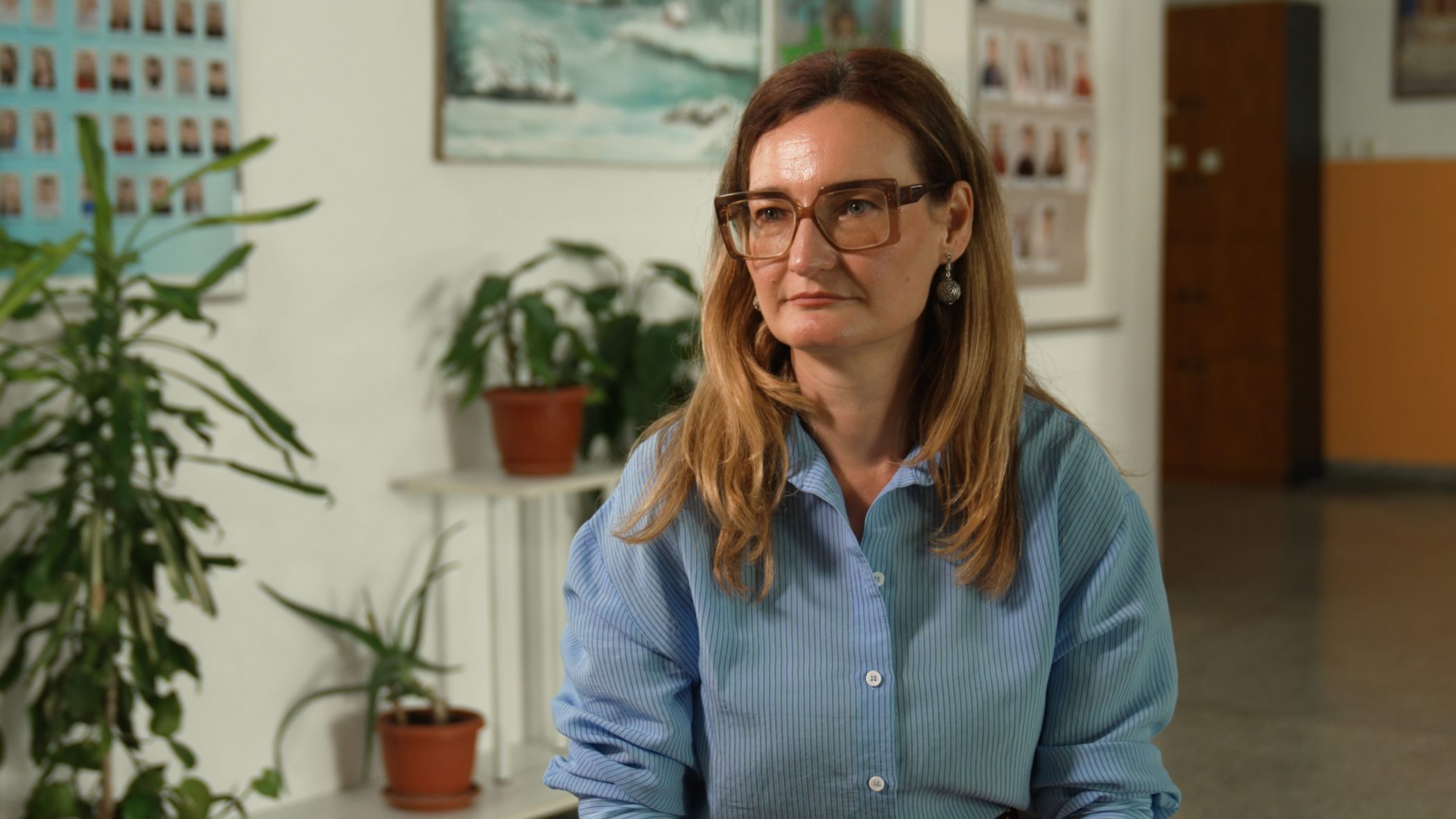
Merima Jašarević, profesorica historije u Osnovnoj školi “Nafija Sarajlić”. Foto: Detektor
Their teacher says that after the videos she directs them to talk to their parents.
“Ask your parents, ask your grandmothers and grandfathers what memories they have. What do they remember best? What hurts them the most? How open are they in communicating with you? I try not to give them too much, I don’t want to make them sad, I don’t want to show them how hard it was for their parents and their grandmothers and grandfathers, but I want to make them aware … that everything we went through in the 1990s is still happening somewhere today,” Jašarević tells Detektor.
Professor Forić Plasto reminds the class that Avdić was a boy in July 1995, separated from his family in Potočari, one of the few who survived the execution.
“That could have been us, not just them,” says one pupil during the discussion about the war and its consequences.
For these children, war is not just a lesson from a textbook. Many of them grew up with family stories of the Sarajevo siege, the shelling and the detention camps.
“My grandfather was in a camp for two years,” says pupil Davud Muharemović. He explains how his parents lived on humanitarian aid and how shells and snipers were an everyday problem. He says his parents toned done some of the harsher facts when he was younger, but that the war was always talked about in their home.
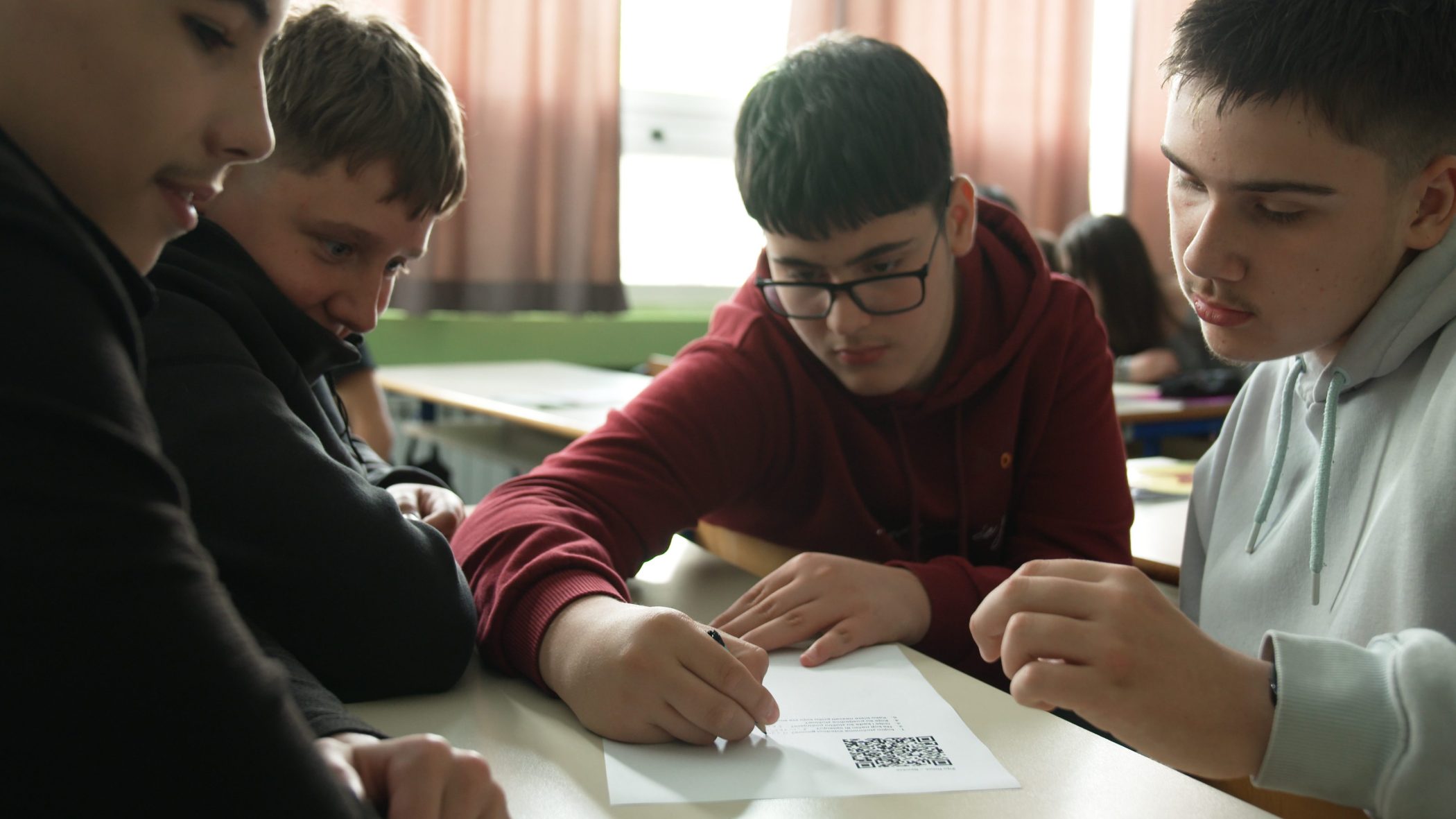
Davud Mahmutović, učenik Osnovne škole “Nafija Sarajlić”. Foto: Detektor
After the model class, he says he realised that people across Bosnia and Herzegovina were fighting to survive in almost impossible conditions.
His classmate, Ilhan Kožljak, says that he often asks family members about their memories from the war, but that they mostly try to show him “the better sides” in order to protect him from the most troubling details.
Professor Forić Plasto says that the Database of Facts Established by Courts is much more than an archive – it’s a tool that brings history closer to pupils through genuine human stories.
“The Database is a fantastic resource, not only for researchers but primarily for educators and pupils,” says Forić Plasto, who created a teacher’s manual with instructions on how to conduct classes along with the Database.
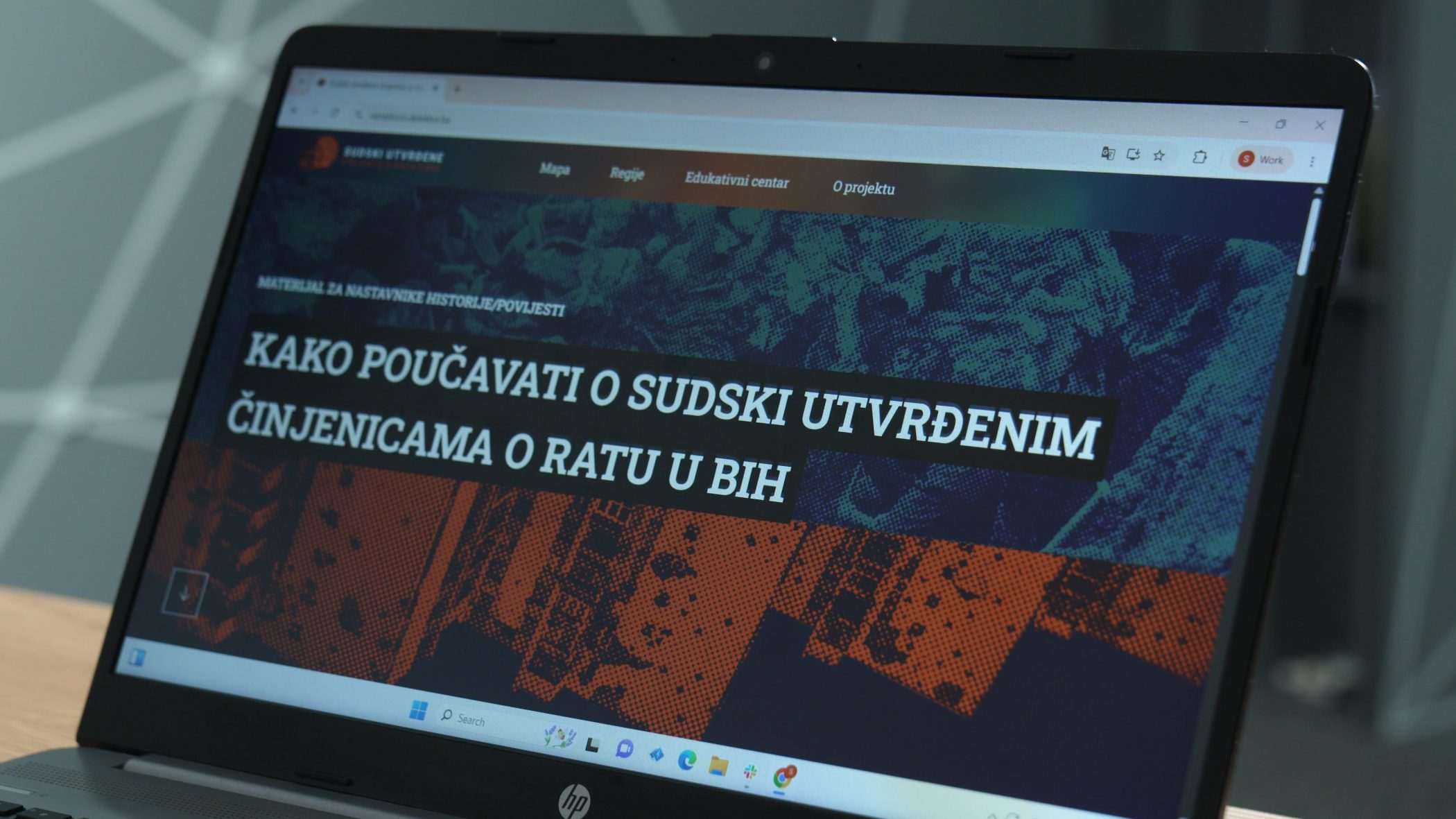
Baza sudskih utvrđenih činjenica. Foto: Detektor
The Database was created with the support of the United Nations Secretary‑General’s Peacebuilding Fund, together with the Srebrenica Memorial Centre and the Forgotten Children of War Association. As well as educating young people, it is intended to combat the denial and relativisation of verdicts, as well as to build peace and mutual understanding.
As the class ends, the pupils are still standing in front of the board on which they have written messages about the importance of learning about the war.
“So that it never happens again,” one of them has written.