




This post is also available in:
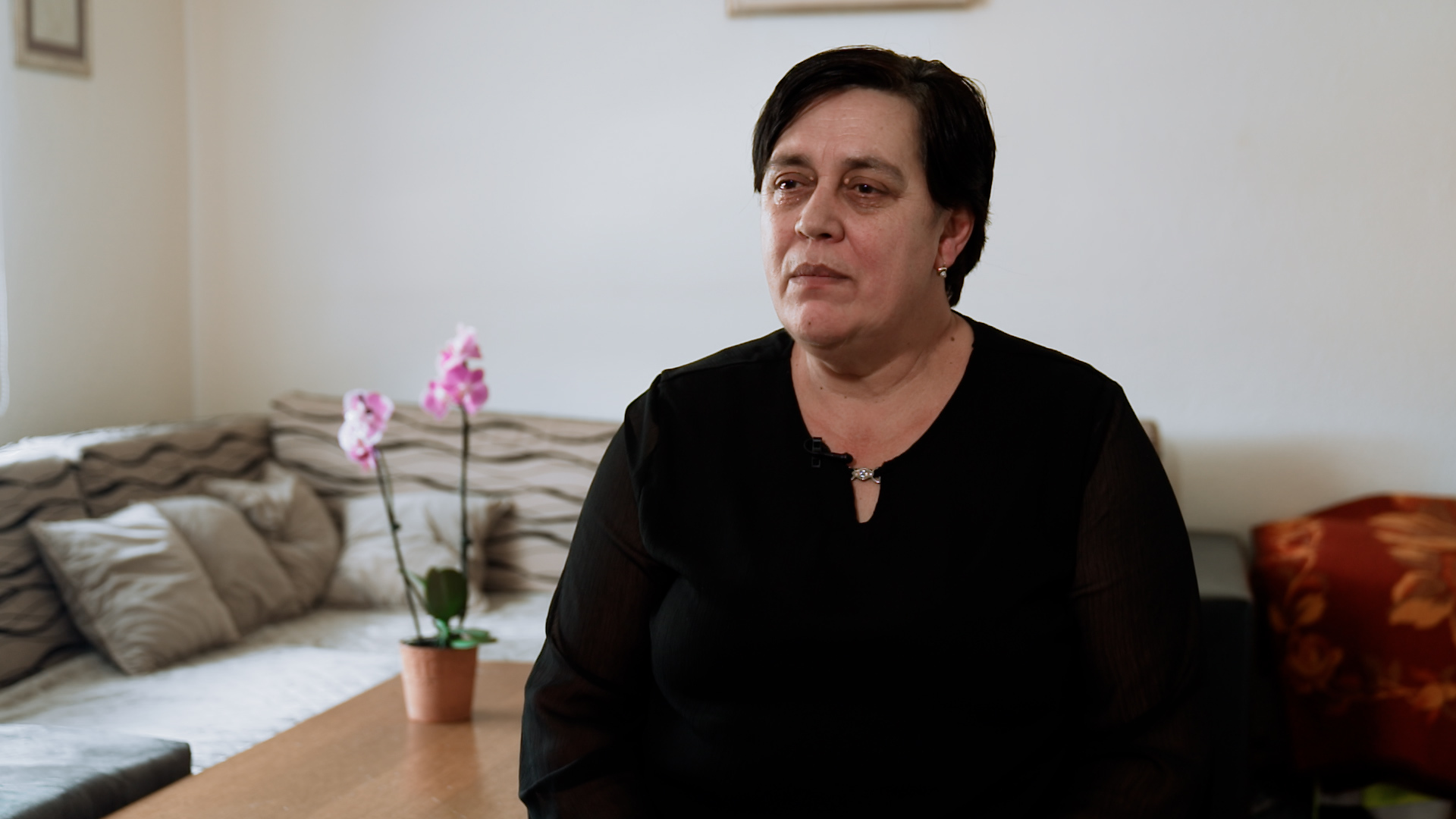
In 1992, when a survivor of war crimes who spoke to Detektor was 14-and-a-half years old, the war started in the village near Bratunac where she lived with her family. Speaking anonymously to protect her identity, the survivor recalls how she and her family were forced out of their house, which was then set on fire. As they headed towards the road, soldiers singled out the girls and led them towards the forest. She was among them.
“I didn’t know if I would get out of that forest, or where they were taking us. I was being threatened with a knife,” she says.
“There were maybe 15 of them, how would I know how many now, those soldiers of theirs – who were masked. I couldn’t even look that much. They didn’t let me look that much. There were all sorts of things. They were looking at me and then they were saying all sorts of things, cursing. So it was like all sorts of things one after another,” she continues, recounting the trauma she experienced as a girl, which she has carried with her ever since.
As well as disrupting her childhood and her education, the experience has left consequences for her health. Among other problems, she suffers from damaged vertebrae and a damaged spine. She went to do physical therapy at a health centre, but to continue treatment, she needs to go to a spa for rehabilitation, which she is unable to pay for.
More than two years have passed since the Law on the Protection of Civilian Victims of War entered into force in the Federation entity, formally establishing civilian war victims’ rights. The law, for the first time in the entity, envisages the right to thermal spa treatment and medical rehabilitation.
However, in practice, not one civilian victim of war has been able to exercise this right so far. Today, many wartime rape victims are in the 50-plus age group, and the accumulated consequences of the trauma they suffered, combined with advancing age, are having a significant impact on their medical conditions. Some are having strokes and heart attacks, and suffering from hypertension, cancer and other afflictions.
“The doctor rejected me, he didn’t want to fill [the form] out, he said: “It’s useless filling it out, you will not be able to get that spa treatment, many can’t get it, those who don’t have arms, legs, who are more damaged.” He doesn’t know what I’ve been through. I didn’t tell him all that, but what I care about is if I have the right to it as a civilian victim of war. I said: “You fill out that form for me, I’ll take it and if they reject it, so be it. So I didn’t go anymore,” said the survivor who spoke to Detektor.
She told Detektor that because of the shame she felt, she hesitated to tell her story for a long time.
The Federal Law on the Protection of Civilian Victims of War isn’t being implemented – either because not all of the country’s cantons have fulfilled their obligation to harmonise their legislation with the law, or because the cantons have different approaches, or because they haven’t established mechanisms to implement the law at all, particularly the right to spa treatment.
“How can I go to a spa? I haven’t got the money, I can’t get it together right now, at this very moment, I can’t get enough to go to a spa,” the survivor who spoke to Detektor said.
Arijana Gutic-Memic, a legal adviser at the Foundation of Local Democracy, says that the law provides for a set of rights of civilian victims, such as a personal disability allowance, orthopaedic supplements and care and assistance, but it is envisaged that 70 per cent of this is to be financed from the Federal budget and 30 per cent from cantonal budgets.
The Federal Law provides for a set of supplementary rights, including the right to thermal spa treatment and medical rehabilitation, which must be regulated according to cantonal regulations and financed from cantonal budgets. Supplementary rights include, among other things, priority when accessing health services, covering funeral expenses, housing assistance and free legal aid.
Survivors of wartime sexual violence should, by law, have priorities when using healthcare services such as mammograms or CT scans.
“In these last two or two-and-a-half years, there has been a slowdown because cantonal regulations have not been harmonised at the level of all cantons, so bylaws haven’t been enacted there and civilian war victims haven’t managed to get spa treatment, medical rehabilitation – this was extremely important to them when they saw that they could get it,” said Gutic-Memic.
Ajna Mahmic Catic, legal coordinator of Trial International’s office in Bosnia and Herzegovina, explains that if a civilian victim of war exercises the right to spa rehabilitation through the Law on Civilian Victims of War, then the cost of the spa is borne by the canton within which the patient submitted the request to exercise the right, because according to the law, the fiscal authority and budget planning for the realisation of this right is the responsibility of the cantons.
“Why should there be coordination at the Federal level, both in terms of access to the right and budgeting for the right by the cantons? Because currently, in the ten cantons that we have, even if we were to create programmes for spa rehabilitation, there is the freedom for each of them to regulate it differently,” Mahmic Catic stated.
Adisa Likic, president of the Zvijezda Women’s Association from Vares, says that her organisation encountered a woman who has problems with her spine and had also had a stroke, and requested thermal spa treatment under the law, but never got a response.
“In practice, nothing happens, because it has been left to the cantons. For those spa treatments, there isn’t even a budget allocated at the cantonal level for women to submit their documentation. And so it turns out that this law exists only on a piece of paper that’s lying somewhere in a drawer,” Likic said.
Mahmic Catic says thermal treatment is one of the priority rights afforded to survivors, and that for years her organisation has been stressing the need to treat the psychological and physical consequences of trauma.
“It’s really a big step forward that the law provides for this right. However, particularly because it’s a very specific right, which can be regulated both programmatically and institutionally, we are encountering a problem with the lack of adequate systems within cantonal and municipal bodies to enable this right to be implemented,” says Mahmic Catic.
Thermal spa treatment, as provided for by the Law on Civilian Victims of War, is an important form of rehabilitation that can alleviate the physical and psychological consequences of trauma and contribute to survivors’ quality of life. A sensitive approach is crucial to overcome stigma, discrimination and administrative obstacles and enable the survivors to get what they are entitled to strengthen their trust in institutions.
Gutic Memic believes it’s necessary for officials who come into contact with war victims, in addition to providing services, to have a sensitive approach and show understanding. In most cases, war victims need to speak about the broader picture around their problem, not just what they need at that specific moment, she adds.
Bosnian society is still full of prejudice, and for war victims, even have to stand in queues, hear doors slamming or other noises can be retraumatising.
Psychologist Alma Taso Deljkovic says that it’s very important that the right to rehabilitation is being recognised under the law, but many obstacles exist to the realisation of this right. Taso Deljkovic says that it’s also necessary to consider war victims who do not live near health centres. She argued that they should have priority when accessing health services.
“It’s necessary to do continuous rehabilitation and to somehow treat and empower people in this way because this is the path to healing. It’s not only the psychological part, but it also needs to be rounded off with the health part. Trauma doesn’t only affect the psyche, but affects a person’s entire being,” argues Taso Deljkovic.
She says the financial issue is very important, particularly for civilian victims of war, who find it very hard to finance spa treatment independently. In most cases, war victims cannot afford this type of rehabilitation themselves.
“Going to a spa is not a luxury; it’s not a luxury for them. It’s a necessity for them. Something they need to round off their healing in order to become functional,” Taso Deljkovic concludes.
***
This article was supported through the Platform for Gender Justice project, implemented by UN Women with the support of the United Kingdom. The views and opinions expressed are the sole responsibility of the author and do not necessarily reflect the views of the UK Government or UN Women.