

This post is also available in:
Almost 30 teachers attending the first in a series of trainings on “How to Learn and Teach About the War in Bosnia and Herzegovina” from January 12 until January 14, organised by the Balkan Investigative Reporting Network of Bosnia and Herzegovina, BIRN BiH, the Srebrenica Memorial Center, and the Association Forgotten Children of War, visited the former Partizan and Luka detention camps in Brcko. The visit was organised by Senad Osmanovic, Head of the Education Department of Brcko District, and former Luka camp detainee Amir Didic.
In front of the detention camp where the Fourth Elementary School in Brcko is located today and the Partizan facility, they recalled how their fellow citizens were beaten up and killed at these places during 1992, despite the facilities being in the town centre and not far from the police station.
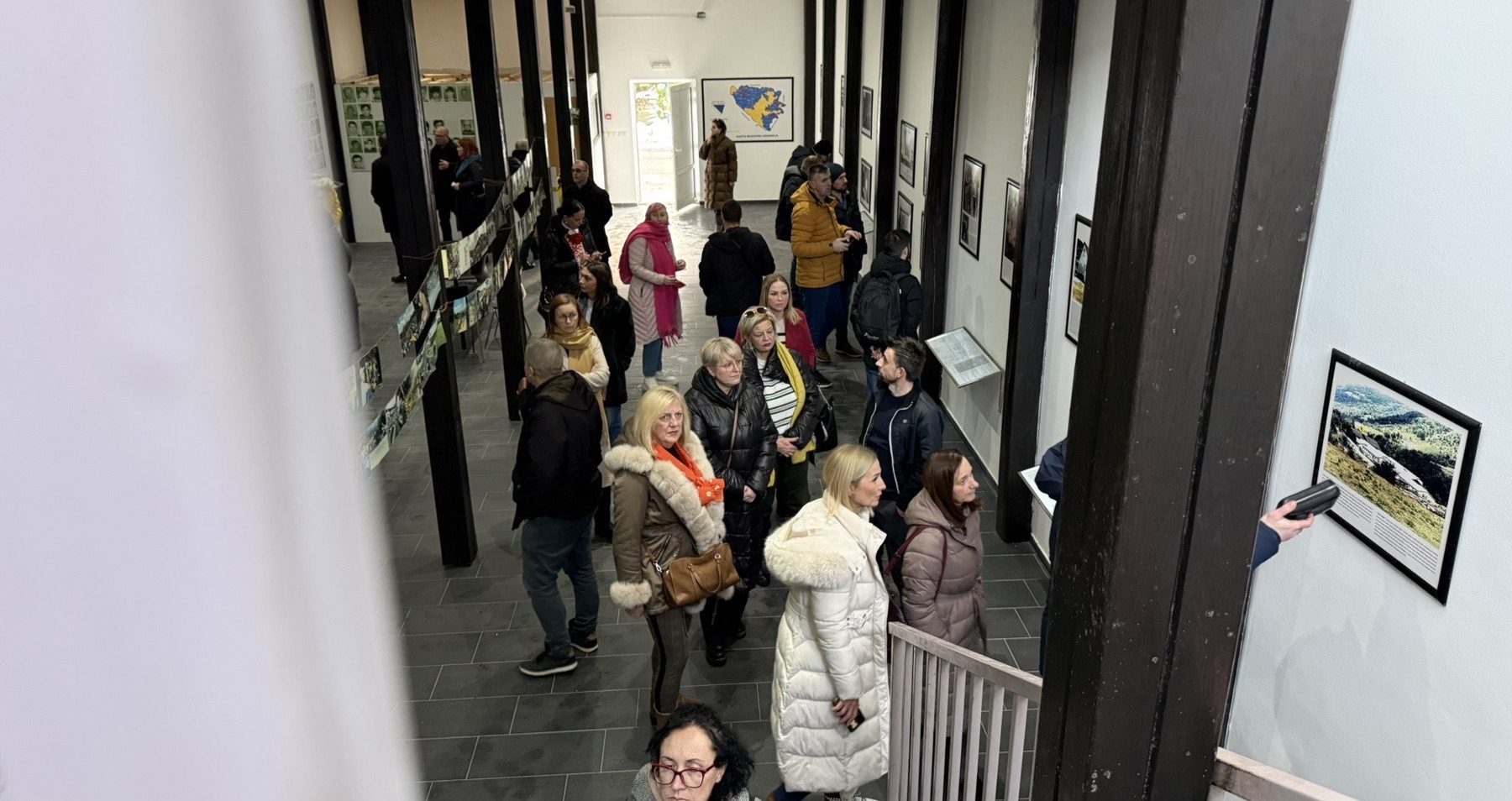
Luka detention camp in Brcko. Photo: Detektor
Almost 30 teachers attending the first in a series of trainings on “How to Learn and Teach About the War in Bosnia and Herzegovina” from January 12 until January 14, organised by the Balkan Investigative Reporting Network of Bosnia and Herzegovina, BIRN BiH, the Srebrenica Memorial Center, and the Association Forgotten Children of War, visited the former Partizan and Luka detention camps in Brcko. The visit was organised by Senad Osmanovic, Head of the Education Department of Brcko District, and former Luka camp detainee Amir Didic.
In front of the detention camp where the Fourth Elementary School in Brcko is located today and the Partizan facility, they recalled how their fellow citizens were beaten up and killed at these places during 1992, despite the facilities being in the town centre and not far from the police station.
“No one reacted,” Osmanovic told the teachers, adding that, unfortunately, many people who went missing from the Brcko District are still being searched for.
Walking towards the former Luka detention camp in Brcko, the teachers spoke to Didic, who had been detained and tortured there aged only 23.
“Every visit means a lot to me and all detainees, to spread the truth,” Didic said.
As they looked at pictures of the suffering and the missing in the former Luka detention camp premises, the teachers, from Tuzla, Bihac, Sarajevo, Cazin, Bijeljina, Travnik, and other cities, said it was unimaginable that someone could commit such crimes, and that just visiting the place left a huge impression on them.
“I have visited many different detention camps, but I must admit that this has affected me emotionally,” said teacher Amila Kunosic from the Centar Elementary School in Tuzla.

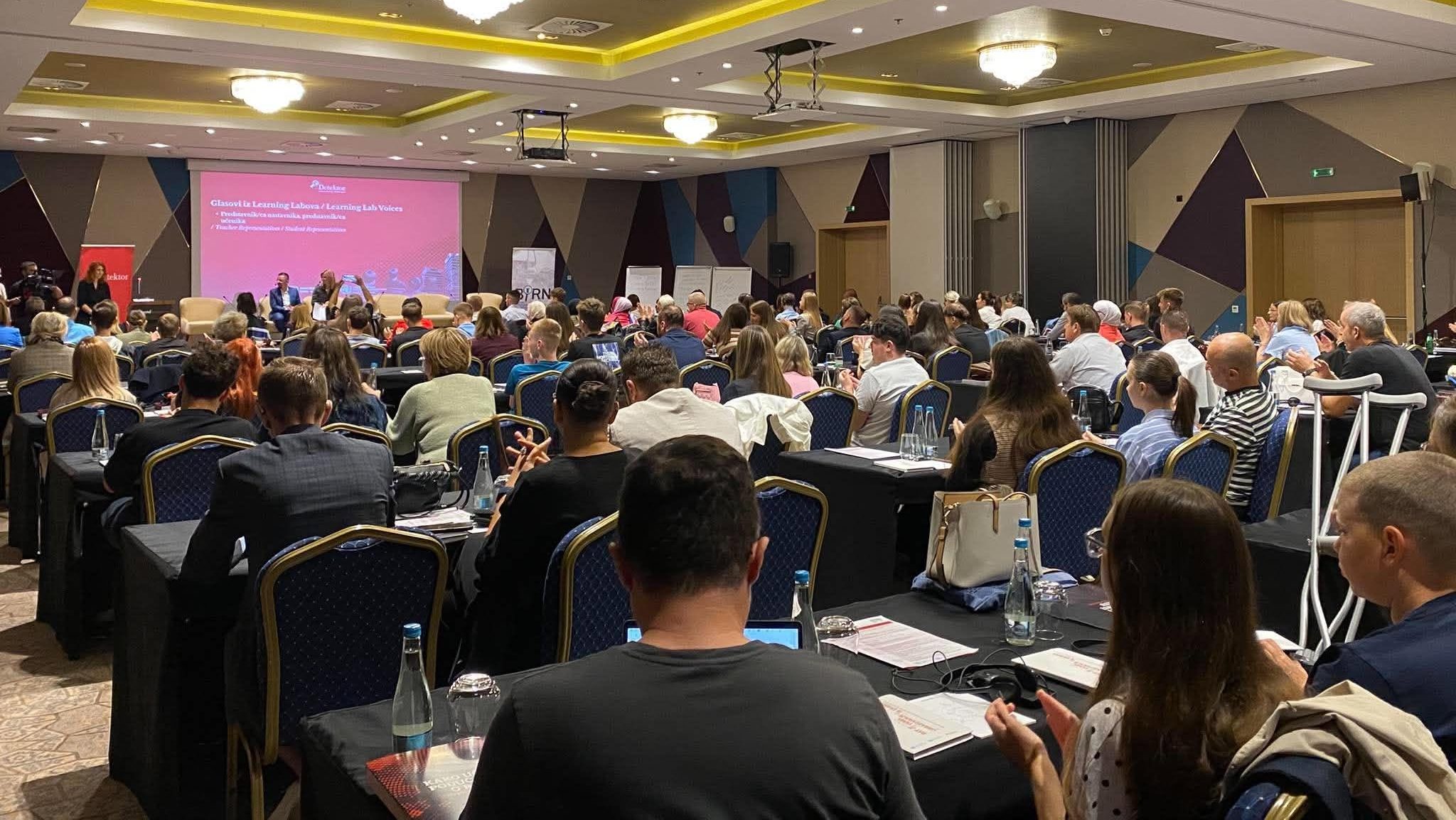
Training “How to Learn and Teach About the War in Bosnia and Herzegovina”. Photo: Detektor
According to the Database of Judicially Established Facts, created with the help of the United Nations Secretary-General’s Peace Building Fund, PBF, through the project “Building Long-Term Peace in Bosnia and Herzegovina: Investing in the Future”, from May 3, 1992 onwards, in Brcko Municipality, Serbs detained primarily Bosniak and Croat civilians at 14 locations. They included the Brcko Public Security Station, the Laser bus company, the Partizan sports hall, the Vestfalija restaurant, the football stadium, the elementary school in Loncari, the Pelagicevo agricultural cooperative store, the mosque in Kolobare, the Posavina hotel, the hospital in Brcko, the fire station, the JNA garrison, and the Luka detention camp.
The Hague war crimes court established that from May 8 to June 6, 1992, a large number of people were shot and killed in the Luka detention camp, and that, in addition, detainees were interrogated and abused. Those killed were buried in graves, or their bodies were thrown into the Sava River.
The training participants discussed these and other facts with transitional justice experts and BIRN BiH journalists, who prepared video content for use in classes and drew the conclusions of the trial chambers concerning the wartime events from all verdicts. The materials are adapted to all ages and are available for free. The teachers talked about the methodology and conduct of such classes with history professor Melisa Foric Plasto, who has created a manual for teaching about the war. A special segment of the training was dedicated to genocide, which the teachers discussed with Muamer Dzananovic, co-author of Handbook on Srebrenica – From Siege to Genocide.
The biggest concern for all teachers is how to rise above personal experiences and remain professional during classes while discussing such sensitive topics, and how to properly talk about them with students, for which trauma expert Azra Frlj was at their disposal.
On the third day of the training, a special focus was on sexual violence, specifically on children born as a result of war, with members of the Association “Forgotten Children of War” assisting teachers at the workshop.
“The training is great. I will greatly use the workshops that you have shown us, and show the same to the students. It is much better than the traditional way of teaching,” said Amila Kunosic.
Nedzad Kapidzic, a high-school teacher from Travnik, said that teachers also needed to adapt to new generations and this kind of training is useful for class preparations and new knowledge, “so that no one is offended while speaking about the truth and what has been judicially established, which is not my opinion or that of my colleagues but the facts,” Kapidzic said. He pointed out that teachers are obliged to educate themselves and adapt to new generations who were not born during the time of the Bosnian war and mostly have gained knowledge only from their families.
The training, which will be held also in Zenica and Mostar after Brcko, is intended for history teachers and focuses on the practical use of the Database of Judicially Established Facts about the War in Bosnia and Herzegovina and on the handbook, How to Learn and Teach About the War in Bosnia and Herzegovina.
“The goal of the training is to empower teachers to use factual, verified, and multi-perspective approaches in studying contemporary history and to develop critical thinking and empathy for all victims among students,” said BIRN BiH project manager Mirza Halilcevic.