




This post is also available in:
A year and a half ago, Adi Ferizovic decided to sell his hockey stick on PIK, the former OLX [online classifieds platform]. He would usually wait several months for a buyer, but this time a message came right away.
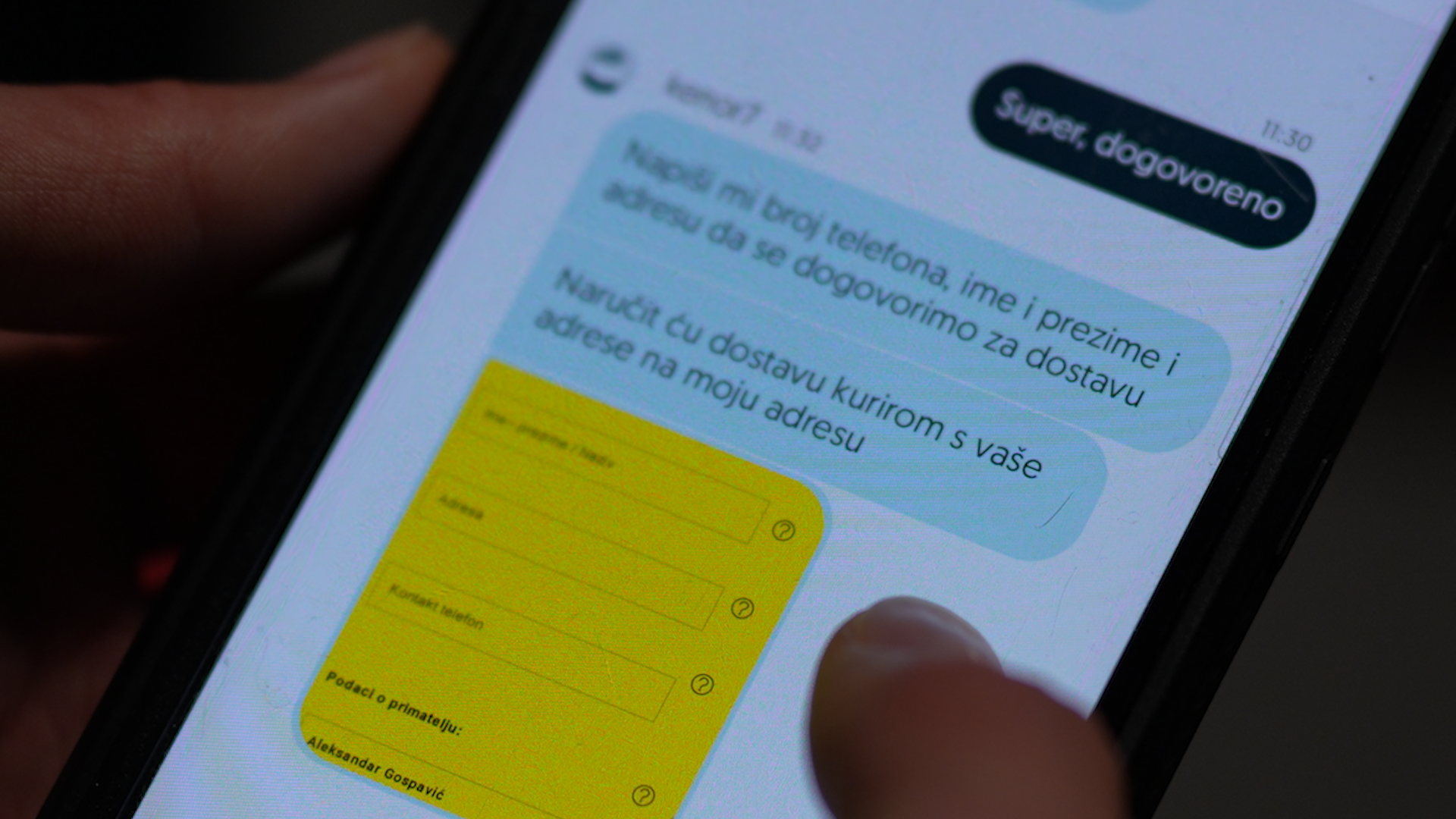
“The message said: ‘Hello, is the product still available?’ I replied: ‘Yes,’ because it had just been posted an hour earlier. After that, they sent me a link where I had to fill in certain details, like my bank account number and a couple of other pieces of information. I can’t remember exactly now. But at that point, it didn’t raise any red flags for me at all,” the Detektor Magazine interviewee said as he started telling his story.
He thought it was just a regular, quick online sale, but a few moments later he realised that he had entered his personal information on a fake express mail link designed to harvest data and steal money from bank accounts.
“I was momentarily really naive, because I was like, ‘Great, I’ll sell this product really quickly.’ And I entered that information without even thinking about the possible consequences,” Ferizovic recalls.

Adi Ferizović. Photo: Detektor
Suspicion quickly arose when he remembered the experience of a friend who had told him that when selling on OLX, you never enter any personal information, and the whole sale process happens exclusively through the platform.
“I called my mum to check. She said, ‘Son, are you aware that there are online scams and that we’re constantly getting notifications from the bank and via SMS saying don’t enter any information.’ At that point, I was like, ‘No, what should I do now?’” Ferizovic said.
In his case, the worst possible scenario was avoided by his quick reaction – withdrawing money from the account and blocking the card.
These kinds of attempts aren’t isolated incidents, but part of a well-established network of online scams that cleverly exploit the popularity of platforms like domestic company OLX, or PIK.ba, to extort sensitive data. The people behind these efforts have gone a step further, with the scope of scams expanding to involve simulations of some institutions in Bosnia and Herzegovina, something that digital security experts are also warning about, pointing out that messages like this can be recognised.
Everyone is a potential victim
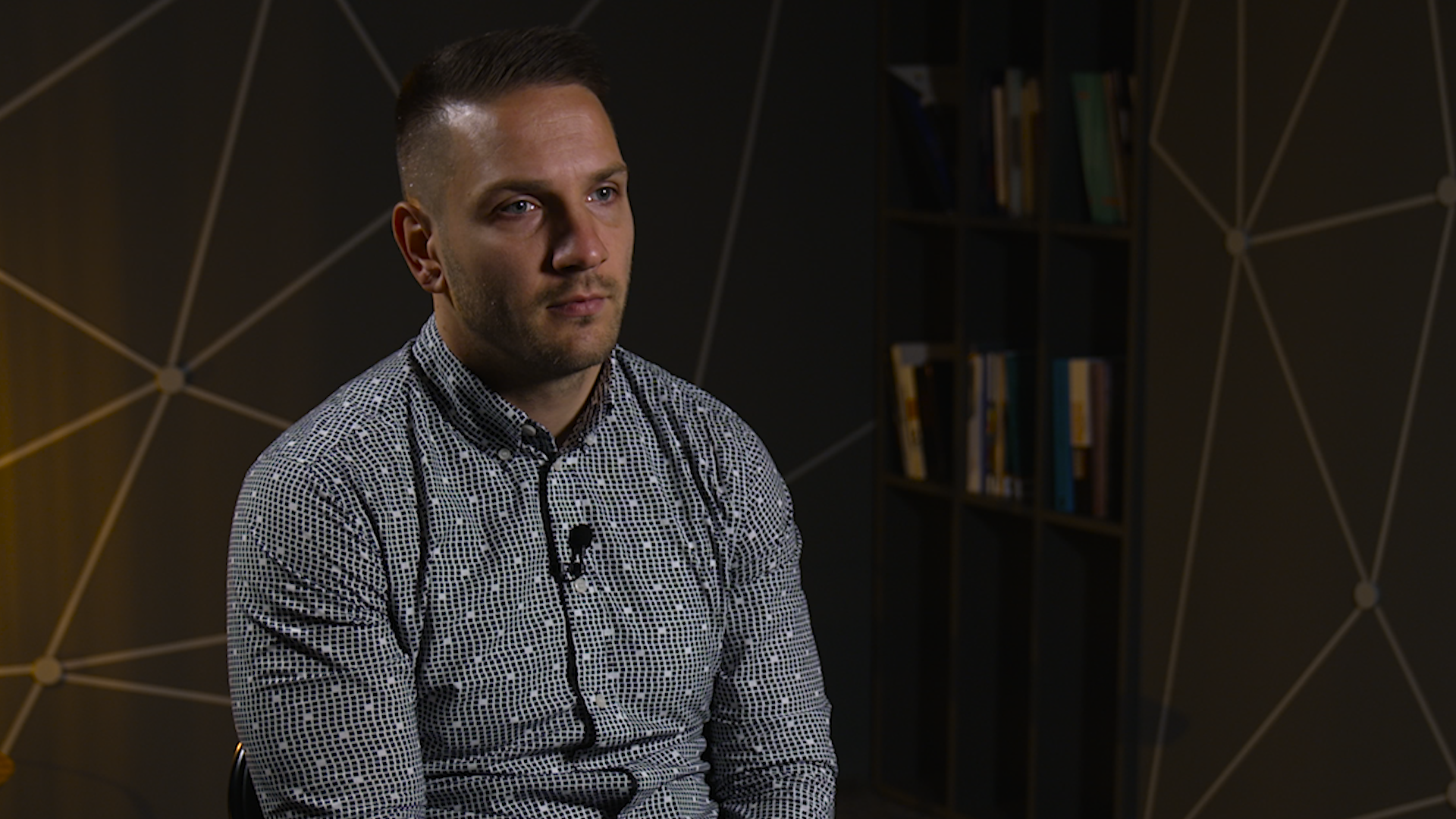
Semir Dedić, president of the Association “e-Transformacija”. Photo: Detektor
Semir Dedic, president of the e-Transformacija association, explains that we can recognise such attacks because they usually demand an urgent, immediate reaction and data they shouldn’t be asking for.
“For any payment to someone, for all of us, an account number is enough. Any other data they ask for probably points to a scam. As a rule, it’s something that requires an urgent reaction, and it’s always best to try to check it,” said Dedic.
Dedic points out that everyone is a potential victim because attackers depend on psychological triggers, not just on our technical literacy or illiteracy.
“They rely on a whole range of small psychological triggers to take advantage of our momentary lack of attention, our trust in an institution,” he says, emphasising that the most important thing is to check the source of where the information comes from and not leave your personal data online because these days, with the help of artificial intelligence – which enables cheaper scams with much less effort, fewer resources and less time – the attackers can personalise these scam attempts.
If you get an alleged message from the bank, he says, call the bank’s number -not from the message, but the one from the official website – and check if it’s really the bank that is contacting you.
Domestic trading platforms affected
Aida Raonic, the head of the marketing department at PIK.ba, says that it is one of many platforms affected by this epidemic of scams, and that no one is invulnerable, but that it is working daily to educate users about the importance of online safety
“The difference between us and other platforms is that we are a domestic company and we have the mechanisms to act immediately,” Raonic explains.
According Raonic her, PIK.ba informs users every day through blog articles about the ways that scams are constantly changing, both in appearance and by using methods that seem quite authentic.
“Through our blog articles, through the help given to our users, through our social media accounts, in the messages themselves and in the messaging system, we automatically recognise when someone is a potential scammer and we suspend them, while also sending a message to our users that the person has been suspended for attempting to commit fraud,” Raonic explains.
She emphasised however that the platform’s protection mechanisms operate within its own infrastructure and that it cannot offer protected communications on other platforms.
“Our ‘responsibility’ is for everything that happens on our platform, up until the moment our user leaves and continues the conversation outside of our platform. What does that mean? Most of the time, the communication starts on PIK. Then it continues on other platforms, like Viber, WhatsApp or SMS, where we lose the ability to track what happens next,” she stressed.

Aida Raonić, the head of the marketing department of PIK.ba. Photo: Detektor
Mamer Bajrami from the Federal Police Administration says that police have noticed a slight increase in online scams related to buying and selling, but the force doesn’t have official statistics, as each canton and police administration maintains its own data.
In Bajrami’s opinion, the very fact that someone is sending a link in which you have to fill out your details to receive money suggests that it’s probably a scam. He adds that, according to police information, the people involved are not located in Bosnia and Herzegovina.
“In cooperation with partner organisations, we’re working on documenting these crimes and identifying the perpetrators, and we’re doing our best in relation to these cases,” Bajrami explained.
Scammers ask for swift response – and bank details
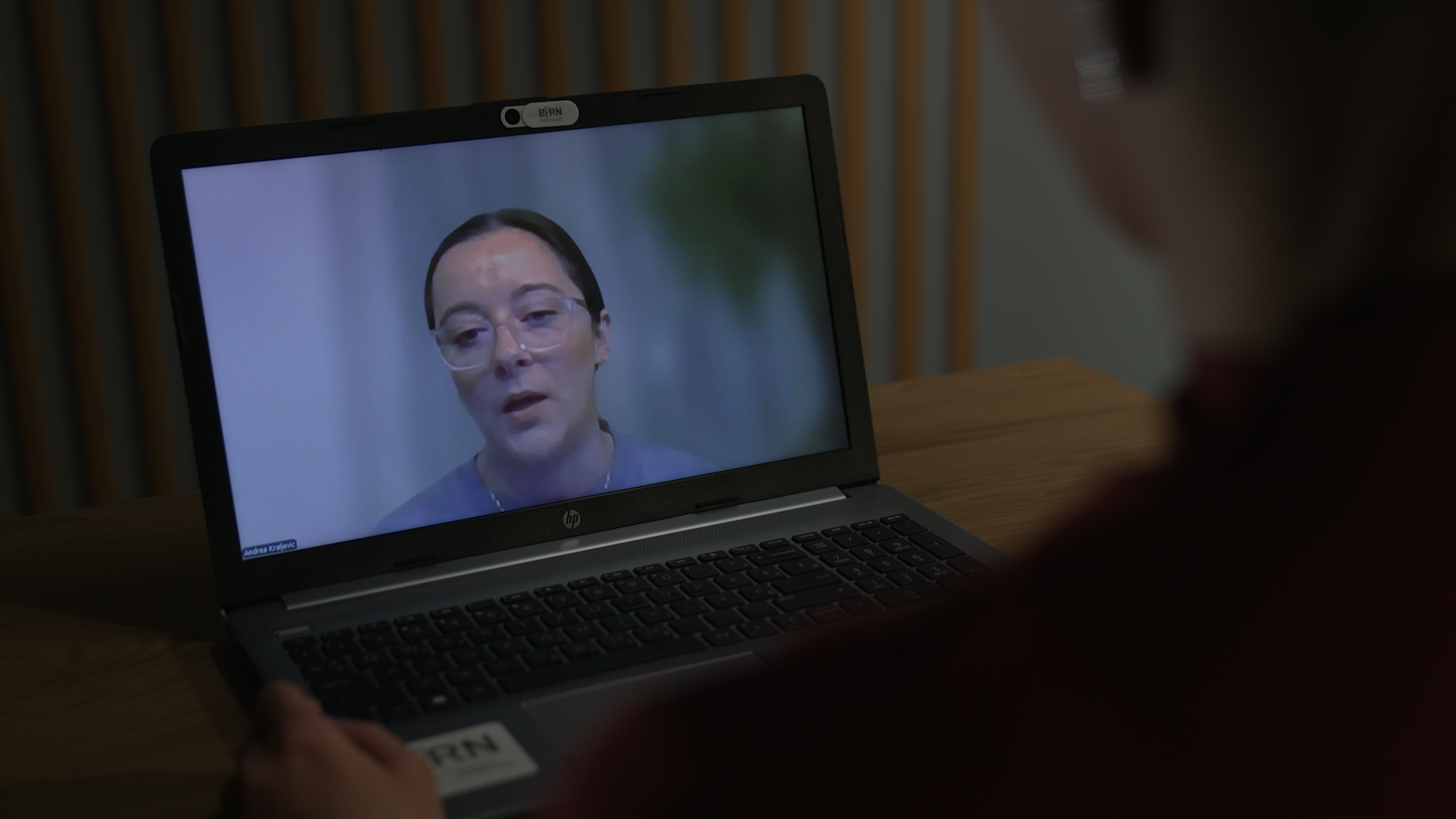
Andrea Kraljević. Photo: Detektor
Detektor has been contacted by other members of the public who have had similar experiences. Among them was Andrea Kraljevic, who was selling an industrial sewing machine on the OLX platform. A few days after her ad was posted, she received an inquiry asking if she would ship it via express mail, with the buyer offering to pay the shipping costs, which she agreed to, giving him her address.
Kraljevic explained that she gave the buyer the email address and phone number he asked for, then she received a notification to confirm the pickup of the shipment.
“To me, it all really seemed completely normal. I opened that email, the information wasn’t anything special. First it was just personal details and address verification. For the next step, it asked for bank details. Honestly, I didn’t think much about it,” Kraljevic explained.
She thought that this purchase method was for the customer’s security so she started entering her bank details, including her first and last name, card number and expiration date, and the three-digit CVC number.
Kraljevic said the payment wasn’t successful because it said there was an error, and after three attempts, she contacted the buyer and asked if there was another way to pay. She added that the buyer claimed there was a rule for new users that required them to have at least 300 marks [around 150 euros] in their account for them to send money to someone.
“That was a sign for me, and that’s when I figured out that this was definitely some kind of scam. I reacted immediately and called the bank to block my card. The bank operators reacted really quickly and blocked the card, so no damage was done,” Kraljevic said.
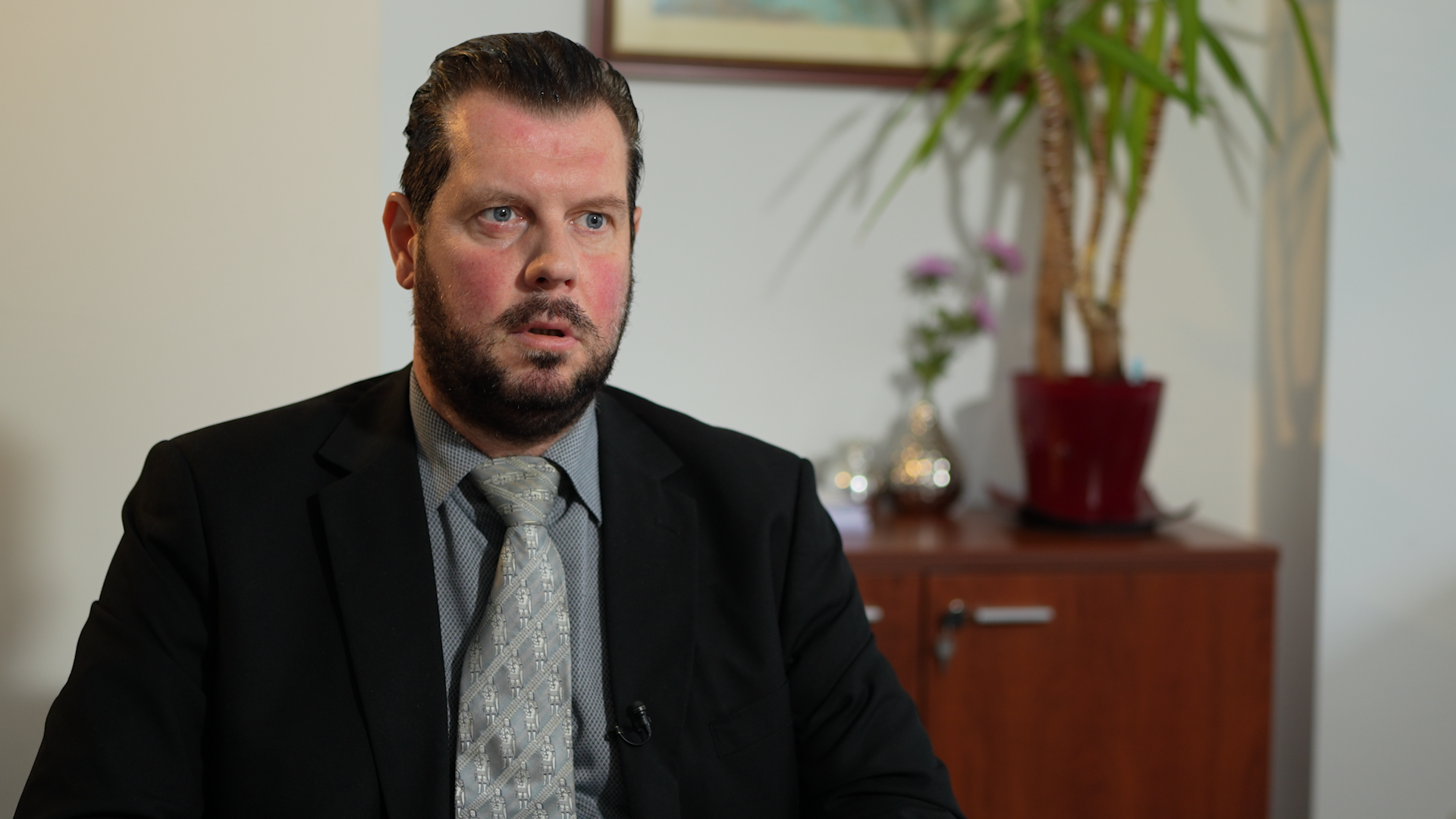
Silvije Fučec, head of the Public Relations Department at the Agency for Personal Data Protection of Bosnia and Herzegovina. Photo: Detektor
How to protect personal data
Silvije Fucec, head of the Public Relations Department at the Agency for Personal Data Protection of Bosnia and Herzegovina, says that people can protect themselves from the online theft of personal data by checking if the website they are buying from is trustworthy and by checking on other people’s experiences.
“If we’re shopping online, it’s definitely recommended to check our account balance before and after the purchase. It’s recommended to have a separate card just for shopping, with only enough money on it to cover the specific transaction. Even in that case, if someone managed to get the details from that card, they still couldn’t exceed its limit, so it couldn’t really harm someone,” Fucec explained.
Fucec says that it’s not advisable to make purchases or buy subscriptions from other people’s devices, only from your own device, which should be protected with user passwords. He adds that our laptops and tablets, if we make purchases using them, should be protected with antivirus software.
“The advice to the public is never to keep scanned personal documents on their mobile phones,” he explained, adding that if someone loses their phone, laptop or tablet, someone could get access to all their documents and data.
Detektor also contacted several commercial banks in Bosnia and Herzegovina to get their experiences with attempts to steal their clients’ banking data. The banks say that behind every fraud lies the human factor and social engineering psychology, through which clients are tricked into revealing sensitive information themselves through skilled manipulation and fake urgency.
“These scams use trust, expectation of some benefit, or the feeling that you need to act quickly. Messages that rush the recipient, promise an unusually large discount or ask for card details for an alleged payment are reasons to be extra-cautious and to double-check. In such situations, we recommend contacting the company or store through official contacts you can find independently, rather than through a link in a suspicious message,” one of banks stated.
Three years ago, Bosnia and Herzegovina took its first steps toward establishing a Cyber Attack Response Team (CERT) for institutions and the public, but it’s still the only European country that doesn’t have one due to administrative obstacles and a lack of political consensus. That makes public caution even more necessary. Although many think they’re too careful to fall victim to internet scams and that these scams are meant for ‘someone else’, the people Detektor spoke to emphasised the need for caution.
“I’ve always been one of those people who’ve always said that this can’t happen to me because I’m careful and because I pay attention. It really just takes a tiny moment of inattention or a moment when a person is a bit absent-minded, everyday stress, a bit of tiredness, and suddenly this kind of situation happens,” Kraljevic said.