




This post is also available in:
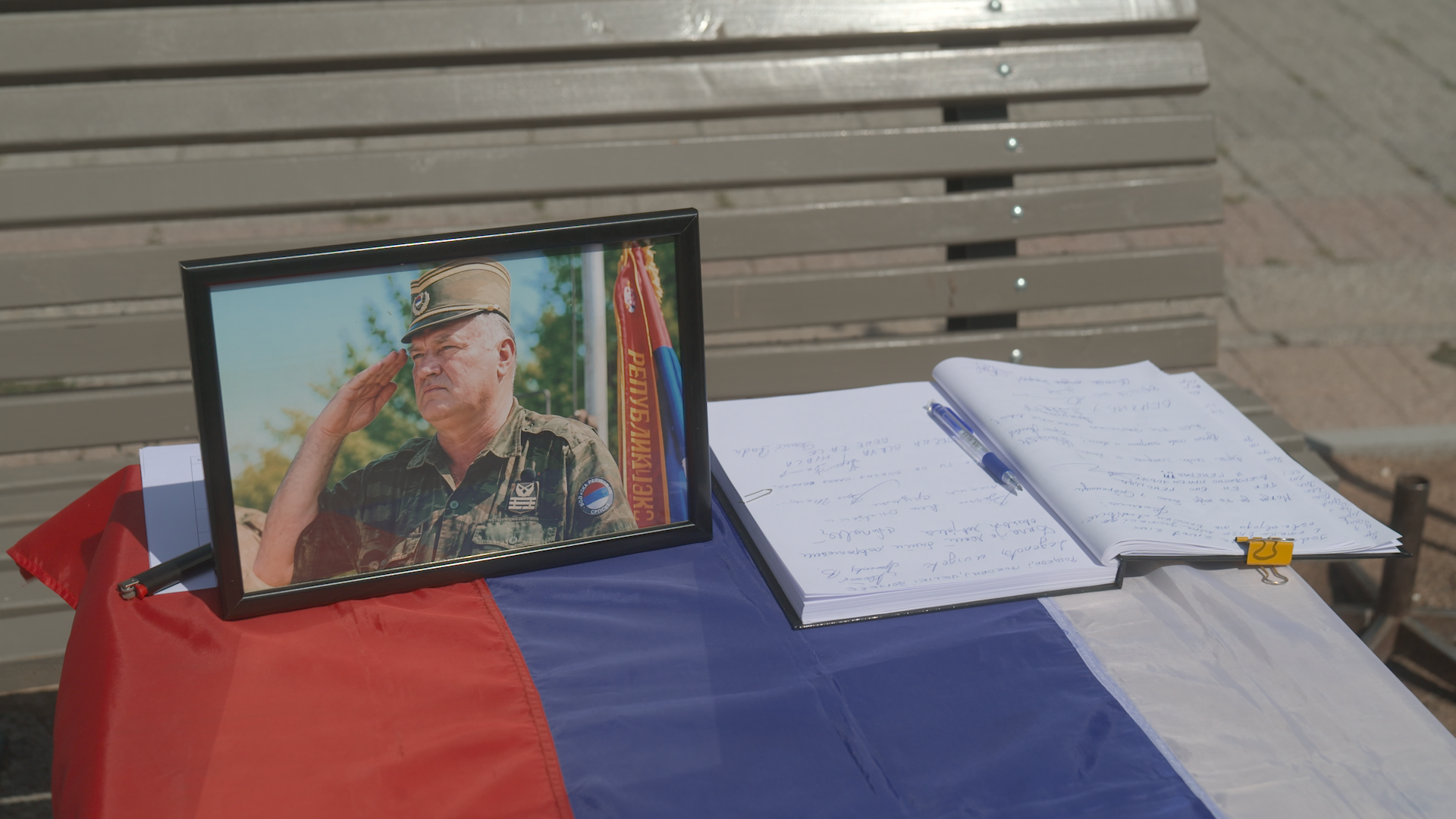
Banja Luka, Visegrad, Pale and Zvornik are just some of the places in Republika Srpska where rallies in support of Mladic have been held and books for people to express their condolences made available. Hundreds of people have come out into the streets to praise the convicted war criminal since August 27, when he died in The Hague. This was despite the fact that glorification of war criminals has been legally banned in Bosnia and Herzegovina since 2021, although only two final verdicts have been issued for the offence so far.
“Believe me, I wouldn’t even have paid any attention, that’s how much [Mladic’s death] means to me, but what’s happening because of him and his ideology is dangerous,” Mirsada Malagic, whose two sons and husband were killed in the Srebrenica genocide, told Detektor.
Mirela Osmanovic, an assistant for international cooperation at the Srebrenica Memorial Centre, said that after Mladic’s death, the reality that people in Srebrenica inhabit on a daily basis has been laid open.
“His death didn’t mean the end of the ideology, narrative and value system that had made him a hero for years,” Osmanovic said.
After his death, Detektor has recorded an increase in content relativising the crimes committed under Mladic’s command, including posts presenting the forced displacement of the population from Srebrenica as an act that supposedly saved civilians’ lives.
“That [statement by Mladic in Srebrenica in July 1995 saying no one would be harmed] was just for the outside world. Afterwards, everything happened differently,” Mirsada said about the narrative that Mladic was ‘saving’ Bosniaks. Such narratives are increasingly being spread today through short videos, photos and memes.
People who spoke to Detektor warned that the problem is that this kind of content can reach a large number of people in a short time, especially young people who have no personal experience of the war. A war criminal gets turned into a symbol that is separate from any victims, mass graves or judicially established facts. Meanwhile, the Bosnian Prosecution isn’t responding to this issue.
Hate messages flood social media

Mirela Osmanović. Asistentica za međunarodnu saradnju u Memorijalnom centru Srebrenica.
The platform Register 145a, which enables people to report instances of the denial of genocide and the glorification of war criminals, received around 5,000 new reports after the news of Mladic’s death, including some for the incitement of hatred. Detektor also found paid posts on social media celebrating Mladic, but after our report on this was published, Meta removed them from Facebook and Instagram.
Zasto Ne, an NGO that works for accountability, also recorded a sharp increase in reports to its website about the denial of facts related to the forced relocation of civilians, women, children and elderly people from Srebrenica.
“It’s a very dehumanising attitude towards the victims themselves because in that post [celebrating Mladic on social media], it basically says that he granted them their lives, so now they can come and visit their dead each July [on the genocide anniversary at the Srebrenica Memorial Centre] in Potocari,” said Amar Karadjuz of Zasto Ne.
Osmanovic warns that the problem is that a lie, provocation, or a video that romanticizes a war criminal can reach hundreds of thousands of people in just a few hours, especially young people who have no personal experience of war and genocide.
“The war criminal is presented as some kind of pop culture symbol completely detached from what he really is,” she explained. She said that an image of Mladic is created that is disconnected from all the mass graves, war victims and legally established facts that formed the basis of his conviction for genocide and other crimes in Bosnia and Herzegovina.
Karadjuz advised social media users to try to refrain from engaging in discussions about such content, because that only increases its visibility.
A rally in support of Mladic was announced in Srebrenica on September 2, ahead of his funeral. A photo of the poster quickly started circulating on social media.
“Come to respectfully bid farewell to our general,” the poster said.
After a request by victims’ associations for a counter-gathering, the Republika Srpska Interior Ministry banned the Mladic rally. On the day, besides a few locals, Detektor’s team saw more police officers present than usual.
When asked by a Detektor journalist whether an event should be organised in Srebrenica to commemorate Mladic, one local woman replied: “Well, dear, I think it should… a man is a man.” A few other locals shared a similar view, while only one woman thought he should not be honoured in Srebrenica.
On the same day, we also visited Bratunac, where crimes were committed in 1992, and three years later, victims from Srebrenica were killed. Everything seemed calm until midnight, when a video appeared online of a group of young men intimidating post-war returnees by chanting Mladic’s name.
The glorification spread to the streets and the stadiums, and into the public statements of politicians from Republika Srpska. Among those who have glorified Mladic are former Republika Srpska president Milorad Dodik, National Assembly president Nenad Stevandic, Banja Luka mayor Drasko Stanivukovic, and the state-level minister of foreign trade and economic relations, Stasa Kosarac.
Honours for a war criminal in Serbia
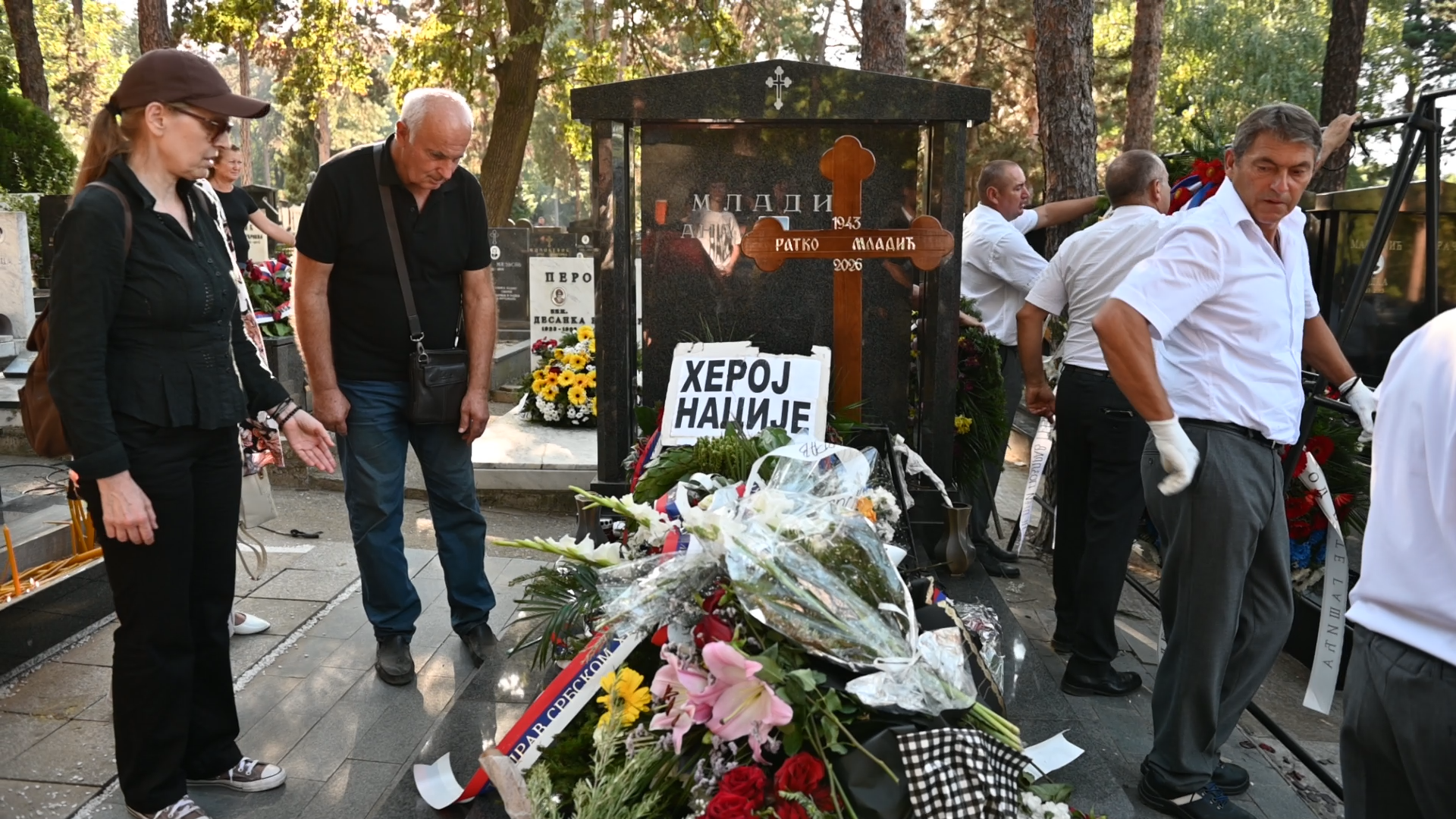
Mladićev grob u Beogradu. Foto: Detektor
When Mladic’s body arrived in Belgrade on a state plane with the Serbian Minister of Justice, yet more glorification followed. Detektor recorded events at the commemoration and the day before the funeral at the Red-Star-Partizan football derby, where the criminal’s name was celebrated by fans in the cruellest manner.
“Destination: Potocari,” the fans chanted.
Mladic said these words in July 1995 when Bosnian Serb Army troops entered Srebrenica, and in the days that followed, more than 7,000 men and boys were killed. The victims’ bodies were discovered in mass graves for years afterwards. Some of their remains have yet to be found.
Lawyer Vlado Adamovic, a former State Court judge, was stunned by seeing thousands of people in a stadium chanting their approval of a call to genocide.
“I’ve been in the courtroom for 40 years. What have I been doing for 40 years? What has my generation been doing? What has all this led to? It’s the relativisation of all social values, to a point where something that in the minds of my generation not only wasn’t normal, but that we couldn’t even imagine would happen, has become normal,” said Adamovic.
The coffin bearing Mladic’s body was guarded by the Serbian army troops and police while thousands of people, including former Bosnian Serb Army soldiers, politicians from Bosnia and Herzegovina and Serbia, as well as various right-wing organisations, came to pay their respects. The Serbian flag was draped over the coffin, and he was given a ceremonial gun salute as his medals and sword were lowered onto his grave.
Sonja Biserko, president of the Helsinki Committee for Human Rights in Serbia NGO, explained that the funeral and the rhetoric it around united Serb nationalists on both sides of the border.
Mladic’s supporters see him as a winner simply because Republika Srpska exists, Biserko added.
“So, Srebrenica, where the genocide was committed, is in Republika Srpska … All the other locations … like Kozarac, Foca, Visegrad, and other places, they are all in Republika Srpska. There are reasons, from the point of view of these people here, to glorify and celebrate Ratko Mladic,” she added.
After that footage was shown internationally, the European Union and the international community couldn’t agree on whether state honours had been given to a war criminal in Serbia. There were also statements from politicians in the Federation – seen by some public figures as cheap point-scoring – but no concrete action was taken.
On the day of the funeral, Bosnia and Herzegovina’s foreign minister Elmedin Konakovic announced that he would send letters to officials in Britain, the United States, and elsewhere.
Montenegrin Metropolitan Mihailo told Detektor that everyone, from a human perspective, should acknowledge that genocide took place in Srebrenica.
“The mothers of Srebrenica … they are the mothers of the Balkans when it comes to the most recent genocide to happen in Europe. Many members of their immediate families were killed, and yet they call for peace and love and for people to stop thinking the wrong way, like they do now,” the Metropolitan said.
Judicial silence in Bosnia and Herzegovina
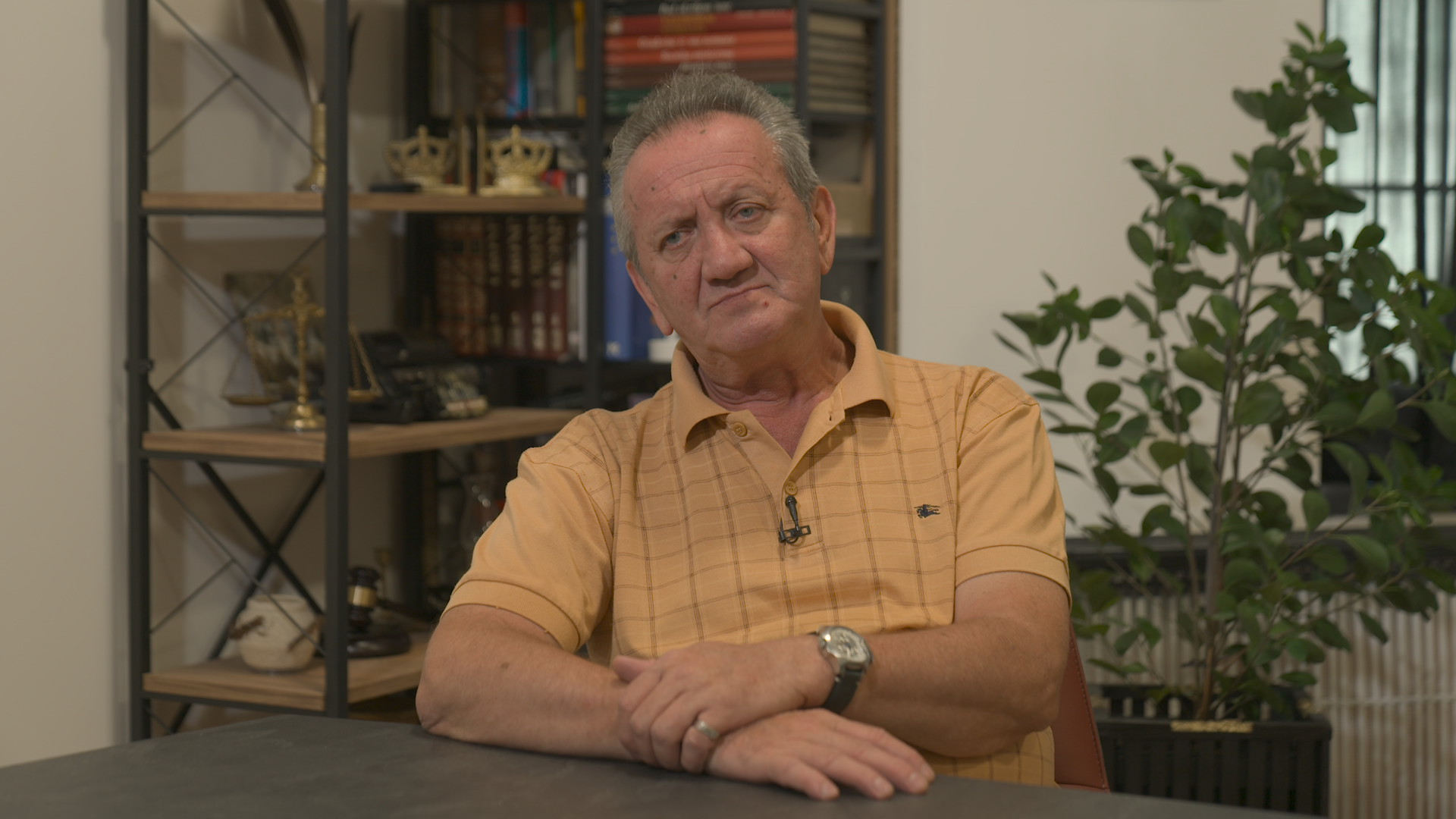
Advokat Vlado Adamović. Foto: Detektor
Survivors and post-war returnees have been unsettled by the glorification of convicted war criminal Mladic. But the Bosnian Prosecution did not respond to Detektor’s question about whether it had opened any cases over this crime, nor whether it had received the reports that numerous members of the public and politicians said they’d sent.
Chief state prosecutor Milanko Kajganic was not able to talk about the issue because he was busy, Detektor was told by the prosecution.
When asked by a Detektor journalist what the High Judicial and Prosecutorial Council will do as the country’s legal overseer, its president Sanin Bogunic said that this was a question for the prosecution it is responsible for investigations.
“As far as we’ve seen from the media, some cases have been opened at the Bosnian Prosecution, so it doesn’t really seem to me that the Bosnian Prosecution is staying silent. The prosecution has its own working procedures. We’re talking about hundreds of people at these gatherings, as we’ve seen. Prosecuting hundreds of people is probably a bit more complicated. I’m telling you this as a prosecutor, not as the president of the Council,” Bogunic replied.
Adamovic believes that we are currently in a situation in which there is widespread disregard for the law.
“When a political leader publicly calls for a revision of the historical facts, for the denial of genocide and its consequences, his words carry a lot of weight. And that constitutes a criminal offence. And there is the possibility that people can be prosecuted for that,“ he said.
“But at the same time, wearing a T-shirt with the image of a war criminal constitutes the same kind of criminal offence, and both criminal offences should be dealt with by the courts and prosecution similarly.“
Adamovic pointed out that Croatia has an effective solution for punishing people who publicly display the image of convicted war criminals, by serving infringement notices.
“They impose penalties very efficiently, and the goal is exactly the same. Only it’s not called denying genocide; instead, it’s called disturbing public order and breaching the peace. But it’s a much smarter option as it allows a large number of courts to be involved in imposing penalties, which makes it possible for the state to act faster and more efficiently,” he said.
Malagic said she can’t understand why the Bosnian Prosecution isn’t responding to the situation.
“They’re only looking out for themselves, holding onto their positions rather than doing their jobs,” she asserted.