




This post is also available in:
During the first days of Ramadan in February, when Muslims fast from dawn to sunset and give to charity, Ramiz Alic, a pensioner from Srebrenik, decided to make a donation – to help feed impoverished orphans in Uganda.
On Facebook, a young man from Uganda had asked him to send him some money to buy iftar meals – the meals with which Muslims break their daily Ramadan fast each evening – for hungry orphans. The man told Alic they that the children would not eat that day if he did not send money.
“These children are orphans … It was hard for me to talk about it when I saw the photos of those children. I felt sorry for them and let go of that money,” Alic told BIRN.
The agreement was simple – 50 iftar meals for 50 hungry children. Alic’s Facebook contact asked that the money be transferred via Western Union.
Alic’s Ugandan contact said he was called Magololo Ramadhan and was a 21-year-old working for a humanitarian organisation.
When Alic asked how much he needed to donate for the meals, Ramadhan responded: “One euro for one child.” Alic agreed: “Alright, I’ll do it for 50 of them,” he said.
“That was on Saturday,” Alic continued. “On Sunday he calls, sends a message: ‘Brother, I’m waiting for your iftar [money].’ I said: ‘Brother, today is Sunday, I’ll do it on Monday, the banks are closed here today.’ And so, on Monday, I went to Western Union and paid 100 marks [50 euros],” he said.
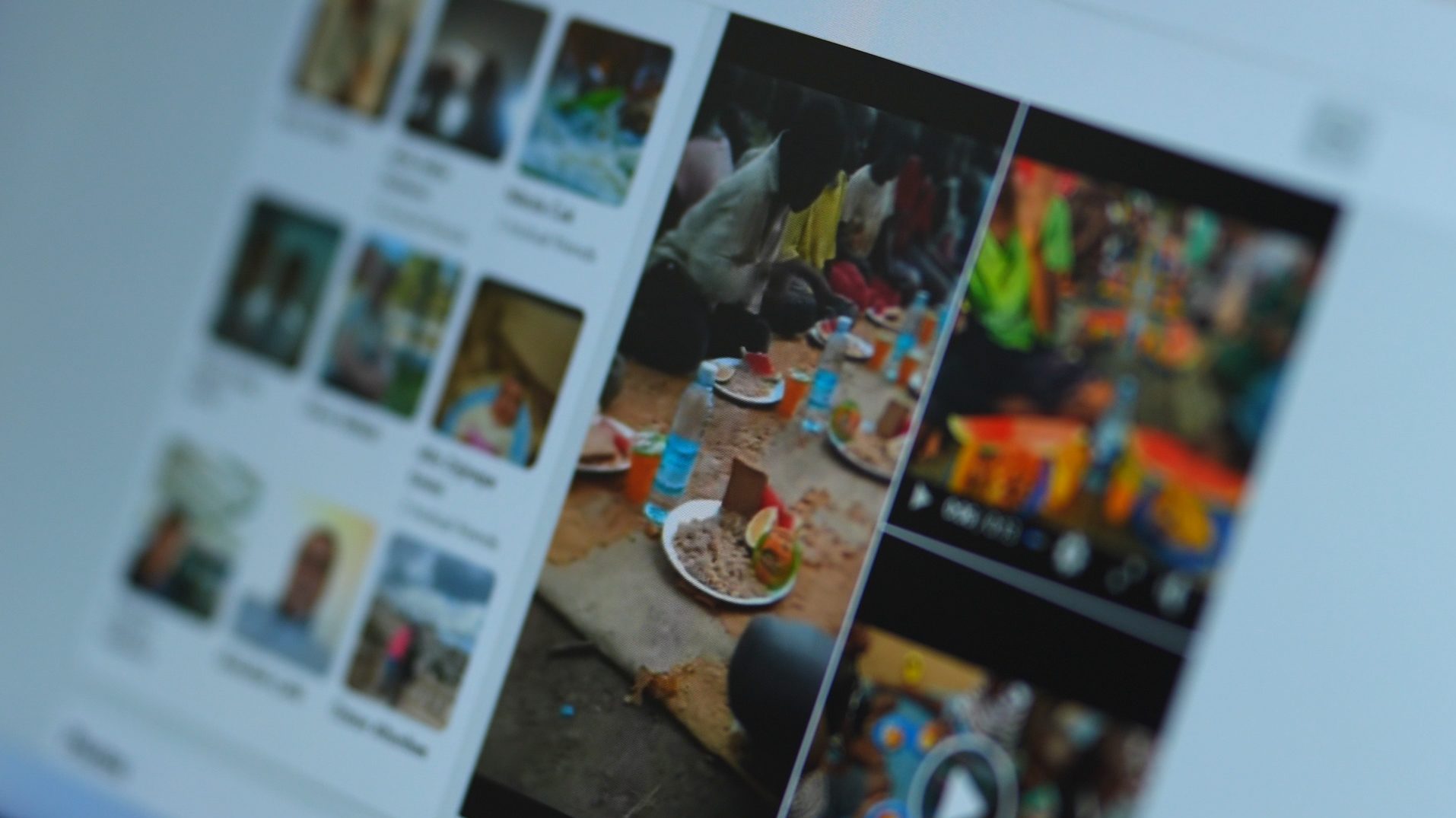
Alic sent the money at 9 a.m. that Monday and Magololo withdrew it minutes later. The agreement was that he would send Alic photos and videos of the children at iftar, along with boards showing the names of Alic and his wife that the children would hold, and a separate board for his son and his son’s wife.
However, after Alic made the payment, Ramadhan merely asked for more money and urged him to collect more cash from friends and acquaintances. He declined to do so.
BIRN found Magololo Ramadhan on Facebook under a different name – Jumma Bin Shabhnu. A BIRN journalist got in contact with him and moved the conversation to WhatsApp, asking about his humanitarian activities.
He sent messages several times a day, full of Islamic religious phrases in Bosnian, via a translation app. As the days passed, he also became more insistent that money should be sent.
In the middle of Ramadan, we contacted Magololo Ramadhan via a video call. He told us he works for a humanitarian group called the Juma Islamic Charity Organisation. He then sent a fake registration certificate.
He wanted the BIRN journalist to send one euro for each child’s iftar meal, just as Alic had done. “You can send money via Western Union, Moneygram and Ria, and I have my own organisation, as well as another organisation that I cooperate with,” he said.
Mirnela Salihovic, director of Mostovi Spajanja (Connecting Bridges), a charitable association from Sarajevo, has been cooperating with organisations and people from Africa for the past year, collecting donations.
She also works with organisations in Uganda and explained that there are procedures to ensure the money reaches the right addresses.
She said she always demands “the name of the organisation, when it was registered, when they got their official seal, when they were founded”. Without that, Mostovi Spajanja will not work with them.
Salihovic said she had also received requests from questionable individuals and organisations and, due to past bad experiences, has not sent them money.
Most of the self-styled humanitarian activists who asked BIRN journalists or others for money wanted the payments made directly in their names.
Their social media accounts also include calls for donations to dig wells.
BIRN previously revealed how people and associations from Bosnia, with the support of local Salafi preachers, raised millions of euros to build wells and mosques in Africa. The investigation showed also that the money was collected in a non-transparent manner, and that although donors received photos of the supposedly built wells, some images clearly had been faked.
Pius Enywaru, an investigative journalist from Uganda, says he has recently come across similar cases, especially during Ramadan, on Facebook, WhatsApp and TikTok. He says the fraudsters do not only target Muslims but anyone they think might donate money.
“They use well-known organisations that are reputable and trusted by people. They use well-known people from different countries. They use their pictures, their social networks. They also publish their pages, to appear more authentic,” Enywaru told BIRN.
“The police [in Uganda] do not pay much attention. [But] we have seen initiatives within our government that have warned people not to fall for scams, and some media organisations have also run campaigns,” he added.
Rasid Krupalija, from the Raskrinkavanje online fact-checking platform, which deals with verifying content on social networks, says most fake appeals for humanitarian aid are placed on Facebook and YouTube.
Meta, which owns Facebook, did not respond to BIRN’s question about the removal of such content, although it violates community rules, and so should be removed.
“Such content is rarely removed, with various excuses – that it does not violate community rules, is not harmful content and the like; sometimes, such excuses are accepted because it is very difficult to prove that something is a scam,” Krupalija said.
“It is very difficult to get in touch with Meta and explain to the people who work there that something is clearly a scam or that it is harmful content,” he added.
Images used to lure the gullible
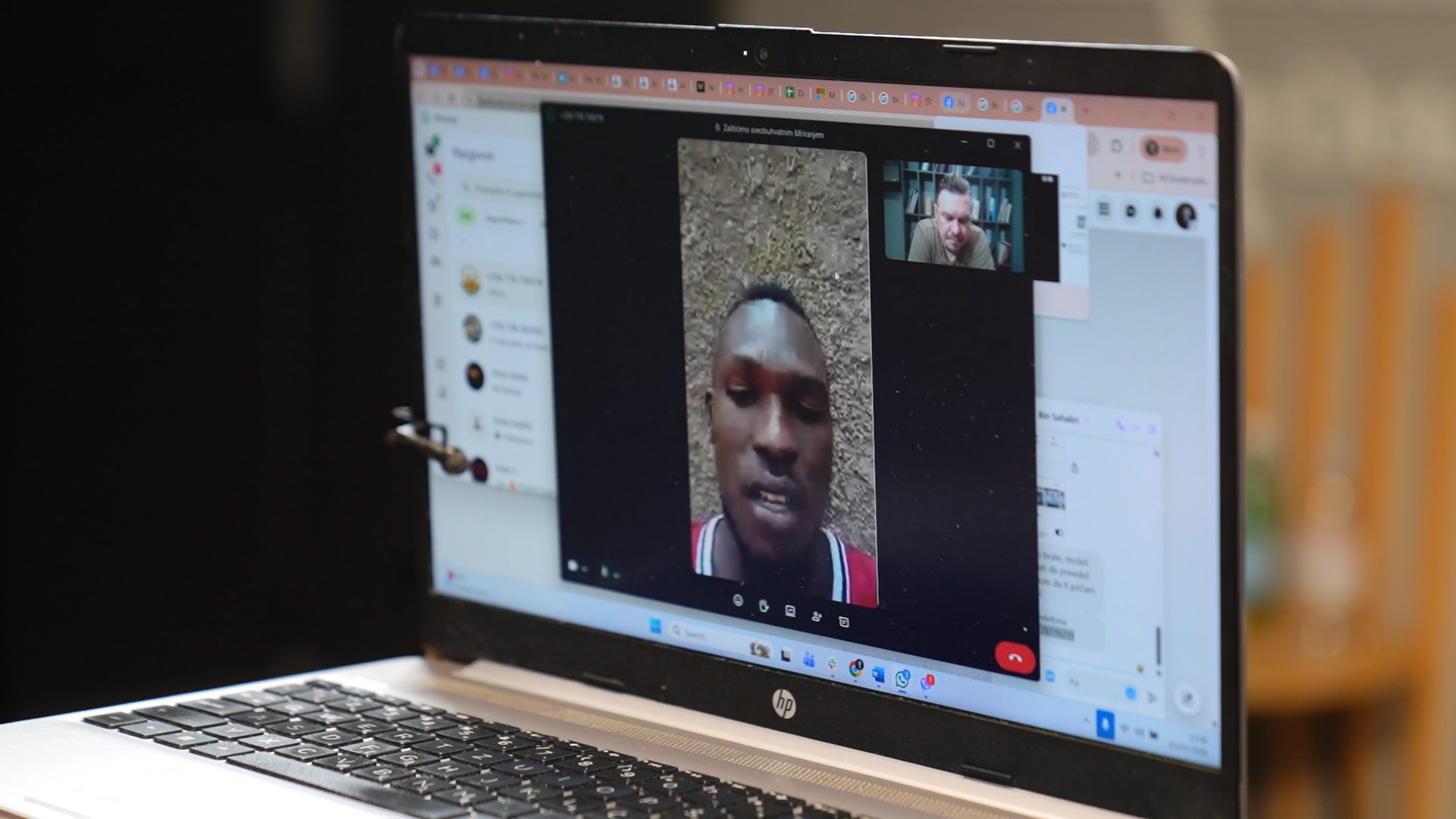
Screenshot from a video call between a BIRN journalist and a person asking for a donations, claiming it is intended for children. Photo: BIRN.
In one message from Uganda that BIRN received, a man calling himself Feki Ismail claimed that he was working for the organisation Islamic Relief and that his brother is the director.
The fake email address and number of the organisation exposed him. Islamic Relief does not operate in Uganda, even though there are fake profiles with that name.
“There have been several social media accounts purporting to raise funds for ’Islamic Relief Uganda’. Islamic Relief does not currently have any presence in Uganda, and we are not raising funds there,” the organisation states on its website, on a warning page titled ‘Scams and Frauds’. “Anything claiming to be Islamic Relief Uganda is not genuine.”
Vahidin Daltur, an information technology expert, believes that such frauds are possible because social media users tend to pay more attention to images rather than accuracy. Scammers are also able to operate across countries in various languages.
“Their images [appealing for money] are also posted in German, because you have a large Muslim population there, as well as in Turkish, Iranian and Swedish,” Daltur noted.
BIRN discovered that scammers from Uganda routinely use multiple names and accounts. “Nasser Manyuka” asked BIRN for money from the account name “Ammad bih Nasser”. Through detailed monitoring and comparing photos, videos and phone numbers, BIRN concluded that this was the same person.
In the messages he repeatedly sent, “Nasser” used religious language to try to extract money. At least 20 other social media account names sent similar messages to BIRN, appealing for donations.
Sasa Petrovic, head of the police’s Department for Combating Computer Crime in Bosnia’s Federation entity, said internet fraud falls under the jurisdiction of lower-level police departments in the Federation’s ten cantons.
However, most such cases are then transferred to the Federation Police Administration, significantly adding to its workload. “It’s a big burden for us, preventing us from dealing with the things that we should be dealing with,” Petrovic said.