



This post is also available in:
Five kilometres from Potočari, a road lined with trees leads to the settlement of Šušnjari. These were once the roads Fadila Ademović’s children took to school, while she shared everyday life with her neighbors. Fadila greets us at the gate in front of the house. She no longer lives there, but visits several times a year.
She explains that this is a new house. Above it we look at the remains of the old family home where Fadila lived with her husband Hajrudin, their son and two daughters. The name “Fahrudin” has been carved into a brick. He was Fadila’s son.
After Srebrenica was declared a safe area, Fadila explains, UNPROFOR set up a base in Jaglići above the Ademović family home. She showed journalists a photograph of Fahrudin with his friend Semir and other children.
“The children would go to the soldiers, and they would give [the children] chocolate”, Fadila recalled. The soldiers often took photographs.
In the photograph we are looking at, the boys are smiling, unaware of everything that would follow.
“They went down to school in Potočari. The two of them [Fahrudin and Semir] were always together. And then he would say, ‘I don’t want to live here, I will build a house in Srebrenica, near Semir’”, she said of her son’s friendship.
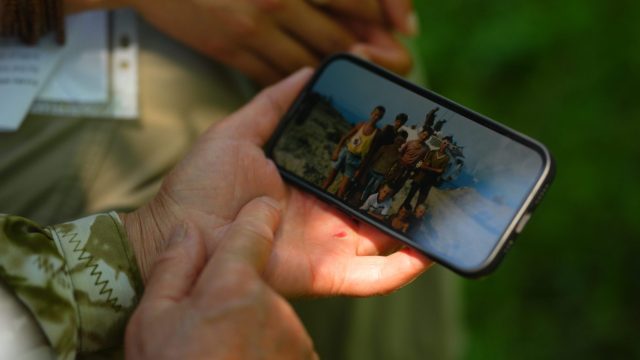
Fadila shows where Fahrudin’s son is. Photo: Anes Asotić
In July 1995, the Ademović family left their home when news arrived of the fall of Srebrenica.
“When we were leaving the house – we had bought him an accordion so he could play – and he wanted to carry it on his back. To take it with him. ‘Throw it away’, I told him, ‘so we can cross – we’ll buy you the most expensive one’”, Fadila said.
Fahrudin had to set off through the forest with his father, without his mother, sisters or accordion.
“Mom, I want to go with you”, were the last words Fadila heard from Fahrudin, words that would echo within her for decades. Soldiers did not allow her son to go with her.
She speaks quietly about their separation. With her two daughters, she went toward Potočari, where they spent the night, and the next day were transported to what was, for them, free territory.
Days passed in the hope that someone would knock on the door with news that her son and husband had survived.
“I just waited – whenever they said ‘someone came out of the forest alive’, you run, you fly, just to hear, to know anything. But never anything. Never.” Ademović said.
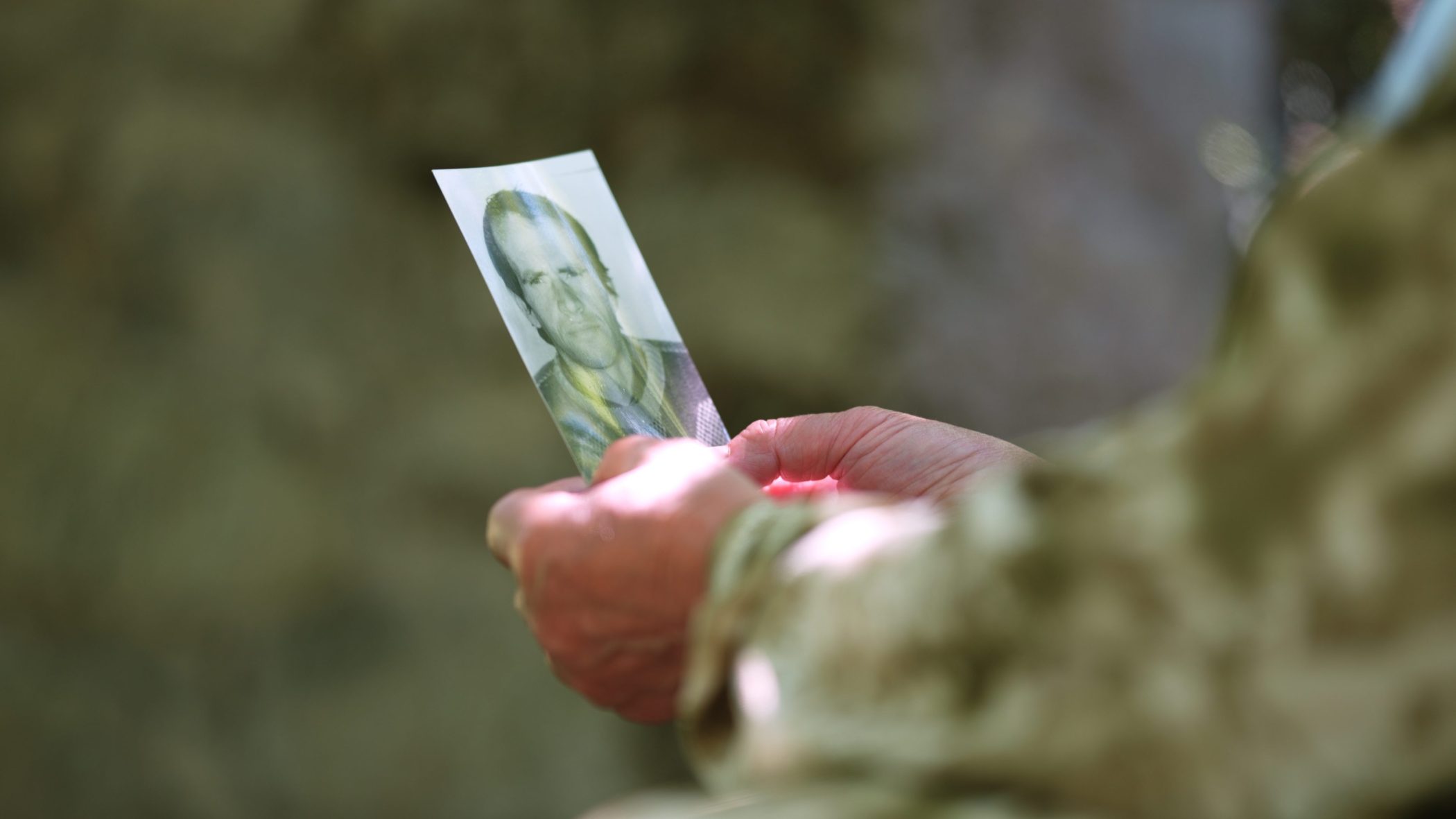
Photo of her husband, Hajrudin. Photo: Anes Asotić.
She lived for a long time in Zavidovići, and every day was a struggle for survival. At times, she even thought about taking her own life.
“Then my daughters would come to mind. Where would they go? God would give me strength and turn me away from it. I kept fighting, always fighting. I worked through the nights. I would sit and knit. Slippers, socks. I would make them and sell them. Some foreigners started coming, buying them. All so I could educate my children”, Fadila said.
Several years after the war, only traces of the life she once knew awaited her at the ruins of her former home in Šušnjari. In the place where she lost almost everything, she tried to build a home again.
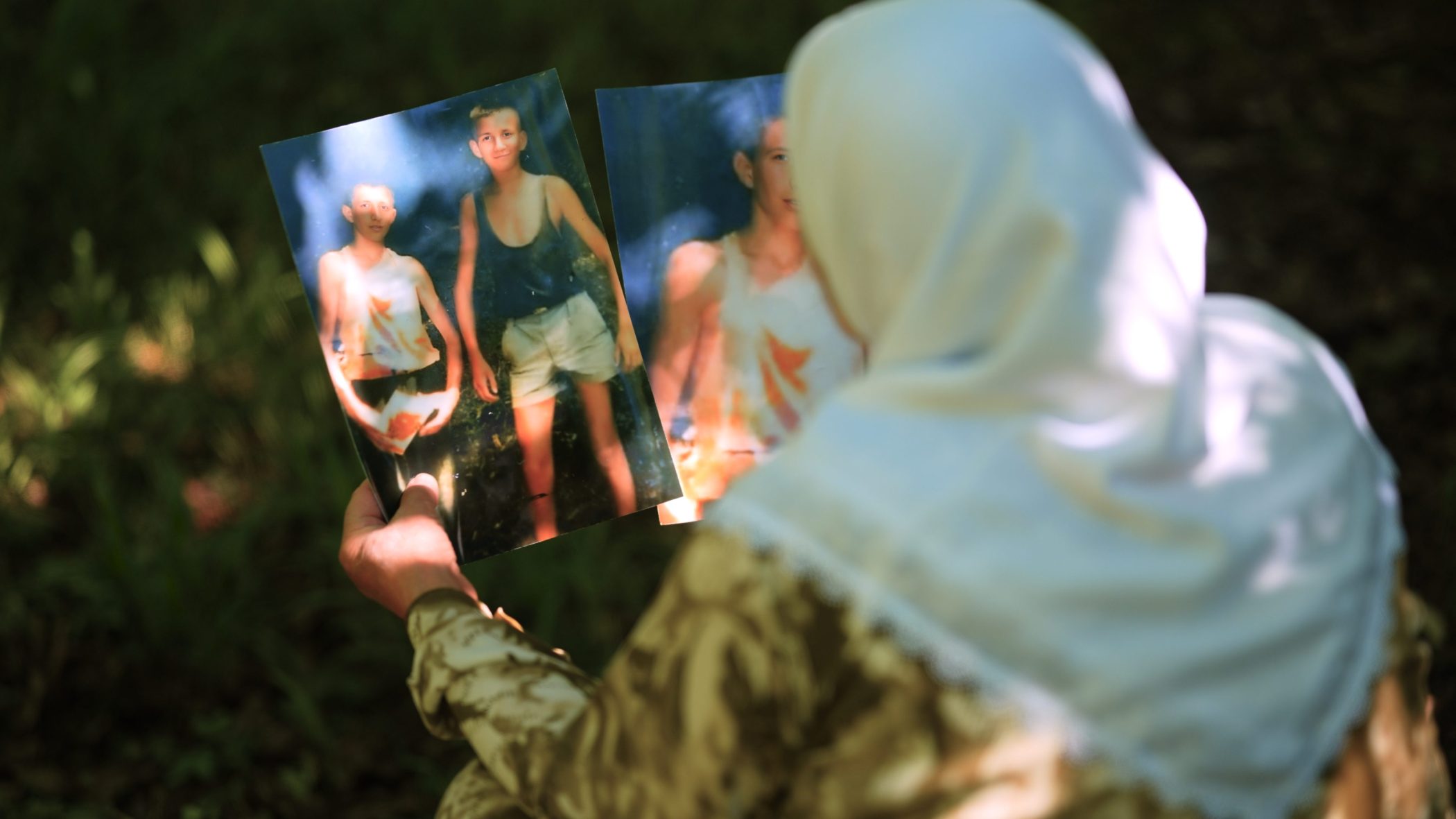
Fadila looks at photos of her son Fahrudin and his best friend Semir. Photo: Anes Asotić
“When I built it and stayed there alone, I would dream of him. He would appear there on that corner. My son. He would come. I would jump up, ‘Come’, I’d say, ‘son, your mother has built a house’”, she said.
Years have passed, marked by numerous burials and identifications of victims of Srebrenica, and Fadila still waits to bury even one bone of her son or husband.
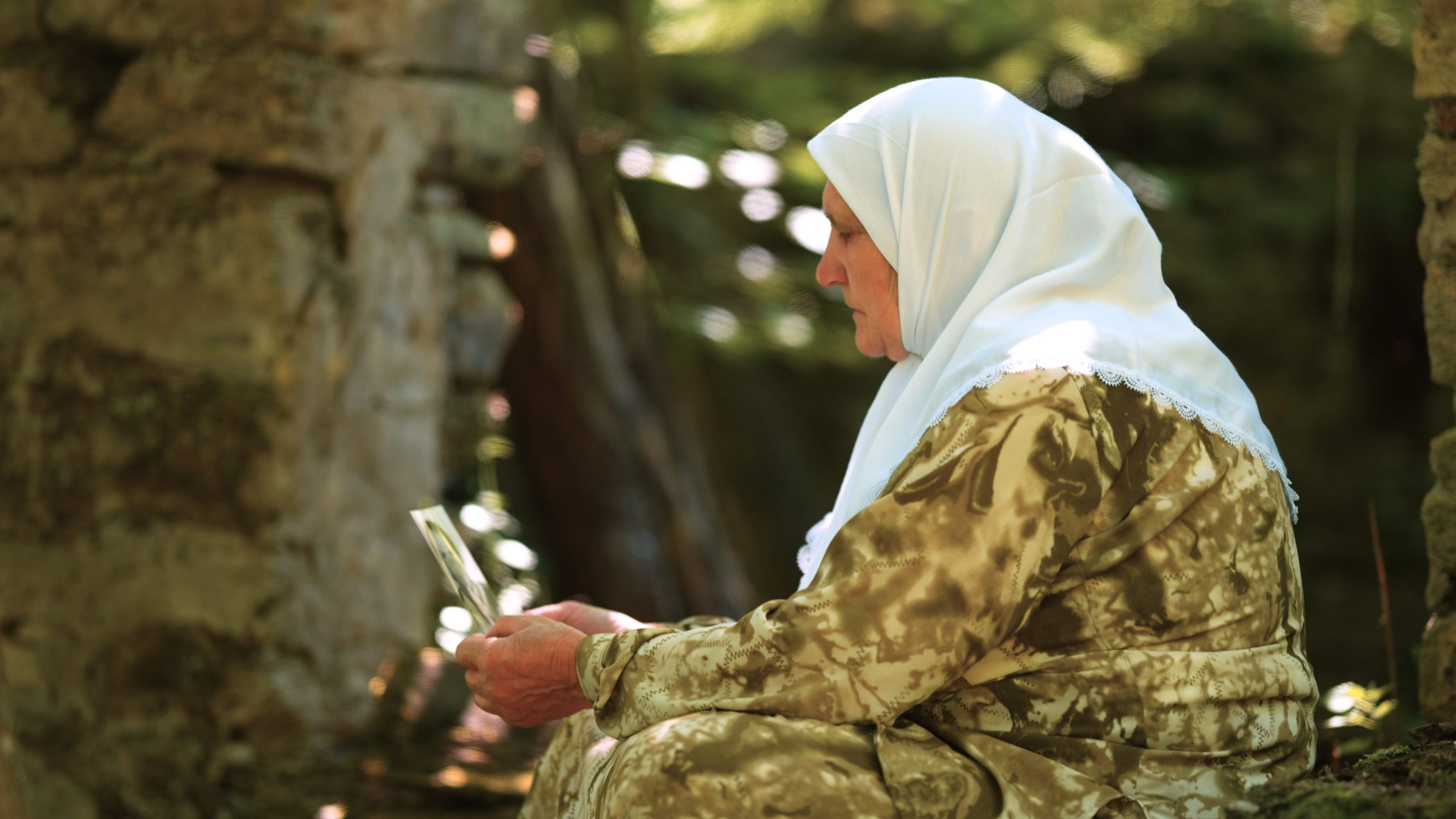
Fadila Ademović on the threshold of her former house. Photo: Anes Asotić
“I want it to be known that my son existed, and that something would be found to bury, so that while I am alive I can at least once visit his grave”, Fadila said. Today, one of her few remaining memories is the photograph of her son with friends, taken by UNPROFOR soldiers, which was found by the Srebrenica Memorial Center while working on a project with the University of Amsterdam.
In the Srebrenica genocide, Fadila also lost her brother and many other family members. As she speaks about the past, her voice trembles. But when she talks about young people who survived and managed to build their lives, a smile appears on her face. In their success, she sees the continuation of life.
“I never said, ‘why is someone else alive and my son is not?’ I can’t – I fear God. It makes me happy when someone manages to get an education, to stand on their own feet on the right path and to live cleanly and honestly,” she said.
Her message to younger generations is to learn about the genocide, not to hate anyone, to know what happened, to remember and never to forget.