




This post is also available in:
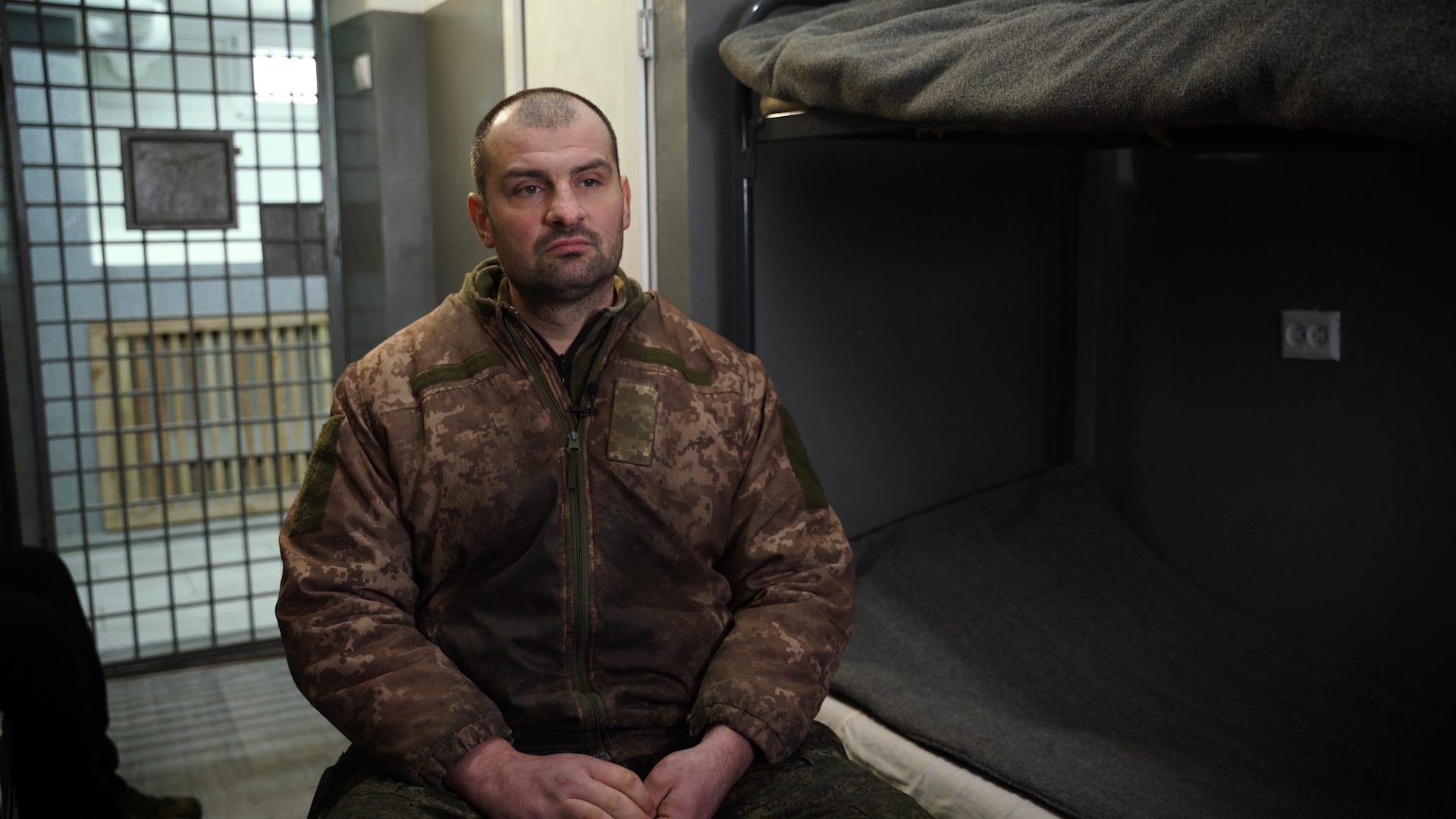
“A woman approached us; she was a captain, a psychologist, and she calmly told us: ‘You are people who have come here to kill other people for money.’ Like we are contract killers,” says Selver Hrustic, a man from Zenica who joined the Russian army as a mercenary in September 2025, as he begins his confession from a Ukrainian prison.
He talked to Detektor about this and recounted his life story and the way he went from Germany to Russia, and then to the conflict zone.
“I arrived in Moscow on September 4. I arrived at Sheremetyevo [airport] at night – at one or two o-clock … There I told the police I already knew how the process worked – you tell the police at the airport that you want to join the army,” Hrustic explains from his cell in the Ukrainian prison.
He says he didn’t get adequate military training and that the training centre was located outside Moscow in a children’s military school.
“We stayed there, and the FSB [Russian Federal Security Service] checked our documents. You could do some military training if you wanted, and in the end, you went to Jabluchka [FSB HQ] again. I went there on September 19, and there you sign an official contract. As of then, you are a soldier,” Hrustic recounts.
At the beginning of the full-scale Russian invasion, he found an online promotional video of the Kosovo Front, an organisation “supporting Kosovo and Metohija”, whose organiser is Aleksandr Kravchenko, a volunteer in the Army of Republika Srpska and the Russian Army.
Senad Bilic, a lawyer from Sarajevo, who has represented returnees from foreign conflict zones, said that Hrustic committed a criminal offence by joining the Russian army, for which the minimum prison sentence is three years.
“That is contrary to the law on defence and the law on serving the armed forces of Bosnia and Herzegovina. Whether it is the Russian army, the Ukrainian army, the Turkish, Croatian, Slovenian or any other, citizens of Bosnia and Herzegovina are not allowed to serve with foreign armed forces,” Bilic said.
Two years ago, we wrote about Dario Ristic, who was seriously injured while fighting in the Russian army. Last year, he decided to surrender to the Bosnian authorities, and was indicted by the Prosecutor’s Office of Bosnia and Herzegovina.
It’s not known exactly how many volunteers from Bosnia and Herzegovina are in the Russian army. Over a series of several investigations, via Telegram channels that our journalists infiltrated, Detektor exposed individuals who were recruiting fighters for the Russian army in Ukraine. We also discovered that one former member of the Bosnian Army was killed on the battlefield in Ukraine while he was a member of the Russian army – and we also managed to fictitiously enlist in the army.
Ukraine’s embassy in Bosnia and Herzegovina stated that joining the Russian army constitutes complicity in aggression. Ambassador Volodymyr Bachynsky added that he does not distinguish between volunteers and contract soldiers.
Hrustic tells Detektor that his expectations of the Russian army have not been fully met and that the it is very poorly organised. He says that they do not consider contract soldiers to be their own men, and that troops were not given enough water at the front, neither drinking water nor industrial water for washing.
“The Ukrainian army told me that, for example, in the town of Zepa they helped our people who were trapped so that the same thing that happened in Srebrenica was going to happen to them. And then they asked why I joined the Russian side, and I explained to them in the end, and they understood. And I think it would be redemptive, and it is more realistic to fight for the Ukrainian side now,” Hrustic explains, adding that he has already been contacted by the Ukrainian army concerning a potential military engagement.
Bosnia and Herzegovina’s Ministry of Foreign Affairs did not respond to a request for an interview with minister Elmedin Konakovic, and he himself did not answer our calls and messages. Recently, at a press conference, Konakovic that at the moment, the ministry has no access to Hrustic, but that his father and brother have been to his office.
“The situation is, as you can assume, very complex (…) and for now we do not have access there. What is good is that he is alive and healthy,” he said in response to a question from Detektor journalists.
Mirza Buljubasic, an assistant professor at the Faculty of Criminal Justice, compared the case with that of Gavrilo Stevic, who was acquitted of fighting in the war by the Court of Bosnia and Herzegovina, and noted that Hrustic is the first prisoner from Bosnia and Herzegovina to be held in a Ukrainian prison.
“Our big problem in these cases is proving it. If the Ukrainian authorities do not want to extradite him and want to prosecute him, fine; if they want to extradite him and have evidence to prosecute him, but do not want to prosecute him, and instead want to extradite him to us and provide us with that evidence through international legal assistance, then we would have some concrete evidence in this case,” Buljubasic said.
The Prosecutor’s Office of Bosnia and Herzegovina has requested information about Hrustic from the State Investigation and Protection Agency, SIPA. We spoke with his father, who said he did not approve of his departure, but was proud of his son.
“I don’t support any war, any army, I don’t approve of that,” Fahrudin Hrustic said over the phone, and refused to talk to journalists any further.
Amira Barkush and Yevheniia Melnyk are Ukrainian journalists from the United24 media outlet who broke the story about Hrustic.
“Honestly, I didn’t see a moral side to him. I tried a bit. I thought every person has some kind of moral, solid side. I didn’t really feel it in him. I asked him how he explained that to himself, since he was a Muslim. I asked him about religion, if he believed in God. And he said he believed. Then I asked him why he went to fight on the side of the aggressor. He said that this war felt very distant to him,” Barkush told Detektor.
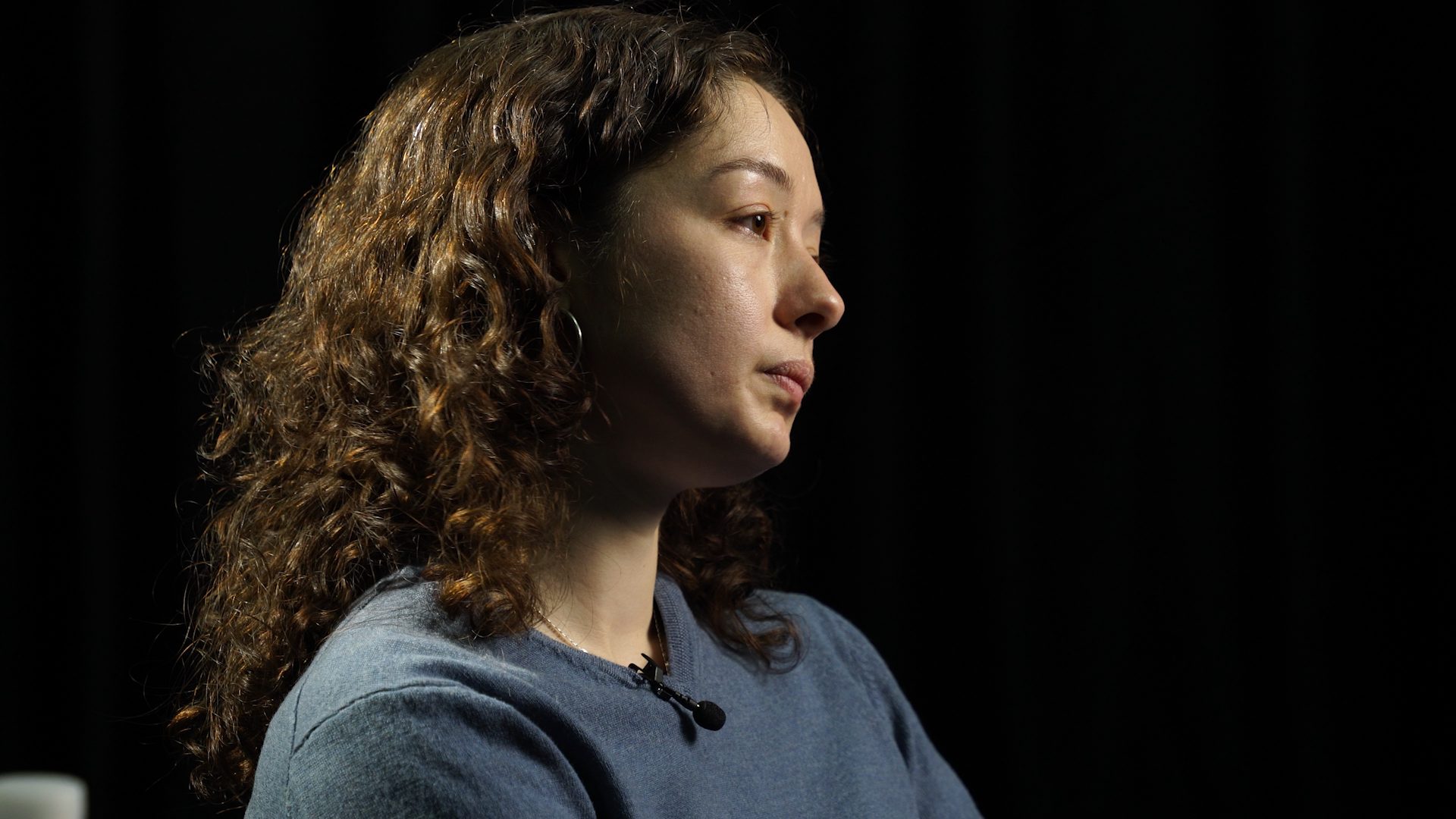
Amira Barkush, journalist of Uniited24 Media. Photo: Detektor
Judging from their previous conversations with prisoners, the two journalists believe that most of them do not tell the truth about their reasons for joining the army.
“There’s also data saying that over the entire course of the war, 10,000 Russian soldiers have been captured, of whom seven per cent are foreign mercenaries. As far as I know now, there are people from as many as 40 different countries in Ukrainian captivity. These are primarily post-Soviet countries, the majority coming from Tajikistan, Uzbekistan, Kazakhstan and Belarus, as well as from Africa and the Middle East,” says Melnyk.
Tamara Kurushkina says that, according to the data available to her organisation, in Ukraine’s prisons there are currently volunteers from over 42 countries who are fighting in the Russian army. The biggest number of them come from Nepal, former Soviet states, and some from Africa and Latin American countries such as Brazil, with an estimated number of over 21,000, although the number is certainly much higher.
“As for people from the Balkan Peninsula in 2024 and captured individuals from Greece, we also know the personal details of at least 200 people from the Balkans who fought or are fighting with the Armed Forces of the Russian Federation.”