




This post is also available in:
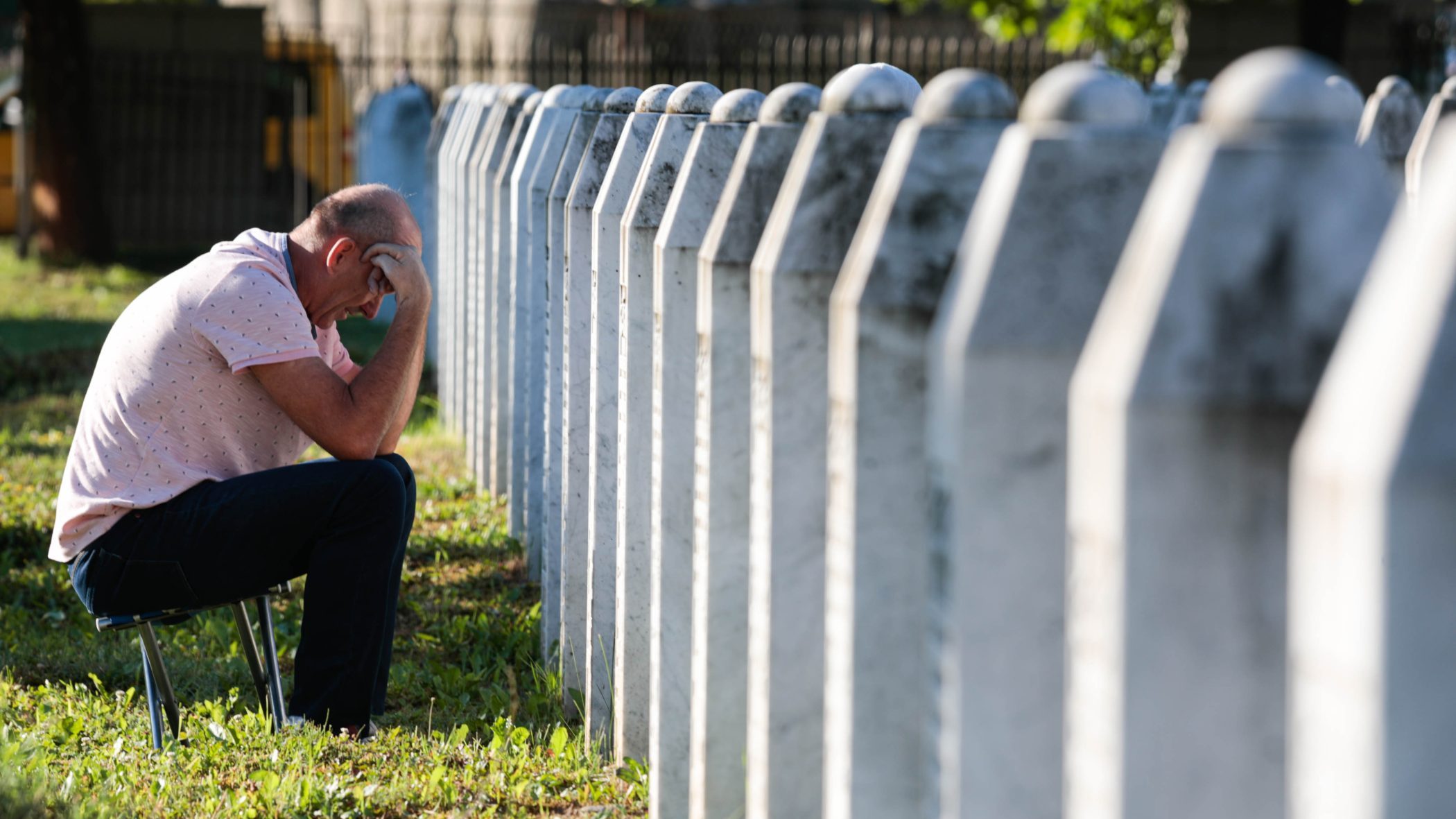
For 12 years, Milena Kulina brought flowers and lit candles at a grave where her son was not buried.
“When the initial visual identification was first done, it was night. The body had been in the ground for a long time, decomposing, and we thought it was him because of a tattoo he had on his leg,” says Milena, whose son Dragoslav was killed during the war.
After they buried the body they believed to be Dragoslav’s, her children later gave blood samples to find their father, Milena’s husband. Through DNA analysis, it was discovered that her son’s body was actually in the morgue in Miljevići, registered as an unidentified person or “John Doe,” and not in the grave she had been visiting for years.
“Believe me, it was hard the first time, but even harder later. You mourn someone else’s child, someone else’s grave, thinking it’s your own. God forbid anyone ever goes through this. Only we mothers understand, but the politicians don’t,” says Milena, barely audible as she had fallen seriously ill after all she endured.
She is still searching for her husband.
Associations of families of missing persons have asked the Missing Persons Institute of BiH to develop and intensify campaigns and other activities in the coming years to encourage the families of victims identified through visual confirmation to provide blood samples, so that these identifications can be verified and possible errors remedied.
Isidora Graorac, President of the Republika Srpska Organisation of Families of Detained and Fallen Veterans and Missing Civilians, says that families must be approached cautiously in these cases, since most consider the issue of their missing family members resolved once the visual identification and burial have taken place.
“Any suspected misidentification must be fully investigated. Otherwise, we might deprive a family of ever finding their missing loved one, because another family has buried them. We must be cautious, have understanding for those still searching for their own, and think about what it would be like to learn we still hadn’t found our loved one and the body we buried actually belongs to another family,” says Graorac.
She adds that it is necessary to talk to families and explain to them that only if a positive identification of remains in an ossuary is confirmed would bodies be exhumed again.
Saliha Đuderija, Chair of the Board of Directors of the Missing Persons Institute, says that their earlier campaign will help. Many families have little interest in cooperating, including giving new blood and bone samples, as this process causes retraumatisation.
“We have nearly 1,900 cases of human remains in morgues that have not yet been identified. For 30 percent of the cases, we are covered, we have blood samples. However, some families have never given blood samples at all, with no one left to do so on their behalf, while others have a change of heart and no longer wish to cooperate. For example, we find a person, but the family is no longer interested – they have closed that chapter,” explains Đuderija.
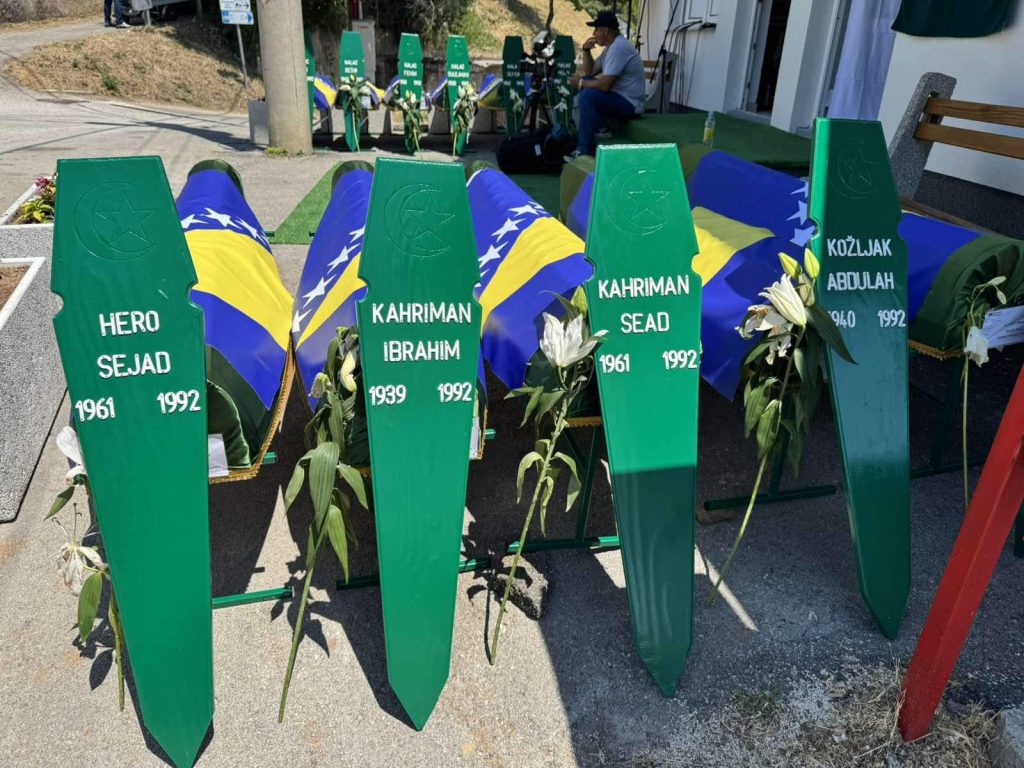
Before the collective funeral in Tihovići, a re-exhumation was carried out in the process of confirming the identities of previously buried persons. Photo: Islamic Community of Sarajevo
Ema Čekić, President of the Vogošća Municipality Association of Families of Missing Persons, says that there must be understanding for these families, as this is yet another painful process for them.
During the re-exhumation of the remains of victims from Tihovići four years ago, carried out to establish the identity of a body located in the morgue in Visoko, it was found that, at the site of one man’s burial, the commingled remains of other persons had been buried.
“We exhumed 12 bodies, and DNA analysis confirmed the identities of 11. Now a sister is left without her brother. She had found, identified, and buried her father. One body in the Visoko morgue is complete, and that is why this re-identification was conducted – since those bodies had been buried after being identified through the classic visual method. If that body does not belong to the one in the morgue, then everything has to be exhumed again, and I don’t have the strength to go to the families and tell them that. We have been waiting a long time for the remains to be returned to Tihovići,” says Čekić, emphasizing how painful this process is for the families.
Bosnia and Herzegovina was the first country in the world to adopt a strategy for resolving cases of misidentifications – where the procedures to be followed when there is suspicion that a person was buried under the wrong name are clearly regulated, according to Samira Krehić, Head of the International Commission on Missing Persons (ICMP) Programme for the Western Balkans.
“In some cases, a family gives blood, and we find a match for certain remains in a morgue, but it turns out that the person has already been buried – that is, remains under that name. However, families do not give blood for cases they consider already resolved,” explains Krehić.
In other cases, several family members are missing. After families have previously identified some remains through the classic visual method, when they later come to give blood to find their other missing relatives, errors are discovered – namely, mistaken identity.
“Since all antemortem samples are stored in one database, when comparisons are made with bone samples, if a match occurs, and we can see that there was an initial case of mistaken identity,” says Krehić, adding that dozens of such cases have been resolved this way, but that morgues and ossuaries across BiH still contain human remains that need to be identified.
“The Criminal Procedure Code of Bosnia and Herzegovina regulates the manner for conducting formal identifications, and this is carried out by forensic medical specialists at the request of the Prosecutor’s Office. We know from the Institute for Missing Persons’ annual reports that dozens of cases each year continue to be resolved in this way,” says Krehić.
An ICMP project between 2013 and 2018 conducted a review of unidentified human remains in 12 morgues. A total of 3,583 cases were examined, and 121 new identifications were established.
According to the Institute, in recent years, 37 misidentifications made through the classic visual method have been corrected. Around 8,000 victims of the recent war were identified through visual recognition.
In the search for more than 7,500 missing persons, Bosnia and Herzegovina lacks new technologies. Additionally, as the ICMP warns, the country also lacks institutional capacities and adequately trained personnel to fully take over the process of exhumation and identification of missing persons, which is one of the requirements in the EU accession negotiations.
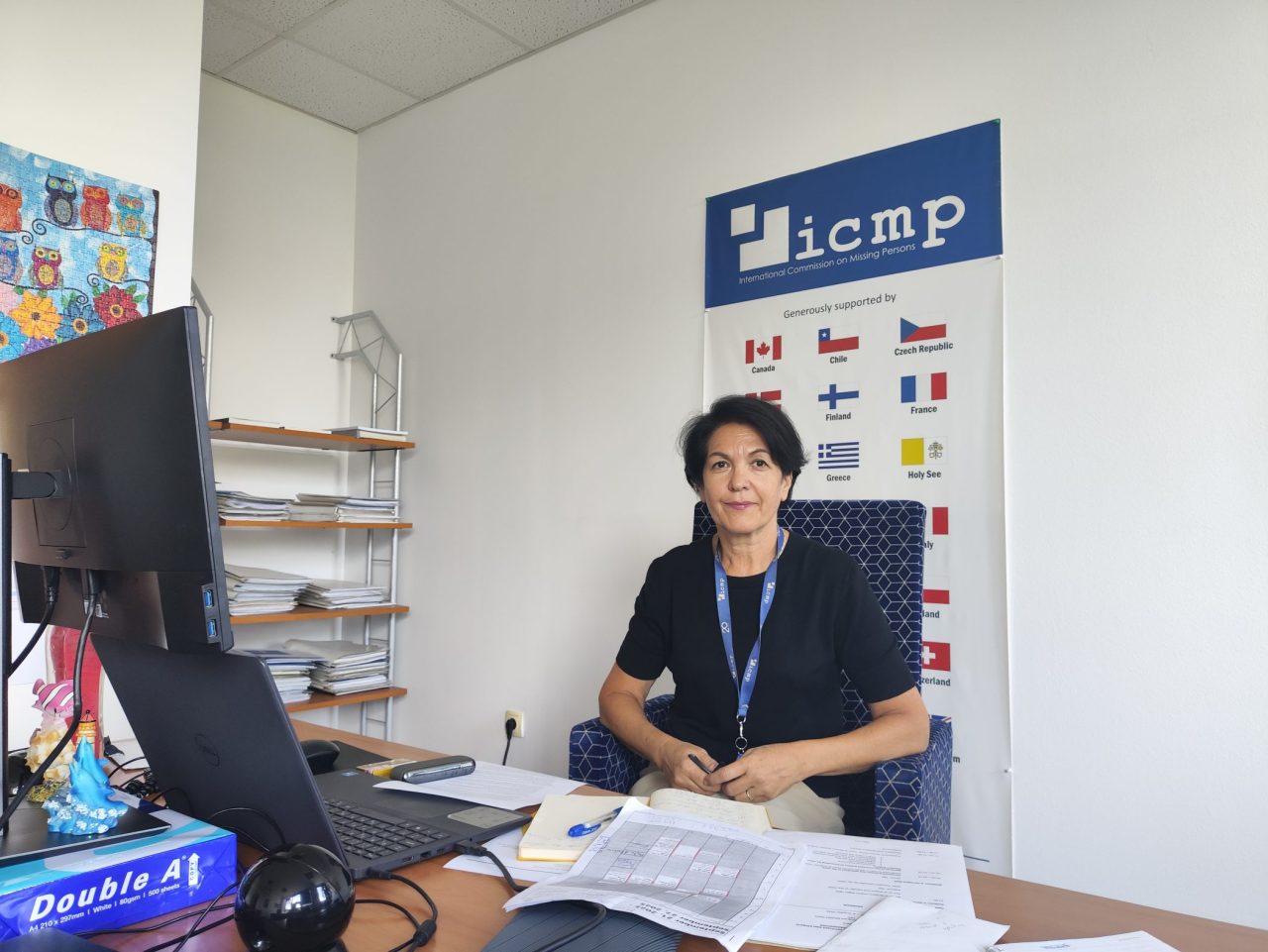
Samira Krehić, Head of the International Commission on Missing Persons (ICMP) Program for the Western Balkans. Photo: Detektor
For years, the ICMP has been providing field assistance during exhumations, morgue examinations, data analysis, reassociation, sample collection, and, finally, identification. This complex work is necessary for successful DNA analysis.
They note that the first phase in this process is exhumation, where the assistance of forensic anthropologists and archaeologists is crucial. Their presence and professional supervision are essential in cases of mass graves where multiple sets of remains are commingled, which often occurs due to secondary burials and relocations.
“Exhumations continue to take place with high intensity. We receive almost daily requests from the Prosecutor’s Office of BiH for field deployments or assistance in morgues. Last year alone there were over 120 field interventions, which means that the need is clearly there. However, the fact remains that BiH does not have this capacity resolved institutionally,” warns Krehić.
Unlike other countries, BiH does not have a national institute of forensic medicine. Forensic medicine specialists, who are highly experienced experts, lack an umbrella institution that oversees their work, provides training, and consolidates all data arising from their activities. Krehić notes that last year they received nearly 90 inquiries from various prosecutors’ offices regarding the status of individual cases and specific samples after exhumation – information that, she says, should not even be with the ICMP.
Previous attempts were made to resolve this issue through the establishment of a forensic medicine institute for the Federation of BiH, but the draft proposal did not pass through parliament. The Republika Srpska, meanwhile, has its own institute. In the meantime, collaboration has begun with the Agency for Forensic Examinations and Expertise, established as a service to the State Prosecutor’s Office, but the BiH Council of Ministers has not approved the employment of two DNA experts.
“There’s a possibility that, if our rulebook on systematisation is adopted, the Institute could gradually take over one or two positions, as it can take on part of the blood collection process and assist prosecutor’s offices with forensic experts. What we currently do is related to war cases, but this expertise could be used much more broadly – someone just needs to structure it. Unfortunately, here, it’s viewed as political, not as a matter of professional competence,” emphasises Đuderija.
Krehić recalls that Bosnia and Herzegovina must strategically plan the gradual takeover of the functions currently performed by the ICMP. So far, the Law on Missing Persons of BiH has been adopted, a central record of missing persons put in place, and software for collecting and analysing all data from the exhumation and identification process consolidated and handed over to the Institute.
“Forensic expertise is not only needed in the process of identifying the missing. It’s also essential in all criminal cases where human remains are no longer recognisable – when fingerprinting, dental records, or visual identification can’t be used. For instance, this applies to establishing the identity of migrants,” Krehić points out.
She adds that BiH must urgently take steps to address the shortage of forensic experts, particularly forensic archaeologists and anthropologists, as well as forensic pathology specialists, since there are few of them and they work on multiple assignments. It takes months and years to train a single expert, and Bosnia and Herzegovina still lacks the necessary curricula for their training.
*This analysis was produced with the assistance of the EU Support to Confidence Building in the Western Balkans project, funded by the European Union and implemented by the United Nations Development Programme (UNDP). The contents of this analysis are the sole responsibility of BIRN and do not necessarily reflect the views of the European Union or UNDP.