




This post is also available in:
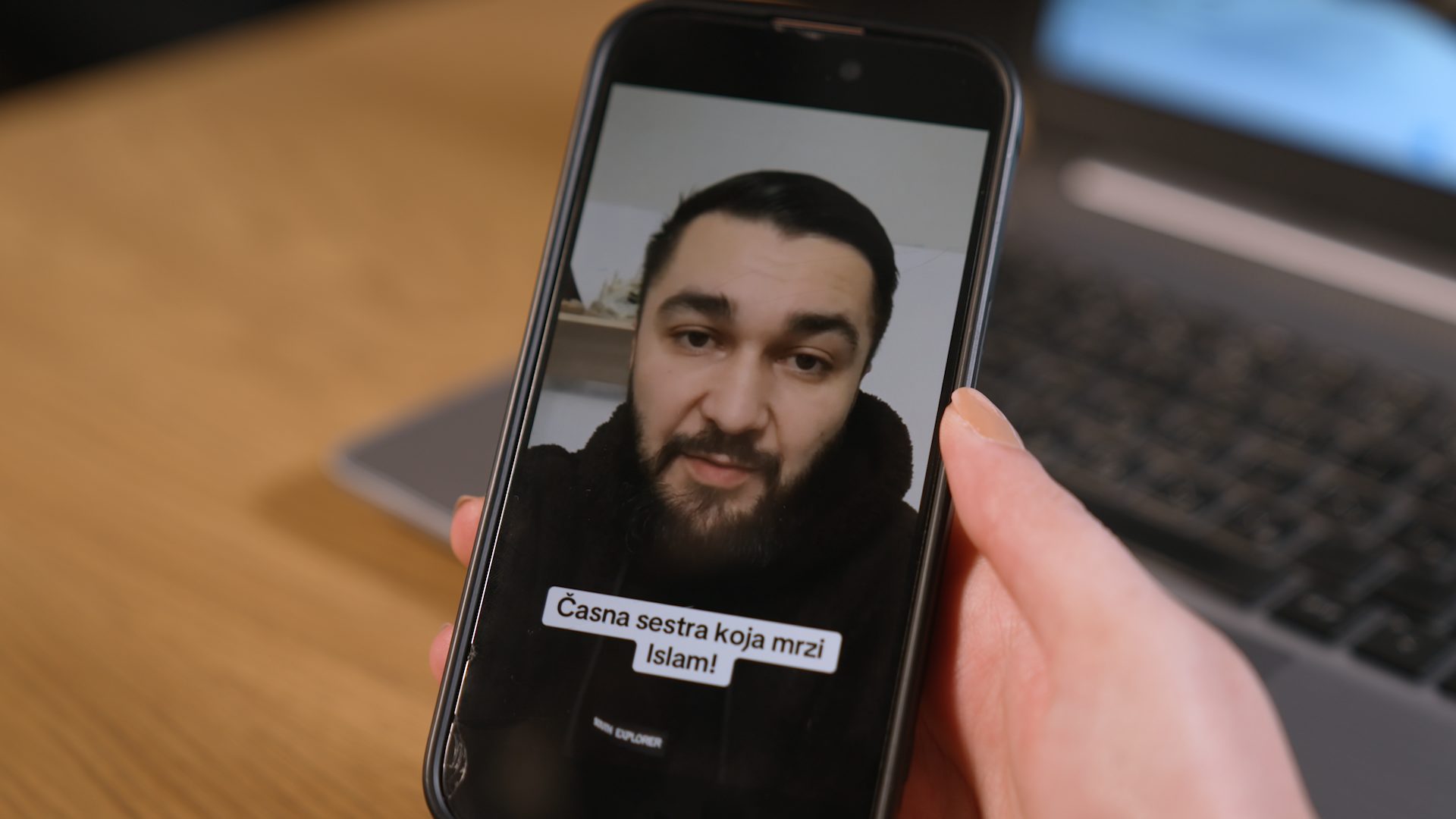
Hadžija is an account on TikTok that had 12,000 followers, including Meho Mahmutagic, who is originally from Bosnia and Herzegovina but now lives in Austria.
Mahmutagic told Detektor that, while scrolling through TikTok, he came across the Hadzija account, which its author Alen Kotoric was using to promote Islam. Mahmutagic then messaged Kotoric privately, and after some correspondence, Kotoric asked him for money, which was allegedly needed to get firewood for an elderly woman from Tesanj.
He told me he was short of about 125 euros in order to be able to order the firewood, Mahmutagic says.
“I told him I would send it to him via PayPal to cover the costs, so that the firewood for heating could be delivered to that old, helpless lady,” Mahmutagic said, adding that he then paid the money, believing that he was helping out.
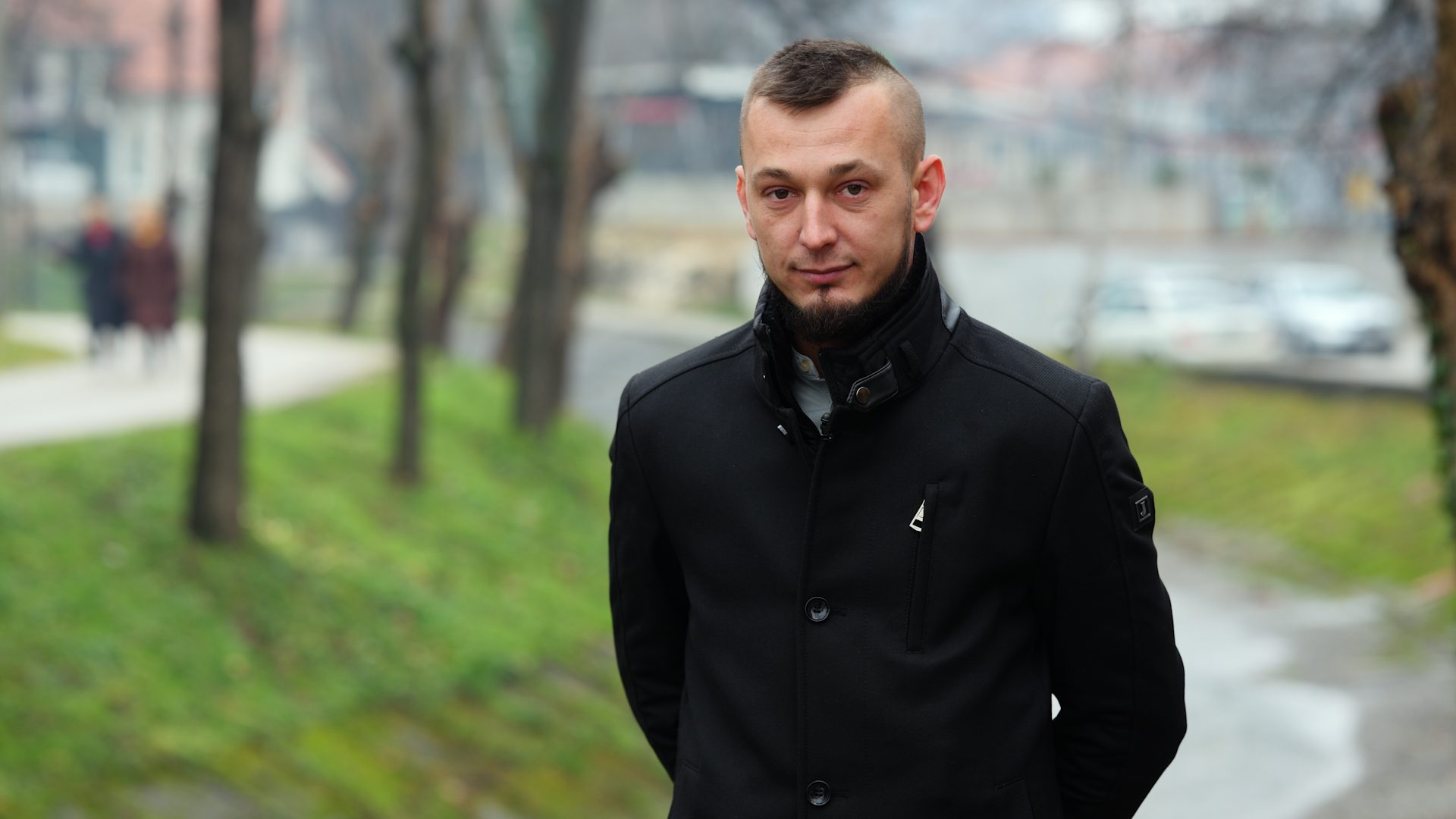
Meho Mahmutagić. Foto: Detektor
The communication continued in a WhatsApp group, which Kotoric presented to Mahmutagic as a platform through which funds were being donated to orphans or people in need every Friday after noon prayers.
Amir – not his real name but a pseudonym used by Detektor journalists for this story – believed he was helping too, in the same way.
“I immediately sent 40 euros so he could do something nice and charitable,” Amir said, explaining that he acted after seeing messages in the WhatsApp group.
According to Amir, Kotoric sometimes said he was hungry, that his fridge was empty or his salary was late. Amir said he couldn’t just stand by indifferently, so several times, he transferred 50 euros.
Then came an alleged appeal for firewood for a single mother of four. Kotoric told Detektor that he was short of 65 euros, which Amir then transferred to him.
“I told him that I was giving the money selflessly, and he could do whatever he wanted with it, after which he told me that he would withdraw the money and take it to her as charity, and then he sent a voice message on WhatsApp saying that he was two kilometres away from that house and he would now offer the charitable donation in the name of Allah, because that man did everything based on faith,” recalls Amir, who had no doubts in Kotoric’s honesty.

Alen Kotorić. Foto: Detektor
Detektor also spoke with other people who wouldn’t go on camera but also supported the Hadžija TikTok accounts and sent money for charitable donations.
But soon they asked Kotoric for proof that the money was destined for the purposes they were told about – not so they could boast about it publicly, but to be sure that they were actually helping.
Mahmutagic created a group of ten members who collected evidence about how and in what way the money was requested and in what amounts. He contacted Kotoric and said he would go to the police and report him. All they could conclude in the group was that the money wasn’t used for humanitarian purposes but, according to Mahmutagic, spent on gambling.
“Then he admitted it to me – all those messages, audio recordings and everything else we handed to the Police Department in Tesanj, in which he admitted that he gambled away 90 per cent of that money, and kept some for personal purposes,” Mahmutagic said.
Detektor’s journalists sought out Kotoric at his address in Tesanj. He said he had been devoted to studying religion for ten years, but he had no formal religious education. After completing the Hajj, he decided to create a TikTok account on which he would start doing dhikr, or reciting the Quran. He also helped people who asked him for advice via the account, he said.
He explained that he received up to 10,000 marks [around 5,000 euros] in gifts, and that more than 3,000 of that was sent directly via PayPal by people who did not want to pay via TikTok. As he noted, when someone sent money via TikTok, he would not receive the full amount because there was a commission.
He soon got married, furnished one floor and bought a car on credit, because he didn’t have enough money to buy some things he wanted, he started to gamble, he admitted.
“When I gambled away my salary and some money that I had, I needed cash. And those people who really stood by me, who are honest and decent people … I asked them to lend me some of the money, and I planned to pay them back, but they would always say: ‘It’s an unselfish gift, no need to pay anything back,’” Kotoric said.
“But they didn’t know that I was gambling. They thought I needed the money for my own needs. Everyone, gambling is the greatest evil,” he said.
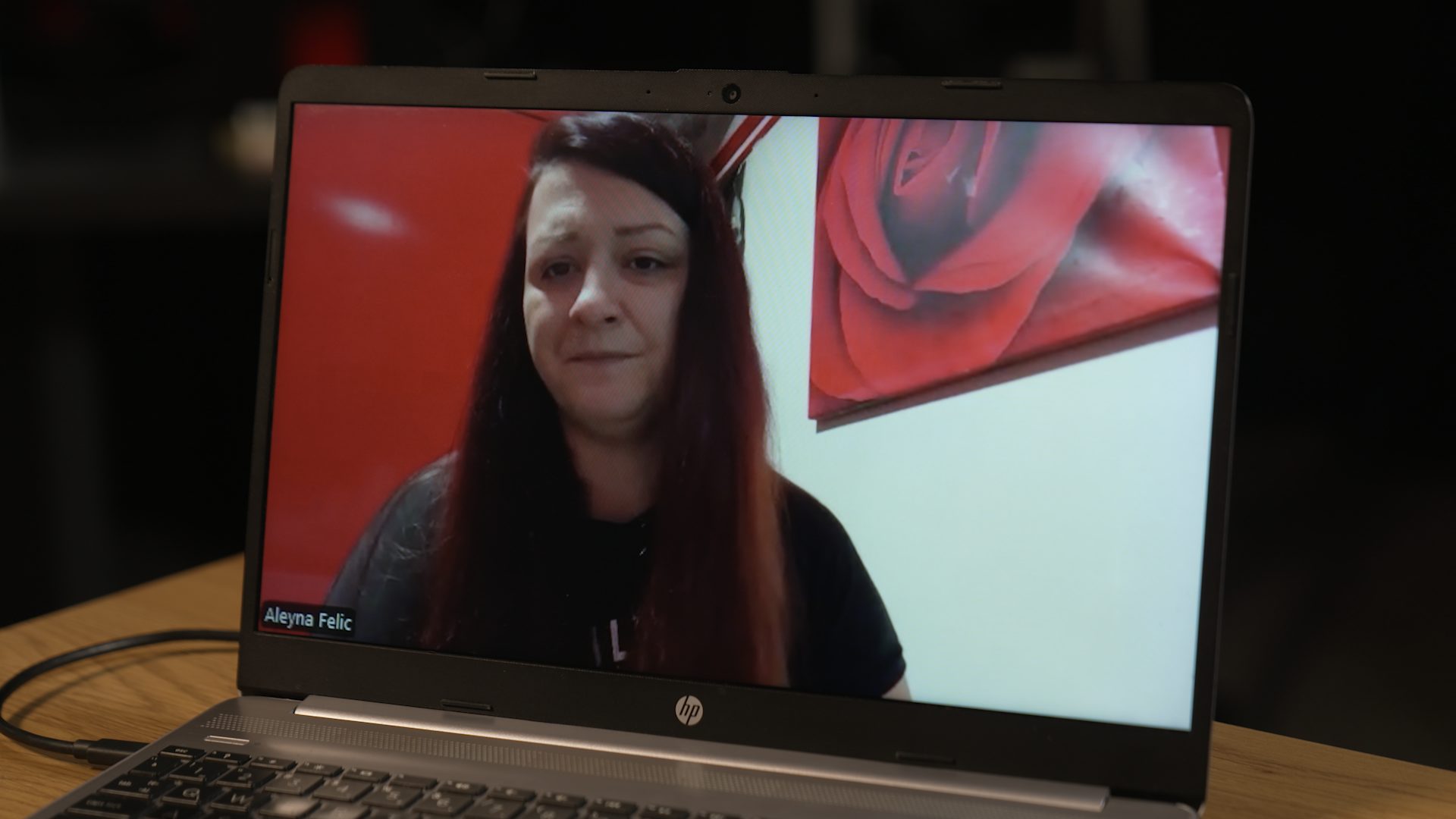
Alejna Felić. Foto: Detektor
Even people who had little money responded to his appeals. Alejna Felic said that she “set aside half of my small funds” to help others, as Kotoric urged, and bought so-called ‘gifts’ for people on TikTok.
“Whoever was able to access [the Hadžija TikTok account] did so; listening, tapping away, supporting him with gifts,” Felic explained.
“I was also in a difficult situation. I’m a single mother and I gave half of the little I had, of what I needed to survive, but it was hard when he said he had no money for food and stuff. I donated the money selflessly,” she said.
After Kotoric was confronted with the evidence, the Hadžija TikTok account was deleted. The amount believed to have been been donated in November 2025 exceeded 7,000 euros, said Mahmutagic.
Felic says she feels deceived, because she took money that was meant for her child and sent it to Kotoric.
“What hurts me the most is that he deceived so many people, that he took money from single mothers, that he took money from disabled people. This man spared no one, and took so much money on the basis of faith. We helped on the basis of faith, and he gambled it all away, unfortunately,” Amir said.
Kotoric says he organised three campaigns, including two for firewood, for which he took perhaps 1,000 marks.
“Up to 2,000 marks, 3,000, definitely not more, and all this was because I got carried away. That just wasn’t me. I woke up the moment I confessed everything to them and when I deleted the TikTok account. That was when I woke up from that dream,” he said.
He insisted that he will return the money he took and asked for forgiveness.
“If they believe that I misled them and that I did it, which I did do and I admit I did, I should return those 3,000 marks that they believe I took,” Kotoric said.
His family did not know wat he was doing.
Now he is telling other people to stay away from TikTok.
“Look at what’s happening with other TikTokkers. I never thought I would be one of them, because I’m neither a fraud, nor evil, nor corrupt. I simply got carried away with everything I did … Islam is perfect, people are not, we all make mistakes. I’ve only made one mistake in my life, and it’s this one,” Kotoric said.
Despite his admission and promise to repay the money, a criminal complaint has been filed against Kotoric at the Tesanj Police Station.
The Interior Ministry of Zenica-Doboj Canton confirmed to Detektor that the Prosecutor’s Office had been notified of this, and that work is under way to verify whether any criminal offence has been committed.

Advokat Senad Pizović. Foto: Detektor
Anyone who deceives people or offers false information for unlawful material gain has committed the criminal offence of fraud, says veteran lawyer Senad Pizovic.
“Whoever sent the money via social media probably has some material evidence of that. Unless the money was passed from hand to hand so there is no record, but usually, at least in my experience, it goes through Western Union and is deposited into an account. So the money always leaves a trace,” Pizovic said, explaining why he believes the case will be easy to prove.
“Then you have the testimony of the person who sent the money, and the purposes for which the money was used only need to be checked; that is, whether it was used for the purposes intended, or the purposes that were stated to the sender of the money,” he added.
The penalty depends on the amount of money involved but, Pizovic explained, the basic sentence is three years in prison.
Fraud occurs as a result of fairly blind trust in certain authorities, who are actually not, and is based on thousands of likes and presence on social media, explained psychologist and psychotherapist Tanja Tankosic Girt.
“One important aspect here is the source of the man’s authority. This is the name Hadzija or the honorific of being a hajj pilgrim,” said Tankosic Girt.
“For most people, invoking religion and reading those religious texts and some holy books instils some kind of trust that this is a person who can solve some of their problems, who can positively influence their lives, and they probably grant him a disproportionate amount of esteem, particularly in terms of morality,” she added.
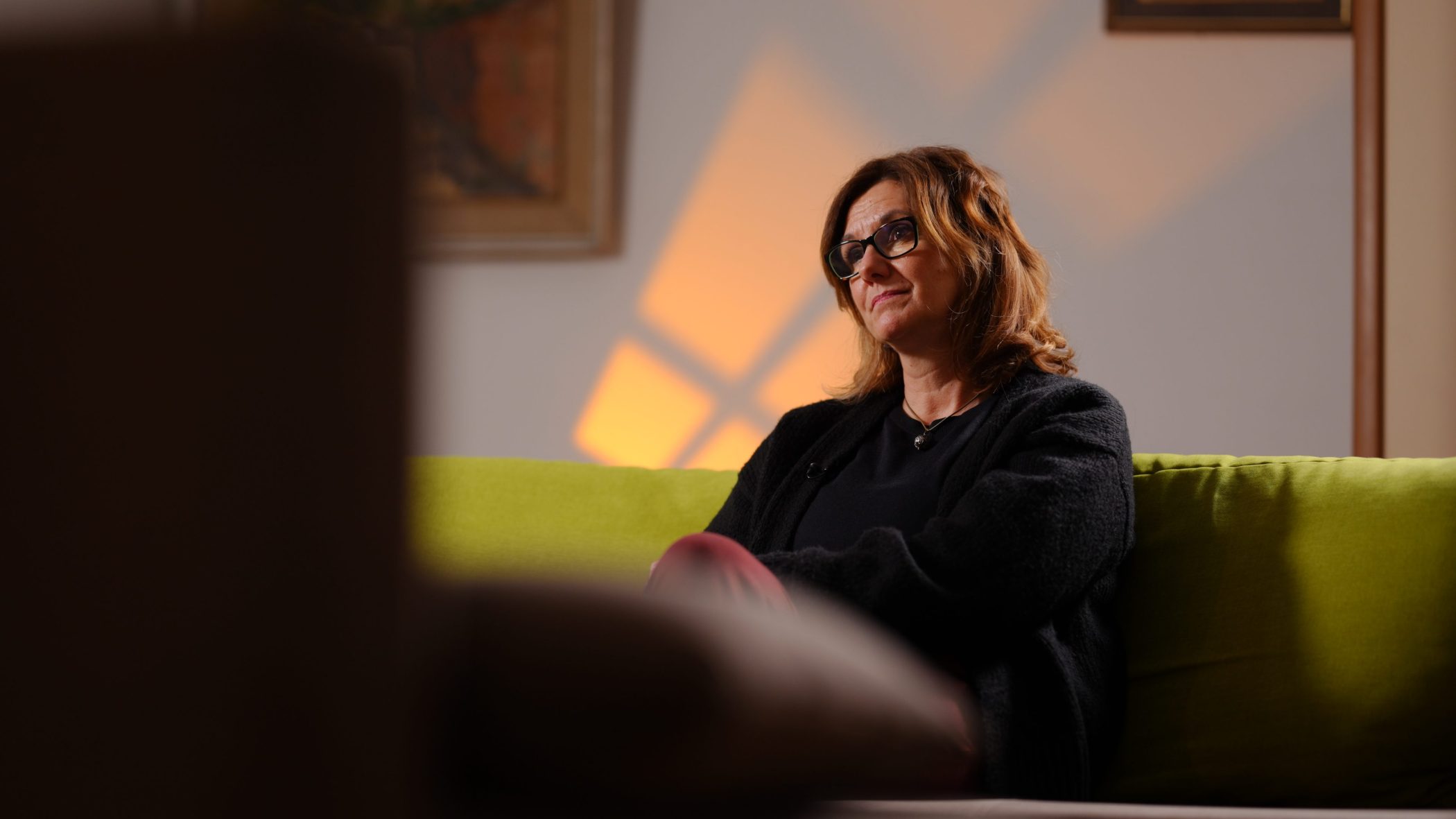
Psihologinja i psihoterapeutkinja Tanja Tankosić Girt. Foto: Detektor
She believes the key issue is that people just weren’t thinking critically about what was happening. People on social media can be seeking guidance, leadership or community, which are normal human needs, but the way these are being delivered via social media and poses a problem.
Such accounts seek to attract as many people as possible, and what is common among them is that they use urgency as a tool to get a response.
“That somehow leads to a wave of fear, worry and concerns, and that’s a good basis for losing the ability to think critically,” Tankosic Girt argued.
“Critical thinking doesn’t go well with urgency; it doesn’t go well with catastrophising. They very often present a situation as worse than it is, like: ‘If we don’t help this mother now, her children will starve.’ This is an alarm call that a disaster is happening, which appeals to this kind of catastrophising, and what happens as a consequence is the loss of the ability to think critically,” she concluded.